This post contains affiliate links. We may earn a small commission at no extra cost to you. Learn more
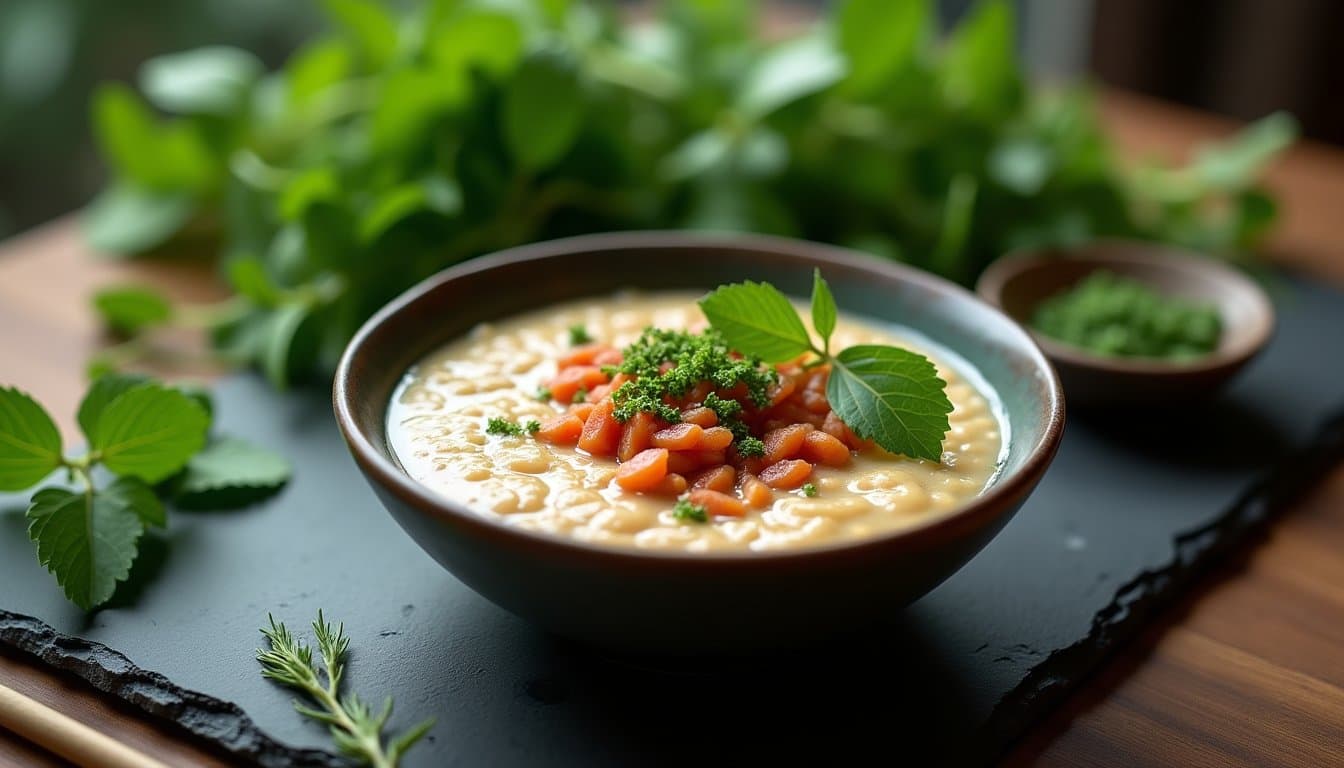
Fermented Oat and Anchovy Congee with Crispy Shallots
what's this?
Strangeness scale
- 1 — Slightly odd
- 2 — Raises eyebrows
- 3 — Genuinely strange
- 4 — Deeply weird
- 5 — Unhinged
- Cook
- 45m
- Total
- 24h 45m
- Difficulty
- Hard
- Serves
- 2
- Origin
- Nordic
Picture a Nordic fisherman and a Cantonese grandmother snowed in together, arguing about breakfast until they land on something neither culture would claim but both should. Lacto-fermented rolled oats break down into a silky, congee-like base with a gentle tang that makes the briny, glutamate-rich anchovies sing rather than shout. The crispy shallots and spring onion cut through the richness with real textural contrast, and the result is simultaneously ancient, weird, and deeply correct.
Equipment
Why It Actually Works
Lacto-fermentation converts oat starches and releases phytic acid, leaving a softer, more digestible grain with a lactic tang that works like a squeeze of lemon, lifting and sharpening every other flavor in the bowl. Anchovies are loaded with free glutamates and inosinates, and when dissolved into a warm, starchy medium, those nucleotides synergize with the fermentation byproducts to produce a layered umami effect far more complex than either ingredient alone, a phenomenon food scientists call 'umami synergy.' The crispy shallots bring Maillard-derived furans and pyrazines, roasted and almost meaty top notes that trick your brain into reading 'hearty' before the spoon even hits your lips.
Learn the flavor science rules behind recipes like this →Ingredients
- 200g certified gluten-free rolled oats
- 500ml filtered water, room temperature
- 2 tbsp raw apple cider vinegar with the mother
- 800ml cold water, for cooking
- 200ml good-quality fish stock, ideally made from smoked fish bones
- 8 high-quality oil-packed anchovy fillets, roughly chopped, plus 2 whole for garnish
- 1 tsp anchovy oil, reserved from the tin
- 3 large shallots, peeled and very thinly sliced into rings
- 120ml neutral oil (sunflower or rapeseed), for frying
- 4 spring onions, thinly sliced on a sharp bias, white and green parts separated
- 1 tsp whole caraway seeds, lightly toasted
- 1 tsp whole fennel seeds, lightly toasted
- 1 small clove garlic, finely grated
- 1 tbsp cold-pressed rapeseed oil
- 1 tsp raw apple cider vinegar
- flaky sea salt, to taste
- freshly cracked black pepper, to taste
- fresh dill fronds, small handful, for garnish
- 1 tsp pickled mustard seeds, optional but highly encouraged
Instructions
1. FERMENT THE OATS (24 hours ahead): Combine the rolled oats, 500ml filtered water, and 2 tbsp apple cider vinegar in a clean glass jar or bowl. Stir well, cover loosely with a cloth or plastic wrap with a few holes poked in, and leave at room temperature (ideally 20–24°C) for 18–24 hours. The mixture will smell pleasantly sour and slightly funky — that is your goal. Do not be alarmed. If white surface mold appears (rare but possible), skim it off; any other color means discard and start again.
2. MAKE THE CRISPY SHALLOTS: Heat the neutral oil in a small heavy-bottomed saucepan over medium heat to approximately 160°C. Add the shallot rings in batches — do not crowd the pan. Fry for 6–8 minutes, stirring occasionally, until deep golden and crisp. They will continue to darken after removal, so pull them just before they look done. Drain on paper towels, season immediately with flaky salt, and spread in a single layer. Reserve the shallot-infused frying oil — it's liquid gold.
3. BLOOM THE SPICES: In a wide, heavy-bottomed saucepan or Dutch oven, heat 1 tbsp of the reserved shallot oil over medium heat. Add the caraway and fennel seeds and cook for 60–90 seconds until fragrant and lightly toasted. Add the white parts of the spring onions and the grated garlic, stirring constantly for 1 minute. Do not brown the garlic.
4. BUILD THE CONGEE BASE: Add the fermented oat mixture (including all its soaking liquid) to the spiced pan. Pour in the 800ml cold water and the fish stock. Stir to combine. Bring to a gentle boil over medium-high heat, then immediately reduce to a low simmer. Cook uncovered, stirring every 3–4 minutes to prevent sticking, for 25–30 minutes. The oats will fully break down into a thick, porridge-like slurry with a consistency between risotto and loose polenta. If it thickens too aggressively, add water in 50ml increments.
5. INTRODUCE THE ANCHOVY: Reduce heat to the lowest possible setting. Stir in the chopped anchovy fillets and the 1 tsp reserved anchovy oil. Stir vigorously for 2 minutes — the anchovies will dissolve almost entirely into the congee, creating an invisible but profound umami backbone. Taste the mixture. It should be savory, slightly sour, deeply oceanic, and complex. Adjust salt carefully (anchovies are salty) and add cracked black pepper generously.
6. FINISH AND PLATE: Stir in the cold-pressed rapeseed oil and 1 tsp apple cider vinegar off the heat. The vinegar brightens everything and echoes the fermentation notes. Divide the congee between two warmed deep bowls. Working quickly while the congee is still steaming, arrange the green spring onion slices in a neat pile in the center. Drape one whole anchovy fillet over each bowl in a dramatically casual fashion. Heap the crispy shallots generously on top — do not be shy, they are structural.
7. GARNISH AND SERVE: Scatter fresh dill fronds over each bowl. Add pickled mustard seeds if using — their pop of acid and gentle heat is a revelation here. Finish with one final drizzle of shallot oil and a few flakes of sea salt. Serve immediately with rye crispbreads on the side if not keeping gluten-free, or with plain rice crackers for a GF option. Eat while aggressively hot.
Nutrition (estimated per serving)
- Calories
- 720
- Fat
- 48g
- Carbs
- 55g
- Protein
- 18g
- Fiber
- 6g
- Sodium
- 980mg
Variations
- Smoked herring swap: replace the anchovy fillets with 80g hot-smoked herring (brisling or sprats), flaked in at the end. The smoke adds a bonfire-at-dawn quality that leans harder into the Nordic side of this bowl. Use fresh tarragon instead of dill.
- Vegan glutamate version: whisk 2 tbsp white miso into the stock in place of anchovies, then stir in 1 tbsp finely chopped dried wakame rehydrated in warm water. A few drops of liquid smoke fill in for the brine. You lose the anchovy funk but keep the umami depth.
- Soft egg addition: soft-boil an egg for exactly 6 minutes 30 seconds, peel it carefully, and place it halved in the center of the bowl before the crispy shallots go on. The jammy yolk bleeds into the congee and turns the whole thing into a proper meal.
Storage & Make-Ahead
The congee itself keeps in the fridge for up to 3 days in a sealed container, though it thickens considerably as it sits — stir in a splash of fish stock or water when reheating over low heat. The fermented oats are the only step that genuinely needs planning ahead, so start them 18 to 24 hours before you want to eat. Crispy shallots go soft within a few hours of hitting the congee, so fry them the day of and store any extras loose in a small bowl at room temperature, not in the fridge where moisture will ruin them. Skip adding the dill, spring onion greens, and pickled mustard seeds until you're ready to serve.
Reader Tips
No tips yet — be the first!
More Strange Recipes

Spring Pea Tapioca Crepes with Charred Lime and Watercress Oil
Brazilian tapioca crepes get a raw-food makeover with blended fresh spring peas folded straight into the batter, then finished with a punchy watercress oil and limes charred directly over a gas flame. The starch in tapioca flour binds without heat, so the pea flavor stays grassy and bright rather than cooked into sweetness. It's a breakfast that genuinely tastes like the moment before summer shows up.

Morel Dutch Baby with Truffle Butter and Ramp Confiture
A Dutch baby is already a strange thing: pancake batter poured into a screaming-hot cast-iron skillet, then ballooned into a golden, custardy bowl by oven steam. This one goes further. Finely chopped morels go into the batter, truffle butter melts into the skillet's hot edge, and a jammy ramp confiture brings wild-onion sweetness to every bite. It tastes like a fine-dining tasting menu crashed your Sunday brunch. That's the whole idea.
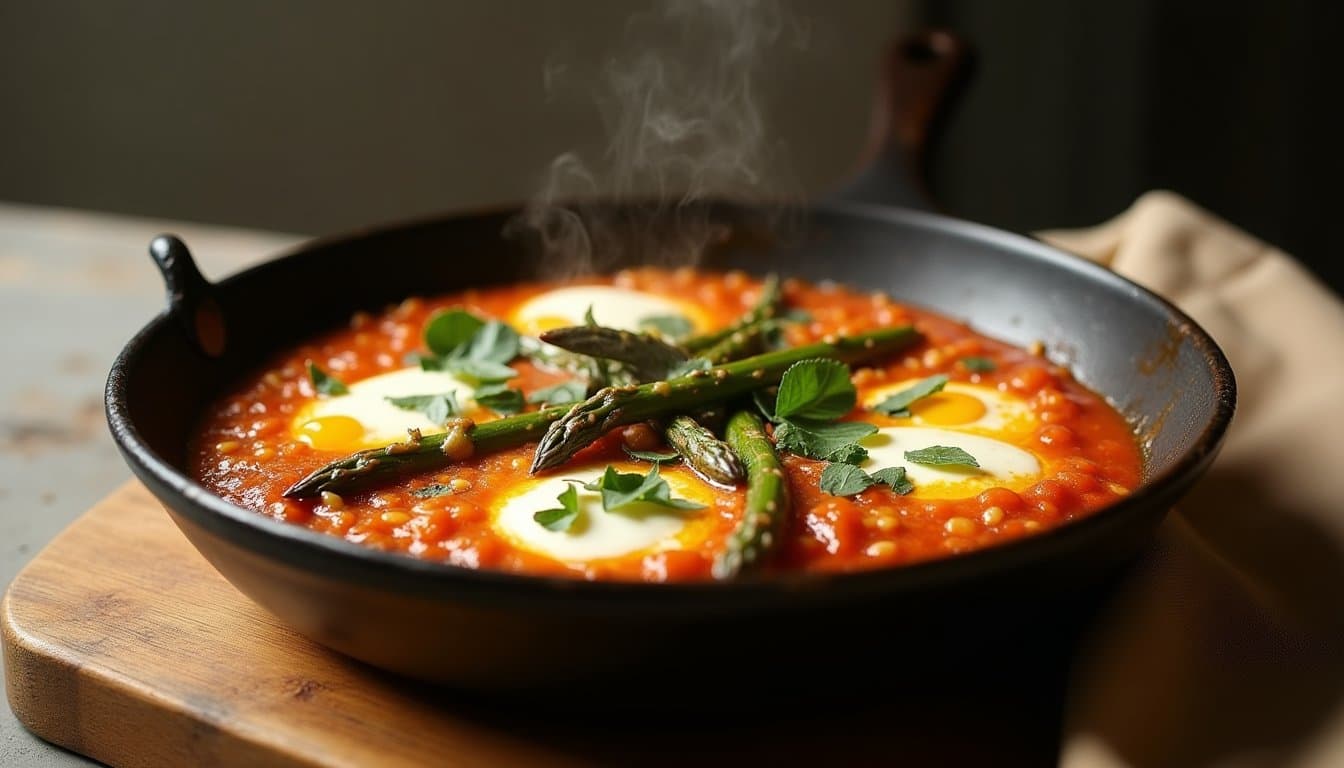
Asparagus & Feta Shakshuka with Wild Garlic and Morel Mushrooms
This isn't your standard shakshuka. Asparagus, morel mushrooms, and wild garlic move into the tomato-and-egg base alongside crumbled feta, and the result is stranger and better than it sounds. The eggs cook low and slow over the vegetable sauce, a trick borrowed from Moroccan tagine technique, so the whites stay silky and the yolks run jammy when you break them.
Get the free flavor science guide.
5 rules that explain why unusual combinations work — plus new recipes every week.
You can unsubscribe anytime. No spam, ever. Or just read the guide.