This post contains affiliate links. We may earn a small commission at no extra cost to you. Learn more
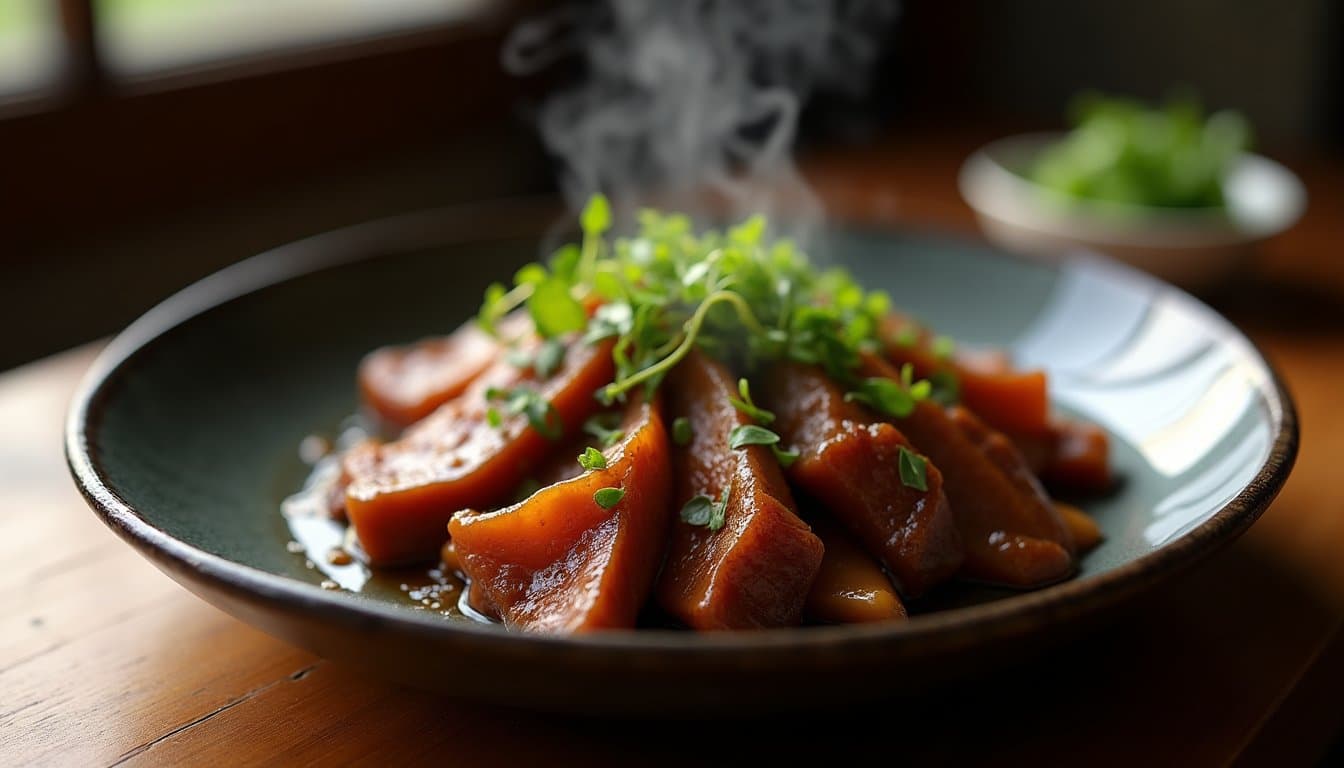
Kombu-Braised Korean Short Ribs with Watercress Gremolata and Black Sesame
what's this?
Strangeness scale
- 1 — Slightly odd
- 2 — Raises eyebrows
- 3 — Genuinely strange
- 4 — Deeply weird
- 5 — Unhinged
- Cook
- 3h 30m
- Total
- 4h 10m
- Difficulty
- Hard
- Serves
- 4
- Origin
- Korean
Flanken-cut short ribs braised in kelp-and-doenjang broth until the collagen gives up completely, then buried under a raw watercress gremolata spiked with toasted black sesame and yuzu zest. The ocean-floor depth of kombu does something almost unsettling to the beef's natural glutamates. The bitter, peppery watercress is what keeps the whole thing from becoming too much of a good thing.
Equipment
Why It Actually Works
Kombu is one of the richest natural sources of glutamic acid on the planet, and doenjang carries both glutamate and inosinate from fermentation. Stack those two against the inosinate-heavy beef and you get umami synergy, where the combined savory intensity runs exponentially higher than any single ingredient alone. The Asian pear pulls its weight too: its cysteine protease enzymes, closely related to those in kiwi and pineapple, actively break down the tough collagen and myosin during the braise, producing a tenderness that cooking time alone can't fully deliver. Raw watercress in the gremolata isn't decorative. Its glucosinolate compounds and chlorophyll provide bitter, peppery contrast that physiologically resets your palate between bites, so the last mouthful hits as hard as the first.
Learn the flavor science rules behind recipes like this →Ingredients
- 2.5 kg bone-in flanken-cut short ribs (about 8 pieces), patted dry
- 2 tbsp neutral oil (grapeseed or avocado)
- 2 tsp fine sea salt, divided
- 1 tsp freshly ground black pepper
- 40 g dried kombu (kelp), wiped clean with a damp cloth
- 1.5 liters cold water, for kombu dashi
- 3 tbsp doenjang (Korean fermented soybean paste), gluten-free verified
- 3 tbsp tamari (gluten-free soy sauce)
- 2 tbsp gochujang (gluten-free), or substitute 1.5 tbsp gochugaru for milder heat
- 3 tbsp mirin (gluten-free), or substitute 2 tbsp honey
- 1 tbsp toasted sesame oil
- 6 cloves garlic, smashed
- 1 thumb-sized piece fresh ginger (about 20 g), sliced into coins
- 4 scallions, cut into 5 cm pieces
- 1 Asian pear (about 200 g), peeled and roughly chopped
- 1 medium yellow onion, quartered
- 2 tbsp fish sauce (gluten-free)
- 1 tbsp rice vinegar
- 1 tsp whole black peppercorns
- 2 dried shiitake mushrooms
- For the watercress gremolata: 80 g fresh watercress, tough stems removed, roughly chopped
- For the watercress gremolata: 2 tbsp black sesame seeds, toasted in a dry pan until fragrant
- For the watercress gremolata: 1 tbsp white sesame seeds, toasted
- For the watercress gremolata: 1 tsp yuzu zest (or Meyer lemon zest plus a drop of lime zest)
- For the watercress gremolata: 1 tbsp yuzu juice (or equal parts lemon and lime juice)
- For the watercress gremolata: 2 cloves garlic, finely grated on a microplane
- For the watercress gremolata: 2 tbsp toasted sesame oil
- For the watercress gremolata: 1 tsp fish sauce (gluten-free)
- For the watercress gremolata: pinch of fine sea salt and white pepper to taste
- To serve: steamed short-grain white rice or cauliflower rice
- To serve: thinly sliced scallion greens
- To serve: gochugaru flakes for finishing
Instructions
1. MAKE THE KOMBU DASHI: Combine the dried kombu and 1.5 liters cold water in a medium saucepan. Let soak at room temperature for 30 minutes — this cold extraction pulls maximum glutamate without the slimy texture hot-steeping creates. Slowly bring to 60°C (140°F) over low heat and hold for 20 minutes (use a thermometer — never boil kombu or it turns bitter and mucilaginous). Remove kombu, reserve it, and set the dashi aside.
2. PREP THE RIBS: Pat short ribs completely dry with paper towels — moisture is the enemy of a good sear. Season aggressively on all sides with 1.5 tsp salt and the black pepper. Let rest uncovered at room temperature for 20 minutes while you preheat your oven to 160°C (325°F).
3. SEAR: Heat a large Dutch oven (at least 6-liter capacity) over high heat until smoking. Add neutral oil. Working in two batches to avoid crowding, sear short ribs 3–4 minutes per side until deeply mahogany-brown on all meaty surfaces. Do not rush this step — the Maillard crust is your flavor foundation. Transfer seared ribs to a plate.
4. BUILD THE AROMATICS: Reduce heat to medium. Add onion quarters, smashed garlic, ginger coins, scallion pieces, and the reserved kombu (cut into strips) to the Dutch oven. Cook, stirring occasionally, for 4–5 minutes until onion softens and edges char slightly. Add the chopped Asian pear and dried shiitake mushrooms; stir for 2 minutes. The pear's natural enzymes will tenderize the meat during the long braise.
5. BUILD THE BRAISING LIQUID: In a bowl, whisk together the doenjang, tamari, gochujang, mirin, toasted sesame oil, fish sauce, and rice vinegar until smooth. Pour this paste over the aromatics in the Dutch oven and cook, stirring, for 90 seconds until the paste darkens and becomes fragrant — you're toasting the fermented compounds. Add whole black peppercorns, then pour in all of the kombu dashi. Scrape up any fond from the bottom.
6. BRAISE: Nestle the seared short ribs back into the pot, bone-side up, ensuring they're submerged at least 75% in liquid. Bring to a bare simmer on the stovetop, then cover tightly and transfer to the preheated oven. Braise at 160°C (325°F) for 3 hours, checking at the 2-hour mark — ribs are done when a chopstick slides through the meat with zero resistance and the collagen has melted into the braising liquid.
7. REST AND REDUCE: Remove the Dutch oven from the oven. Carefully transfer ribs to a rimmed baking sheet. Strain the braising liquid through a fine-mesh sieve into a wide saucepan, pressing solids to extract all liquid; discard solids. Skim the fat from the surface (or refrigerate overnight and lift the solidified fat cap — this is the superior method). Bring the defatted liquid to a boil over high heat and reduce by 40–50% until it coats a spoon and tastes intensely savory, about 15–20 minutes. Taste and adjust with a splash of rice vinegar if it needs brightness, or a pinch of salt.
8. MAKE THE WATERCRESS GREMOLATA: While the sauce reduces, combine chopped watercress, toasted black and white sesame seeds, yuzu zest, yuzu juice, grated garlic, sesame oil, and fish sauce in a bowl. Toss gently — you want the watercress to stay vibrant and crisp, not wilted. Season with salt and white pepper. Make this no more than 20 minutes before serving; watercress weeps quickly.
9. GLAZE AND FINISH: Return the short ribs to the Dutch oven (or a broiler-safe pan). Spoon several tablespoons of the reduced braising sauce generously over each rib. Place under a high broiler for 3–4 minutes until the surface lacquers and caramelizes to a sticky, glossy char. Watch closely — the sugars from mirin and pear can go from perfect to scorched in 60 seconds.
10. PLATE: Spoon a mound of steamed rice into each bowl. Place 2 glazed short rib pieces on top, angling the bones for drama. Ladle 2–3 tablespoons of the reduced braising sauce around the base. Pile a generous heap of watercress gremolata directly on top of the ribs. Finish with sliced scallion greens, a pinch of gochugaru, and a final drizzle of toasted sesame oil. Serve immediately.
Nutrition (estimated per serving)
- Calories
- 1180
- Fat
- 82g
- Carbs
- 28g
- Protein
- 78g
- Fiber
- 3g
- Sodium
- 2450mg
Variations
- Pressure cooker shortcut: braise in an Instant Pot on high pressure for 55 minutes with a 20-minute natural release. You'll sacrifice some slow-developed complexity, but collagen conversion is nearly identical. Cut the dashi by 200ml, since there's almost no evaporation.
- Vegan version: swap the short ribs for 1.5 kg king oyster mushrooms halved lengthwise plus overnight-pressed firm tofu cubes. Replace fish sauce with 1 tbsp white miso whisked into 1 tbsp rice vinegar. Braise for 45 minutes only. The kombu-doenjang combination still delivers the full glutamate hit.
- Next-day cold noodle bowl: refrigerate the braising liquid overnight, lift the fat cap, and toss the jellied stock with cold cooked buckwheat soba, shredded leftover rib meat, cucumber ribbons, and extra gremolata. It's a naengmyeon-adjacent bowl that may honestly be better than the original dish.
Storage & Make-Ahead
The braised short ribs actually improve after a night in the fridge, once the fat solidifies on top and you can lift it off cleanly before reheating. Store the ribs submerged in their braising liquid in a sealed container for up to 4 days, or freeze for up to 3 months. Reheat gently in a covered pot over low heat with a splash of water to loosen the sauce, about 15 minutes, until the meat is warmed through without tightening up. Make the watercress gremolata no more than 30 minutes before serving, since the watercress wilts and the yuzu zest loses its brightness quickly, so keep it completely separate from the ribs until you're ready to plate.
Reader Tips
No tips yet — be the first!
More Strange Recipes
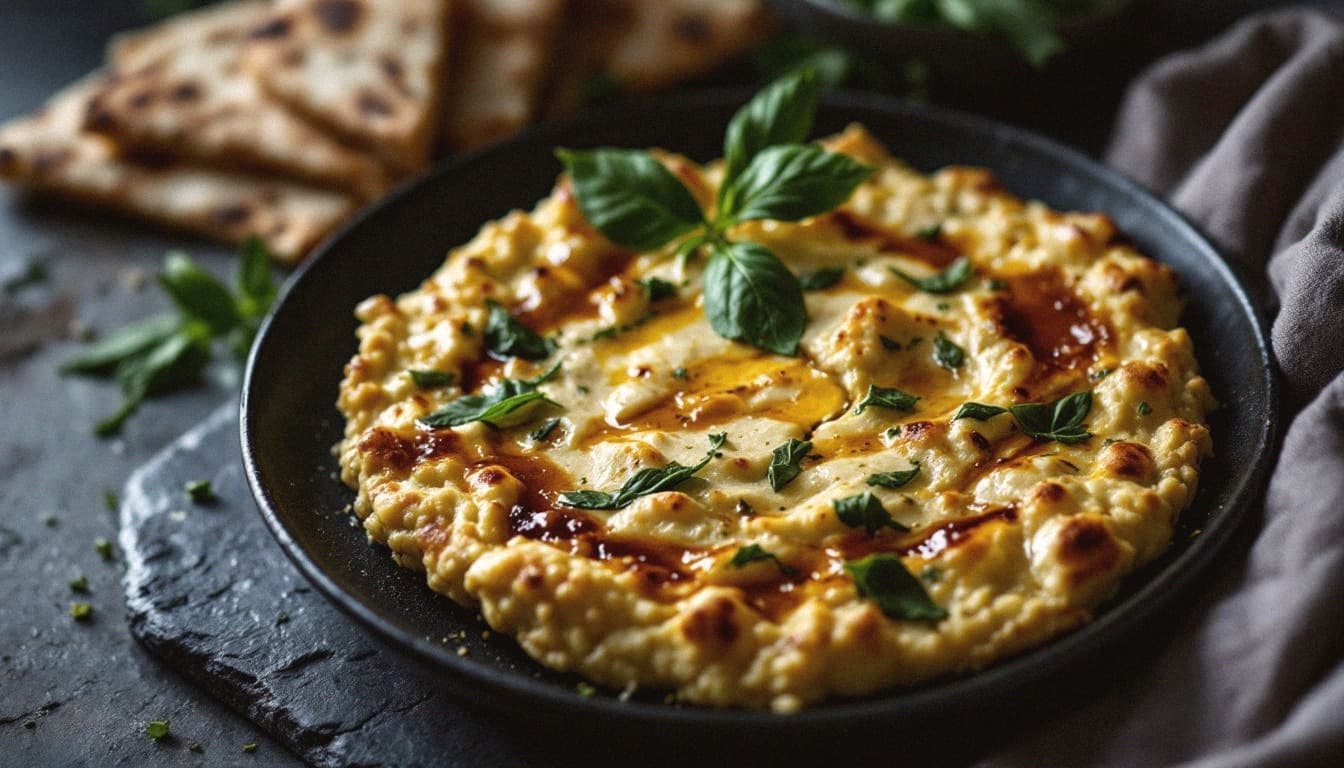
Wild Garlic Fatteh with Spring Peas and Pomegranate Molasses
Fatteh without yogurt sounds like a mistake, but wild garlic sauce and pomegranate molasses together do exactly what yogurt does: cut the richness of chickpeas with acid and funk. The wild garlic loses its raw, almost aggressive bite when it hits warm broth, settling into something foresty and complex that no restaurant version of this dish has ever tasted like. Make it while wild garlic is actually in season, because ramps or dried garlic won't get you there.
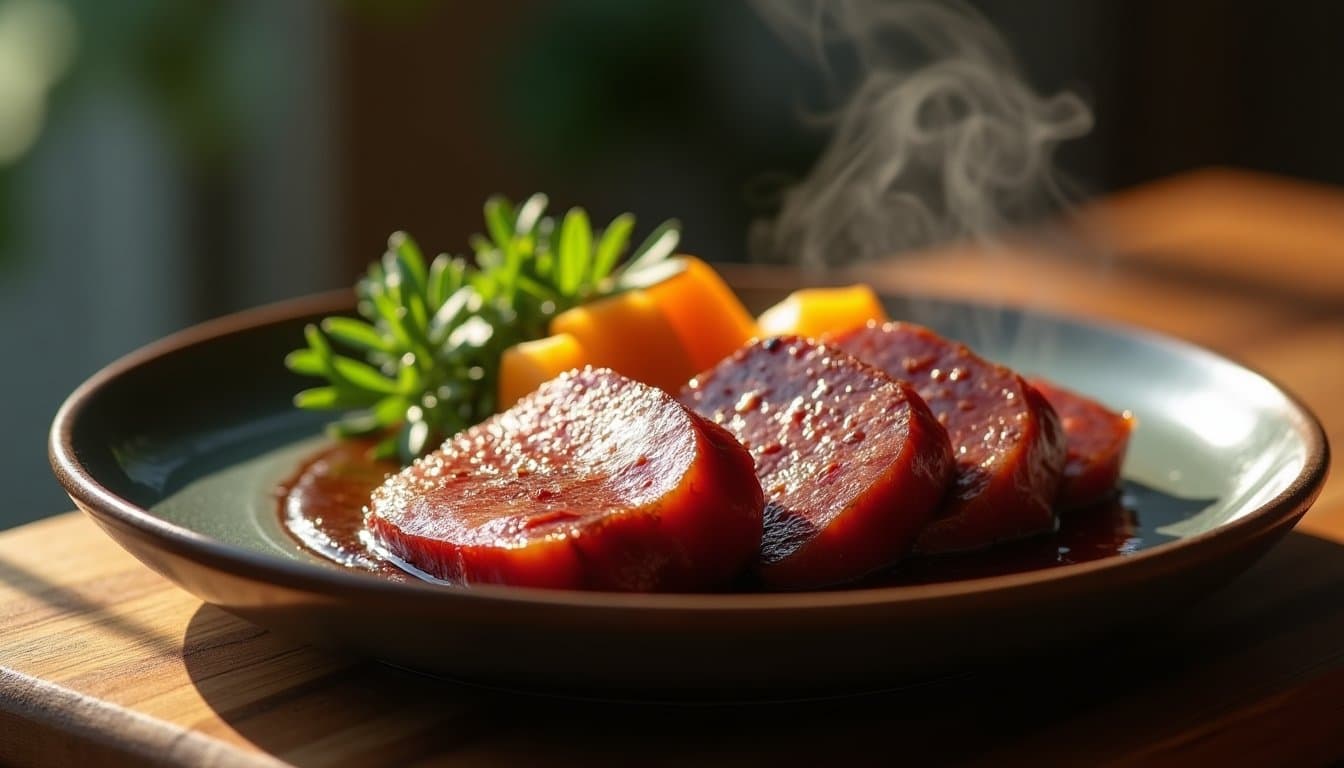
Cold-Smoked Duck Breast with Rhubarb-Ramp Gastrique and Spring Pea Purée
Duck breast gets cold-smoked over juniper and birch, seared to a lacquered crisp, then laid over sweet spring pea purée with a glossy rhubarb-ramp gastrique that is equal parts savage and elegant. Rhubarb's oxalic tartness cuts clean through the duck's subcutaneous fat, while wild ramps bring a sulfurous, garlicky funk that somehow tastes like the forest floor decided to dress for dinner. Nordic spring on a plate: fleeting, feral, and worth every step.
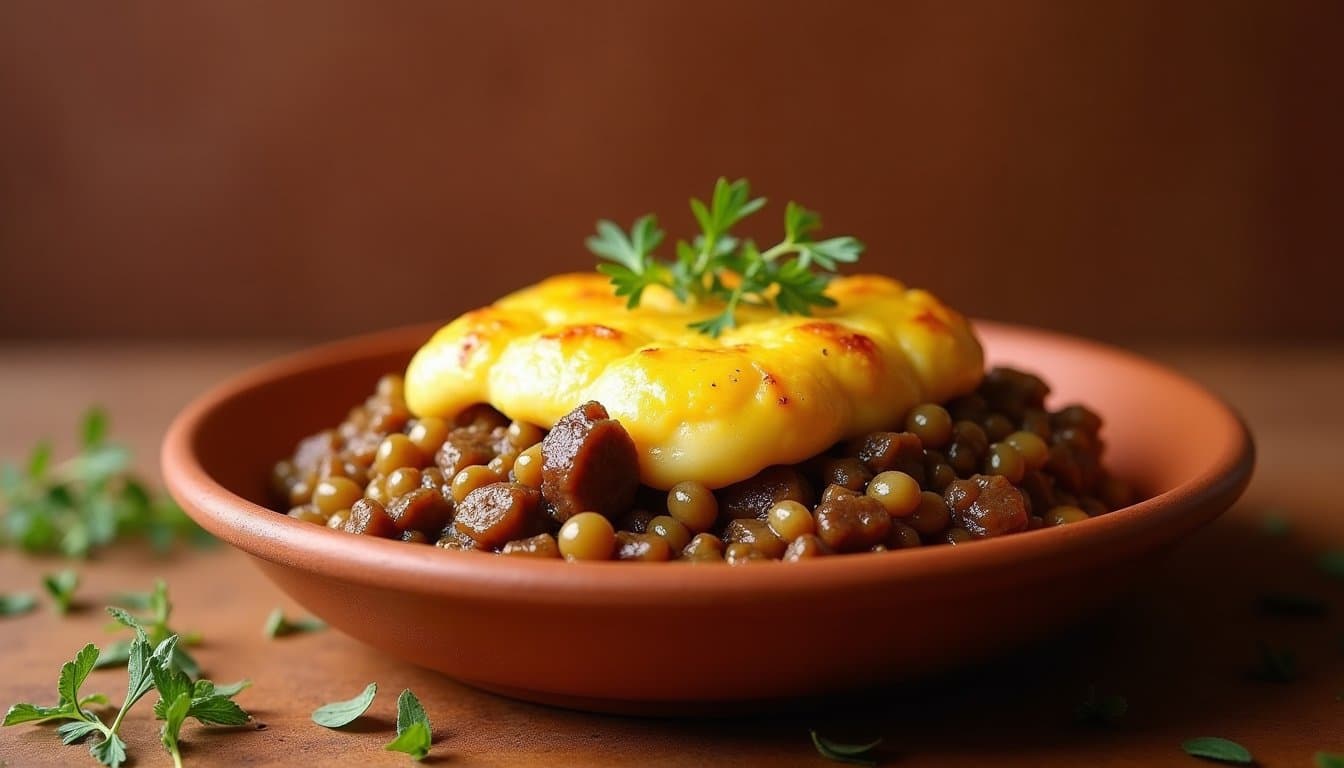
Wild Garlic Lamb Keema Shepherd's Pie with Ramp Mash and Pickled Pea Topping
A British pub kitchen meets a Mumbai dhaba, and neither one blinks. Spiced lamb keema loaded with wild garlic replaces the usual mince filling, a ramp-infused mash crowns the top, and bright pickled peas cut through the richness like a vinegar slap. Comfort food with a passport and a mild identity crisis — exactly how we like it.
Get the free flavor science guide.
5 rules that explain why unusual combinations work — plus new recipes every week.
You can unsubscribe anytime. No spam, ever. Or just read the guide.