This post contains affiliate links. We may earn a small commission at no extra cost to you. Learn more
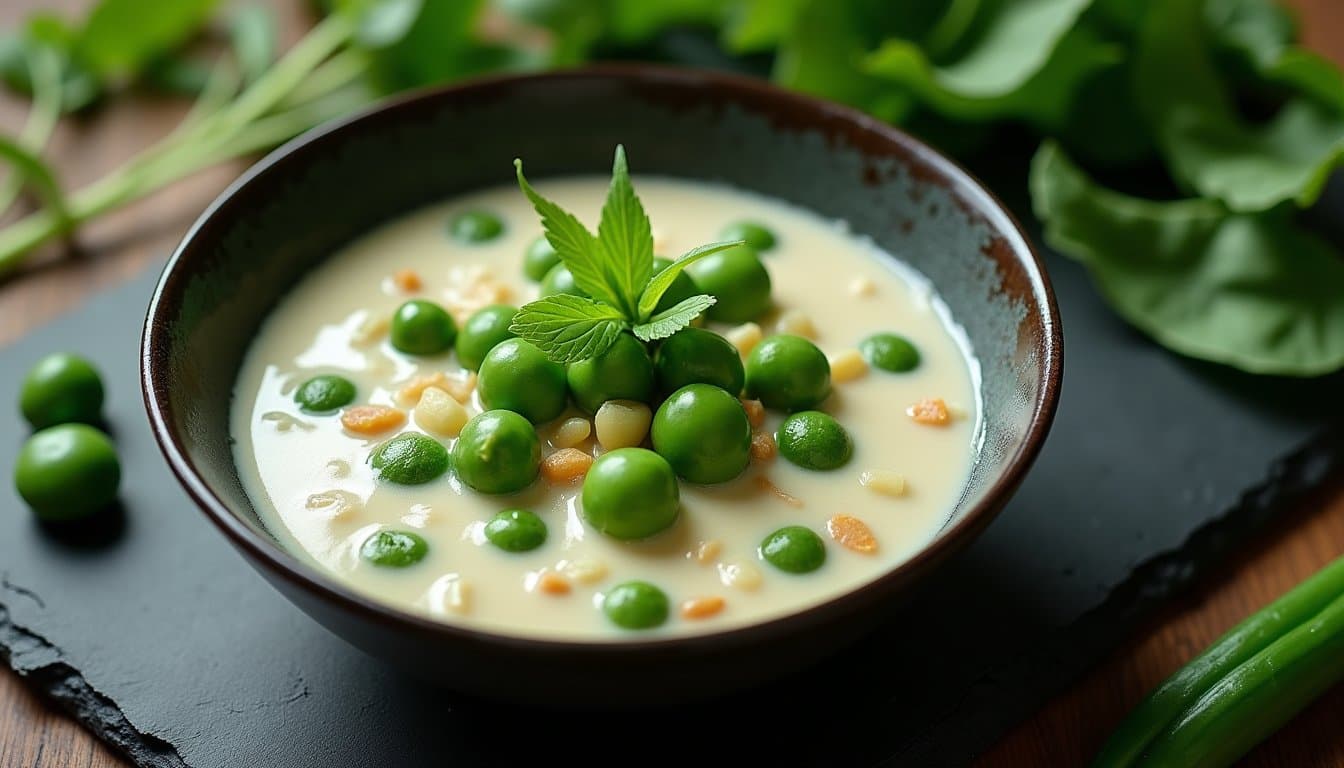
Spring Pea and Coconut Milk Laksa with Ramp Oil and Crispy Shallots
what's this?
Strangeness scale
- 1 — Slightly odd
- 2 — Raises eyebrows
- 3 — Genuinely strange
- 4 — Deeply weird
- 5 — Unhinged
- Cook
- 35m
- Total
- 1h
- Difficulty
- Medium
- Serves
- 4
- Origin
- Thai
This laksa ditches the curry paste entirely and builds its base from braised spring peas and full-fat coconut milk, then gets ambushed by a drizzle of wild ramp oil that brings funky, garlicky depth no lemongrass could replicate. Ramps are the forest's answer to scallions, and their sulfurous punch cuts through coconut richness the way a squeeze of lime never quite manages. Crispy shallots finish it off with a shatter-and-melt texture that makes the whole bowl worth the effort.
Equipment
Why It Actually Works
Spring peas are loaded with natural sugars and glutamates, so partially pureeing them into the coconut broth creates a self-thickening, umami-rich base without any starch or cream additions. The fat in full-fat coconut milk carries fat-soluble flavor compounds from the lemongrass and galangal far more efficiently than a water-based broth could. Wild ramps contain organosulfur compounds similar to garlic and onion but with a greener, more volatile aromatic profile that survives the oil-blanch-blend process intact, while chlorophyll preserved by the quick blanch and ice bath gives the oil its striking emerald color.
Learn the flavor science rules behind recipes like this →Ingredients
- 2 tablespoons neutral oil (grapeseed or sunflower), for the base
- 3 stalks lemongrass, tough outer layers removed, bruised and cut into 3-inch pieces
- 4 cloves garlic, smashed
- 1 inch fresh galangal, thinly sliced
- 2 fresh kaffir lime leaves, torn
- 1 teaspoon ground turmeric
- 1 teaspoon ground coriander
- 0.5 teaspoon white pepper
- 1 tablespoon white miso paste
- 4 cups vegetable broth, low-sodium
- 2 cans (13.5 oz each) full-fat coconut milk
- 2 cups fresh or frozen spring peas, divided
- 1 tablespoon coconut sugar
- 2 tablespoons fish sauce or soy sauce for vegan
- 1 tablespoon fresh lime juice
- 200 grams dried rice vermicelli noodles, soaked in hot water until pliable
- 0.5 cup ramp leaves (wild leek leaves), roughly chopped
- 0.25 cup neutral oil (for ramp oil)
- 4 large shallots, thinly sliced into rings
- 0.5 cup neutral oil (for frying shallots)
- 1 pinch fine sea salt (for shallots)
- 1 cup bean sprouts, for serving
- 0.5 cup fresh mint leaves, for serving
- 0.5 cup fresh cilantro leaves, for serving
- 1 lime, cut into wedges, for serving
- 1 teaspoon toasted sesame seeds, for garnish
Instructions
1. Make the ramp oil: Blanch ramp leaves in boiling salted water for 20 seconds, then transfer immediately to an ice bath. Squeeze out excess water, then blend ramp leaves with 0.25 cup neutral oil in a high-speed blender until completely smooth and brilliantly green, about 90 seconds. Strain through a fine-mesh sieve lined with cheesecloth, pressing firmly. Reserve the vivid green oil; discard solids. Set aside.
2. Make crispy shallots: Heat 0.5 cup neutral oil in a small saucepan over medium-low heat. Add shallot rings and cook slowly, stirring frequently, for 18–22 minutes until deep golden and crisp throughout — low and slow is the secret here, not a quick fry. Use a slotted spoon to transfer shallots to a paper-towel-lined plate, season with a pinch of salt, and let cool. They will crisp further as they cool. Reserve the shallot-infused oil for another use.
3. Build the laksa broth base: Heat 2 tablespoons neutral oil in a large heavy-bottomed pot or Dutch oven over medium heat. Add lemongrass, garlic, and galangal and cook, stirring, for 3 minutes until fragrant and lightly golden. Add kaffir lime leaves, turmeric, coriander, and white pepper; stir for 1 minute. Stir in white miso paste and cook 30 seconds until it melts into the aromatics.
4. Add liquids and braise: Pour in vegetable broth and both cans of coconut milk. Bring to a gentle simmer, then reduce heat to low. Add 1.5 cups of the spring peas, coconut sugar, and soy sauce or fish sauce. Cover partially and braise gently for 20 minutes, allowing the aromatics to fully infuse the broth and the peas to break down slightly, creating natural body.
5. Blend and strain the broth: Remove lemongrass stalks, galangal slices, and kaffir lime leaves with tongs. Using an immersion blender, partially blend the broth — pulse 4–5 times so some peas are pureed and some remain whole, giving the broth a gorgeous green tint and creamy body without losing all texture. Stir in lime juice and taste; adjust salt, fish sauce, and sugar as needed.
6. Finish with fresh peas: Add the remaining 0.5 cup of fresh peas to the hot broth and let them sit off-heat for 2 minutes — they'll warm through while staying bright and sweet.
7. Prepare noodles: Drain the soaked vermicelli noodles and divide among four deep serving bowls.
8. Assemble and serve: Ladle the hot laksa broth over the noodles. Top each bowl with a handful of bean sprouts, fresh mint, and cilantro. Drizzle generously with ramp oil (1–2 teaspoons per bowl) and pile on a heap of crispy shallots. Scatter sesame seeds over the top and tuck a lime wedge on the side. Serve immediately while the shallots still have their crunch.
Nutrition (estimated per serving)
- Calories
- 920
- Fat
- 68g
- Carbs
- 72g
- Protein
- 11g
- Fiber
- 6g
- Sodium
- 780mg
Variations
- Shrimp laksa: Add 200g peeled raw shrimp to the broth in the last 3 minutes of braising. Their sweetness plays directly off the peas, and the fat in the coconut broth keeps them from turning rubbery.
- Ramp-free weeknight version: Make the same blender oil using scallion greens and a handful of spinach. It's less wild and a little milder, but the color holds and it's available in January.
- Spicy pea laksa: Stir 2 tablespoons of sambal oelek, or one fresh red chili blended smooth, into the broth base before adding the coconut milk. The heat sharpens the sweetness of the peas without flattening them.
Storage & Make-Ahead
Store the broth base and soaked noodles separately in the fridge for up to 3 days — the noodles will clump if left sitting in the soup, so keep them in a container with a little neutral oil tossed through. The ramp oil holds well in a sealed jar in the fridge for up to 5 days; give it a gentle stir before using since it may separate slightly. Crispy shallots lose their crunch fast, so store them at room temperature in a small airtight container lined with a paper towel and use within 24 hours. Reheat the broth gently over medium-low heat, then add fresh noodles and peas directly to the bowl before ladling the hot soup over them.
Reader Tips
No tips yet — be the first!
More Strange Recipes

Black Garlic Grilled Cheese with Apricot Jam and Taleggio
Black garlic gets mashed directly into softened butter and spread on the bread before grilling, so its molasses-sweet, faintly funky depth is baked into every bite rather than lurking as an afterthought. Taleggio melts into something almost custardy, and the apricot jam cuts through its barnyard richness with just enough fruit acid to keep things from going heavy. This sandwich sits right at the edge of dessert without crossing over.
Wild Garlic Saganaki with Morel Mushrooms, Honey, and Ouzo
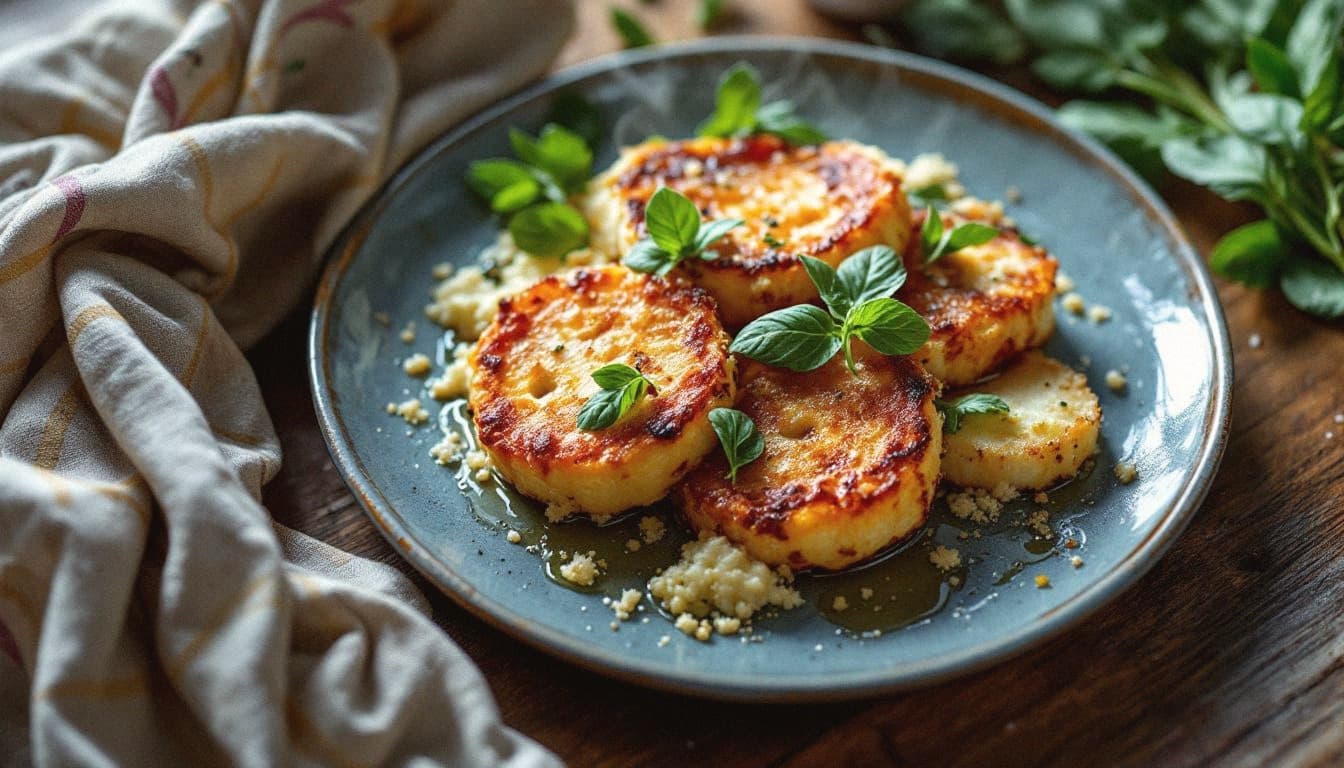
Frying halloumi with wild garlic and dried morels sounds like a recipe written by someone emptying their fridge, but the flavor logic is tighter than it looks. The morels push the cheese's savory depth somewhere almost meaty, the ouzo flame knocks the anise back to a whisper, and the thyme honey lands just in time to stop the whole thing from tipping into brine. Make this in late spring when wild garlic is still young enough to wilt in 45 seconds and smell like the forest floor.
Anchovy-Kissed New Potato & Lamb's Lettuce Salad with Watercress Snow
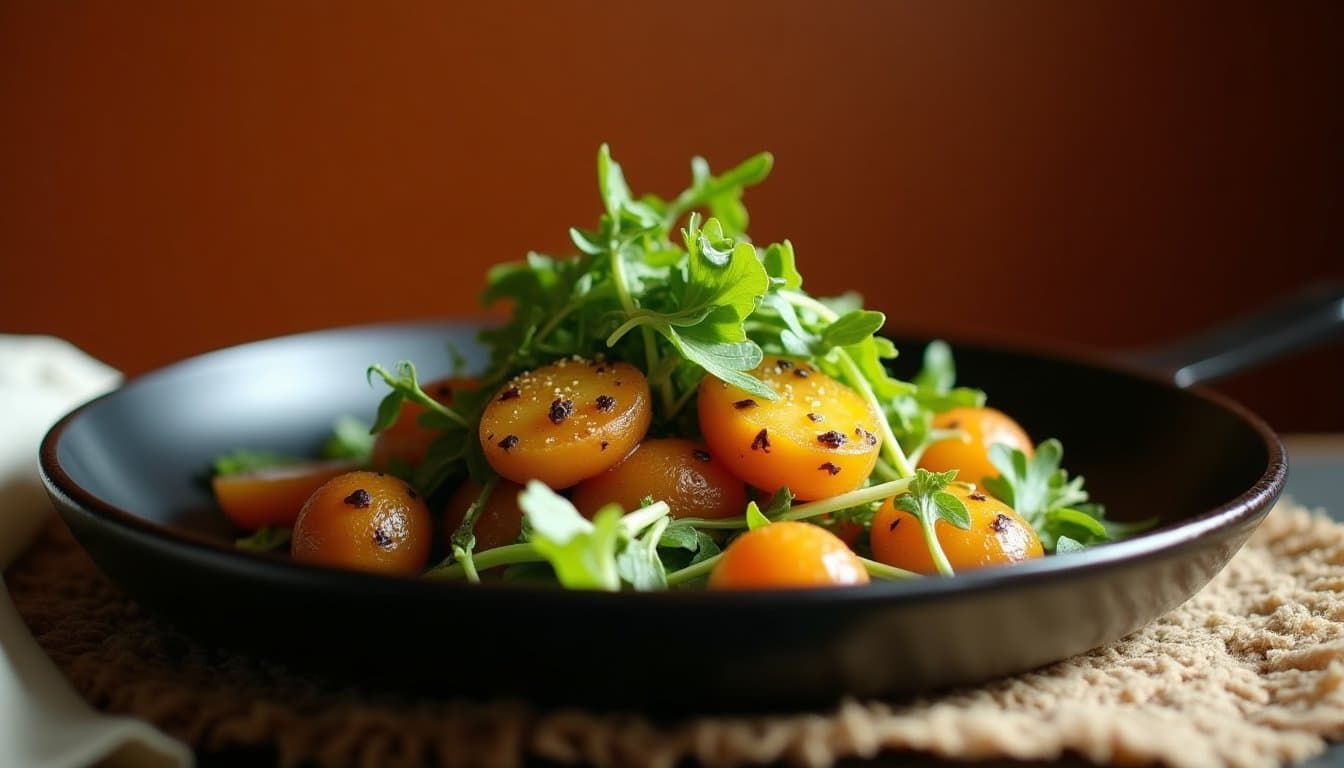
New potatoes and anchovies are a perfectly reasonable bistro pairing, which is exactly why blitzing raw watercress into a near-frozen vinaigrette 'snow' that melts over warm potatoes feels so disorienting in the best way. The cold-hot contrast pulls the anchovy's glutamates forward while the peppery watercress oils bloom against the potato starch. No unusual ingredients, genuinely surprising results.
Get the free flavor science guide.
5 rules that explain why unusual combinations work — plus new recipes every week.
You can unsubscribe anytime. No spam, ever. Or just read the guide.