This post contains affiliate links. We may earn a small commission at no extra cost to you. Learn more
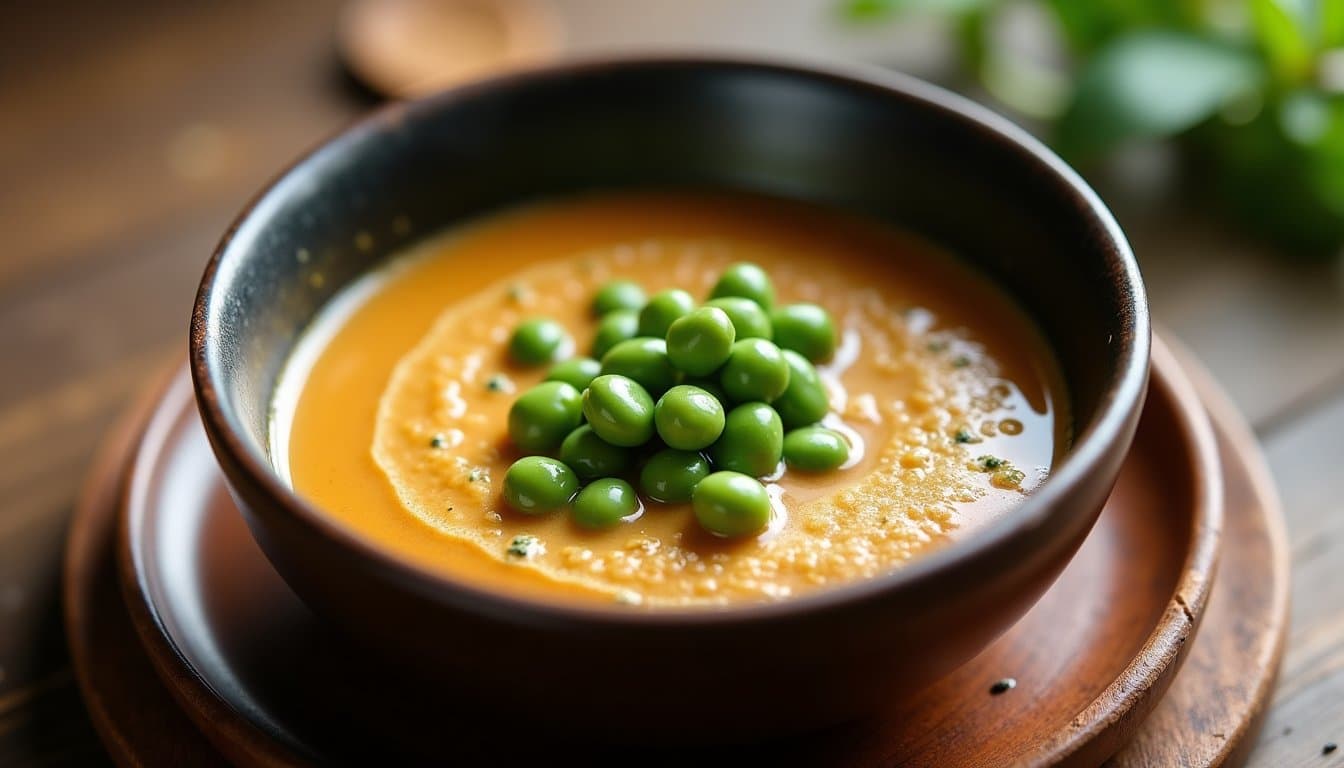
Steamed Spring Pea & Tahini Soup with Za'atar Oil and Preserved Lemon Foam
what's this?
Strangeness scale
- 1 — Slightly odd
- 2 — Raises eyebrows
- 3 — Genuinely strange
- 4 — Deeply weird
- 5 — Unhinged
- Cook
- 25m
- Total
- 45m
- Difficulty
- Medium
- Serves
- 4
- Origin
- Middle Eastern
Fresh pea soup isn't supposed to taste like this. Steaming instead of boiling keeps the peas tasting like themselves, grassy and almost floral, and that's exactly what tahini's bitter sesame depth needs to latch onto. A preserved lemon foam dissolves on your tongue like a salty citrus ghost, and za'atar oil pulls everything together with thyme and sumac acting as unlikely bridges between the creamy and the bright.
Equipment
Why It Actually Works
Steaming the peas prevents water-soluble flavor compounds and chlorophyll from leaching into cooking liquid, which preserves both the vivid green color and the volatile aromatic esters responsible for that grassy-sweet scent. Tahini's bitter sesame compounds, primarily sesamol and sesamolin, counterbalance the peas' natural sweetness through contrast, while its emulsified fat delivers a creamy mouthfeel without any dairy. Preserved lemon brings a third dimension: fermentation-derived umami and high-salinity brine, where the Maillard-adjacent funk of the cured rind amplifies za'atar's thymol and sumac's malic acid, creating a loop of bright-bitter-herbal flavor that makes each spoonful taste slightly different from the last.
Learn the flavor science rules behind recipes like this →Ingredients
- 600 g fresh or frozen spring peas, shelled
- 3 tbsp tahini, well-stirred
- 2 tbsp preserved lemon rind, pith removed and finely minced
- 1 tbsp preserved lemon brine, reserved from jar
- 400 ml cold vegetable stock, divided
- 200 ml full-fat coconut milk, chilled overnight
- 3 tbsp extra-virgin olive oil
- 2 tbsp za'atar spice blend
- 1 small shallot, roughly chopped
- 2 cloves garlic, smashed
- 1 tsp ground cumin
- 0.5 tsp white pepper
- 0.5 tsp fine sea salt, plus more to taste
- 1 tsp soy lecithin powder, for the foam
- 1 tbsp fresh mint leaves, torn, for garnish
- 1 tbsp toasted sesame seeds, for garnish
- 4 small radishes, thinly sliced into rounds, for garnish
- 1 pinch Aleppo pepper flakes, for garnish
Instructions
1. Set up a steamer basket over a pot of boiling water. Add the shallot and garlic to the basket first and steam for 5 minutes until softened and translucent. Add the peas and continue steaming for 4–5 minutes until bright green and just tender — do not overcook or you'll lose that vivid grassy sweetness. Remove from heat immediately.
2. Transfer the steamed peas, shallot, and garlic to a high-speed blender. Add 300 ml of the cold vegetable stock, the tahini, minced preserved lemon rind, cumin, white pepper, and sea salt. Blend on high for 90 seconds until completely smooth and almost silky.
3. With the blender running on low, stream in the remaining 100 ml of vegetable stock to adjust consistency — you want a thick, pourable bisque texture, not watery. Taste and adjust salt. Strain through a fine-mesh sieve for an ultra-smooth result, pressing gently with a spatula. Set soup aside.
4. Make the za'atar oil: gently warm the olive oil in a small saucepan over the lowest possible heat for 2 minutes — do not let it simmer. Remove from heat, stir in the za'atar blend, and let steep for 10 minutes. Strain through a fine sieve, pressing the herbs to extract all the aromatic oil. Reserve.
5. Make the preserved lemon foam: combine the preserved lemon brine with the chilled coconut milk in a tall narrow container. Add the soy lecithin powder and use an immersion blender held just at the surface to whip air into the mixture for 30–45 seconds until a stable, airy foam forms on top. The foam should hold its shape for at least 2 minutes. Work quickly and use immediately.
6. Gently reheat the soup over low heat, stirring constantly, until just steaming — do not boil or you'll dull the color and flavor. Ladle into four shallow warmed bowls.
7. Spoon a generous dollop of preserved lemon foam onto the center of each bowl — it will slowly melt into the soup, releasing bursts of briny citrus. Drizzle za'atar oil in a loose spiral around the foam. Arrange radish slices along one edge, scatter torn mint and toasted sesame seeds over the top, and finish with a pinch of Aleppo pepper flakes.
8. Serve immediately while the foam is still airy and the soup is steaming. Instruct your guests to stir the foam in just before eating to release the full preserved lemon hit.
Nutrition (estimated per serving)
- Calories
- 387
- Fat
- 26g
- Carbs
- 28g
- Protein
- 11g
- Fiber
- 8g
- Sodium
- 620mg
Variations
- Char the shallot and garlic directly over a gas flame until blackened on the outside before steaming the peas. The bitter smokiness plays hard against the sweetness and adds a depth that reads almost meaty.
- Skip reheating and serve the blended soup ice-cold. Swap the coconut milk foam for a cucumber-coconut yogurt foam and finish with a drizzle of green chili oil for a surreal Middle Eastern-Spanish crossover.
- Toss one can of drained chickpeas with za'atar, olive oil, and a pinch of smoked salt, then roast at 200°C for 25 minutes until crunchy. Pile them in the center of each bowl before adding the foam, which turns this into a lunch that actually fills you up.
Storage & Make-Ahead
The blended pea base keeps well in the fridge for up to 3 days in a sealed jar, though it will thicken as it sits, so thin it back out with a splash of cold vegetable stock before reheating gently over low heat. Don't make the preserved lemon foam in advance, as the soy lecithin foam collapses within minutes and needs to be whipped fresh just before serving. The za'atar oil can be mixed up to 5 days ahead and stored at room temperature in a small jar. Keep the radish slices, mint, and sesame seeds separate in the fridge and add them only after the soup is in the bowl, since they'll wilt or go soggy if they sit in the hot liquid.
Reader Tips
No tips yet — be the first!
More Strange Recipes

Black Garlic Grilled Cheese with Apricot Jam and Taleggio
Black garlic gets mashed directly into softened butter and spread on the bread before grilling, so its molasses-sweet, faintly funky depth is baked into every bite rather than lurking as an afterthought. Taleggio melts into something almost custardy, and the apricot jam cuts through its barnyard richness with just enough fruit acid to keep things from going heavy. This sandwich sits right at the edge of dessert without crossing over.
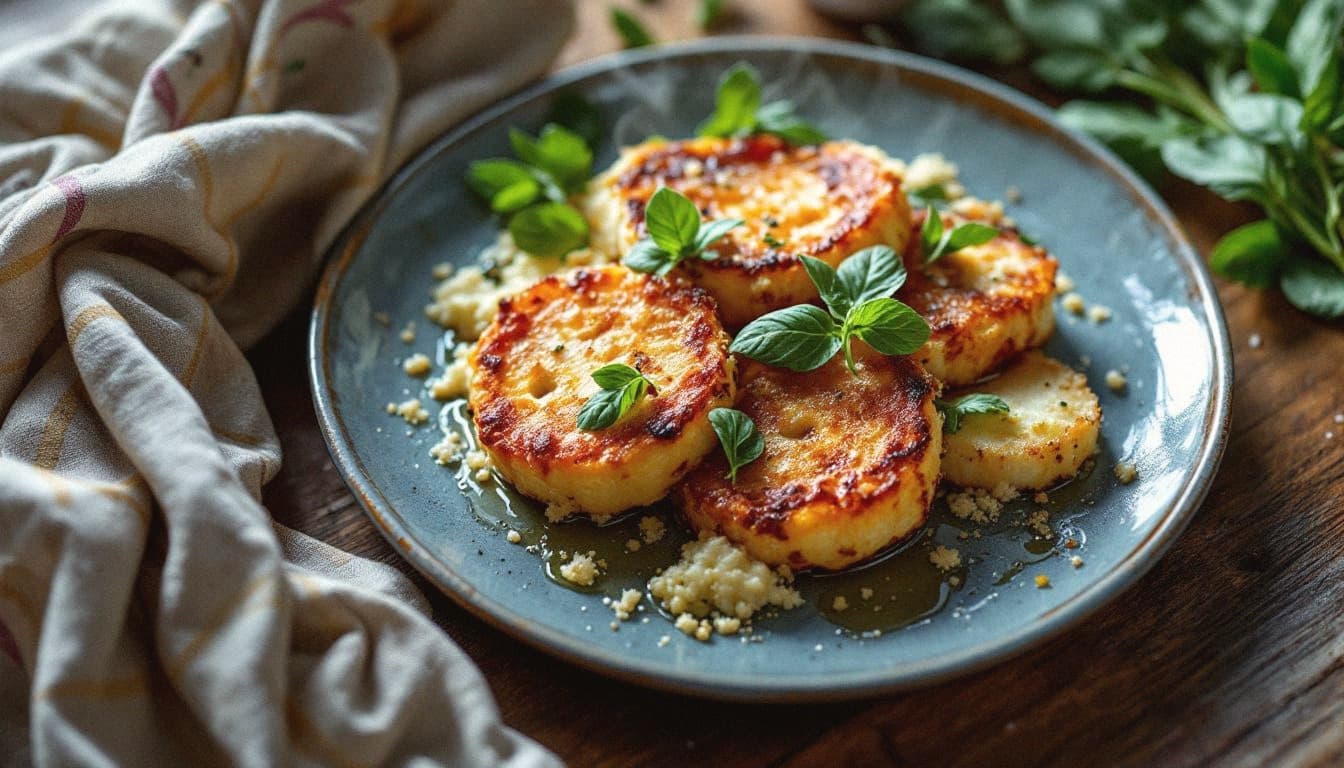
Wild Garlic Saganaki with Morel Mushrooms, Honey, and Ouzo
Frying halloumi with wild garlic and dried morels sounds like a recipe written by someone emptying their fridge, but the flavor logic is tighter than it looks. The morels push the cheese's savory depth somewhere almost meaty, the ouzo flame knocks the anise back to a whisper, and the thyme honey lands just in time to stop the whole thing from tipping into brine. Make this in late spring when wild garlic is still young enough to wilt in 45 seconds and smell like the forest floor.
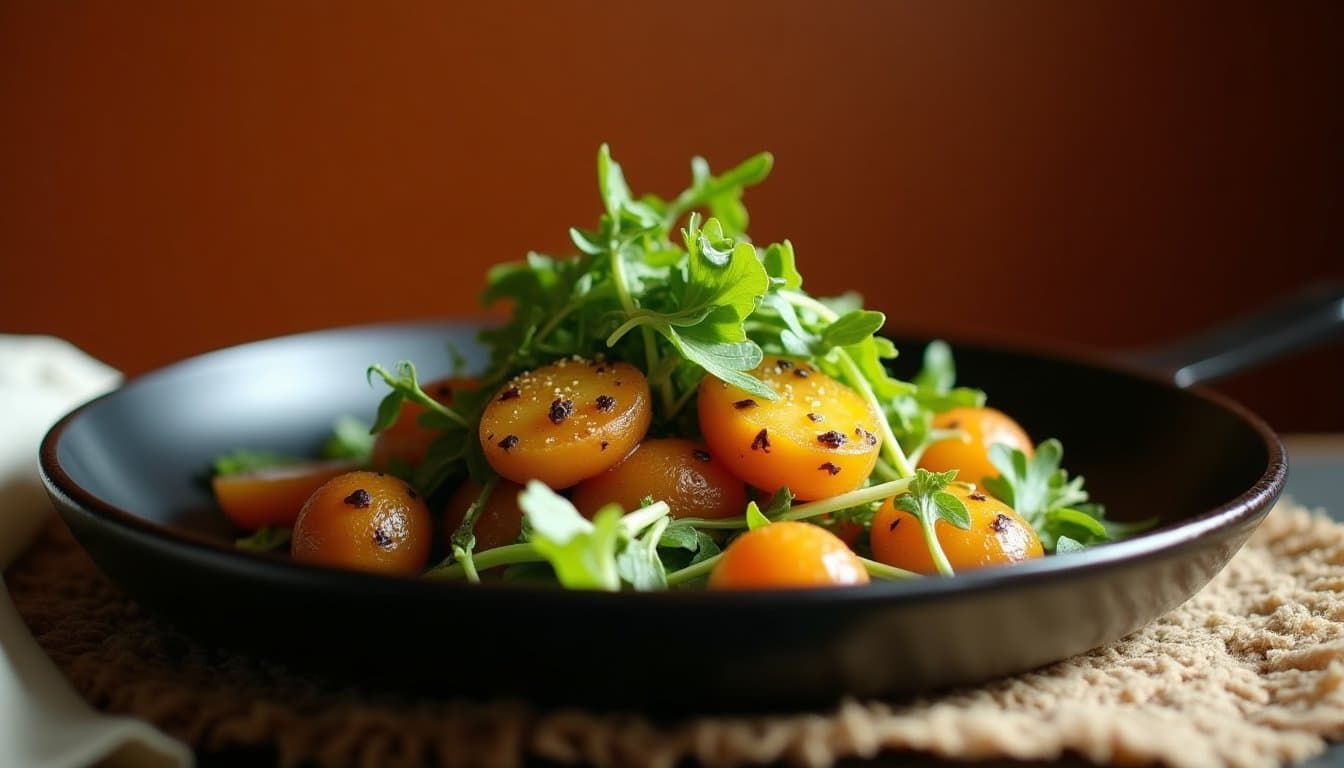
Anchovy-Kissed New Potato & Lamb's Lettuce Salad with Watercress Snow
New potatoes and anchovies are a perfectly reasonable bistro pairing, which is exactly why blitzing raw watercress into a near-frozen vinaigrette 'snow' that melts over warm potatoes feels so disorienting in the best way. The cold-hot contrast pulls the anchovy's glutamates forward while the peppery watercress oils bloom against the potato starch. No unusual ingredients, genuinely surprising results.
Get the free flavor science guide.
5 rules that explain why unusual combinations work — plus new recipes every week.
You can unsubscribe anytime. No spam, ever. Or just read the guide.