This post contains affiliate links. We may earn a small commission at no extra cost to you. Learn more
Spring Pea and Ramp Dal with Wild Garlic Tadka and Crispy Curry Leaves
what's this?
Strangeness scale
- 1 — Slightly odd
- 2 — Raises eyebrows
- 3 — Genuinely strange
- 4 — Deeply weird
- 5 — Unhinged
- Cook
- 35m
- Total
- 55m
- Difficulty
- Medium
- Serves
- 4
- Origin
- Indian
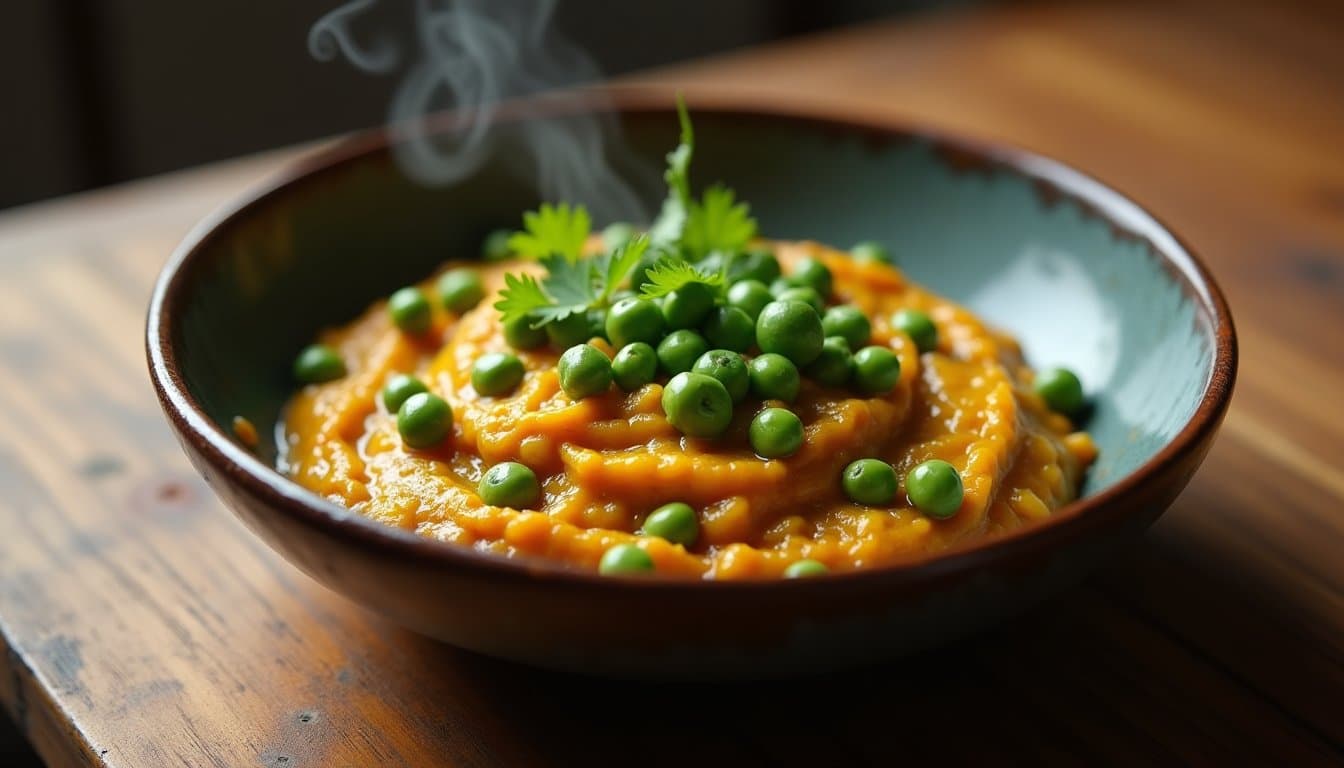
Appalachian foraged ramps have no business being in a Bengali masoor dal, and yet here we are. The sulfurous, leek-meets-garlic punch of ramps and wild garlic replaces the traditional onion-garlic base entirely, while spring peas dissolve into the lentils and bring a grassy sweetness dal has never had before. The plot twist is a screaming-hot wok tadka of curry leaves, black mustard seeds, and raw wild garlic poured over the top at the last second.
Equipment
Why It Actually Works
Ramps and wild garlic belong to the allium family and carry the same organosulfur compounds as conventional onion and garlic, including allicin and diallyl disulfide, so they do the same Maillard and flavor-building work under high wok heat. They just do it louder, with a more volatile aromatic signature that cuts right through the earthiness of masoor lentils. Tamarind's tartaric acid and preserved lemon's citric acid both brighten the iron-heavy flavor of red lentils and slow the oxidation of the peas' chlorophyll, which is why the dish holds its color. Finishing with a raw-oil tadka rather than cooking it into the pot preserves the textural contrast: crispy curry leaves and blistered peas stay crunchy against the soft dal, and the oil's residual heat coaxes fresh volatile compounds from the raw wild garlic right at the table, compounds that would have cooked off entirely in the pot.
Learn the flavor science rules behind recipes like this →Ingredients
- 200 g red masoor dal (split red lentils), rinsed until water runs clear
- 150 g fresh or frozen spring peas, divided
- 8 ramp bulbs with stems, thinly sliced (greens reserved separately)
- 30 g wild garlic leaves (ramsons), roughly torn, divided
- 3 tbsp coconut oil, divided
- 1 tsp black mustard seeds
- 1 tsp cumin seeds
- 12 fresh curry leaves
- 2 dried Kashmiri red chillies, broken in half
- 1 tsp ground turmeric, divided
- 1 tsp ground coriander
- 0.5 tsp asafoetida (hing)
- 1 tsp raw cane sugar
- 2 tbsp tamarind paste
- 700 ml cold water
- 1.5 tsp fine sea salt, plus more to taste
- 1 small preserved lemon, rind only, finely minced
- 2 tbsp coconut cream
- 1 tsp black sesame seeds, toasted, to finish
- Flaky sea salt, to finish
Instructions
1. Soak the rinsed masoor dal in cold water for 15 minutes while you prep everything else — this cuts cook time and keeps the lentils from going glue-like in the wok.
2. Heat your wok over high heat until it just begins to smoke. Add 2 tbsp coconut oil and swirl to coat. Add the sliced ramp bulbs and stems (not the greens yet) and stir-fry hard for 3–4 minutes until they blister and char slightly at the edges. You want caramelisation, not steaming — keep the heat savage.
3. Add 0.5 tsp turmeric, the ground coriander, and asafoetida. Toss for 30 seconds until the spices bloom and coat the ramps. The hing will smell alarming — this is correct and beautiful.
4. Drain the soaked dal and add it directly to the wok. Stir-fry with the ramps for 2 minutes, letting the lentils toast very lightly in the residual oil and spice.
5. Pour in 700 ml cold water and add the remaining 0.5 tsp turmeric, 1 tsp salt, tamarind paste, and raw cane sugar. Bring to a vigorous boil, then reduce heat to medium. Cook uncovered for 12–15 minutes, stirring every few minutes, until the dal is just tender but still holds a little structure.
6. Add 100 g of the spring peas (reserving 50 g for the tadka finish) and the ramp greens. Stir through and cook for 3 minutes. The peas should be vibrant green — if they go grey, your heat is too low and you've lost the will to live. Stir in the minced preserved lemon rind and coconut cream. Adjust salt. The dal should be thick and porridge-like, not soupy. Keep warm on low.
7. Now the tadka — this is the moment. Wipe the wok, return it to the highest heat you have, and add the remaining 1 tbsp coconut oil. When it shimmers and barely smokes, add the mustard seeds. The second they begin to pop (5–10 seconds), add the cumin seeds, curry leaves, and dried Kashmiri chillies. Stand back — curry leaves in hot oil spit with genuine hostility and will absolutely get you.
8. After 20–30 seconds, when the curry leaves are crisp and translucent and the mustard seeds have gone quiet, add the reserved 50 g raw spring peas and half the wild garlic leaves. Toss for exactly 45 seconds — the peas should blister and the wild garlic should wilt just enough to release its allicin perfume without cooking out.
9. Pour the entire tadka — oil, spices, crispy leaves, blistered peas, and all — directly over the surface of the warm dal. Do not stir. The sizzle and crackle is the point.
10. Scatter the remaining raw wild garlic leaves and toasted black sesame seeds over the top. Finish with a pinch of flaky sea salt and serve immediately from the wok, with the crispy tadka layer intact on top for maximum drama and textural contrast.
Nutrition (estimated per serving)
- Calories
- 387
- Fat
- 16g
- Carbs
- 46g
- Protein
- 16g
- Fiber
- 11g
- Sodium
- 920mg
Variations
- Swap masoor dal for chana dal (split chickpeas) for a nuttier, more toothsome base. Increase water to 900 ml and cook time to 25 minutes. The ramp-chana pairing is even more aggressively strange, in exactly the right way.
- Stir in 2 tbsp white miso paste with the tamarind for a Japanese-Indian fermented collision that doubles down on the funk and makes the whole dish taste like it's hiding something.
- For smoke, char a whole ramp bulb directly over a gas flame until blackened, then blend it into the dal cooking water before adding to the wok. It's a deliberate burn that completely changes the dish's personality.
Storage & Make-Ahead
The dal base keeps well in the fridge for up to 4 days in a sealed container, though it will thicken considerably as it sits, so stir in a splash of water when reheating over medium-low heat. The wild garlic greens and ramp tops wilt fast, so fold those in fresh just before serving rather than storing them in the dal. Make the tadka to order each time, since the crispy curry leaves turn soft and lose their texture within an hour of cooking. The dal also freezes well for up to 2 months without the coconut cream, which you should swirl in after thawing and reheating.
Reader Tips
No tips yet — be the first!
More Strange Recipes
Aquavit-Pickled Asparagus with Juniper and Dill Seed
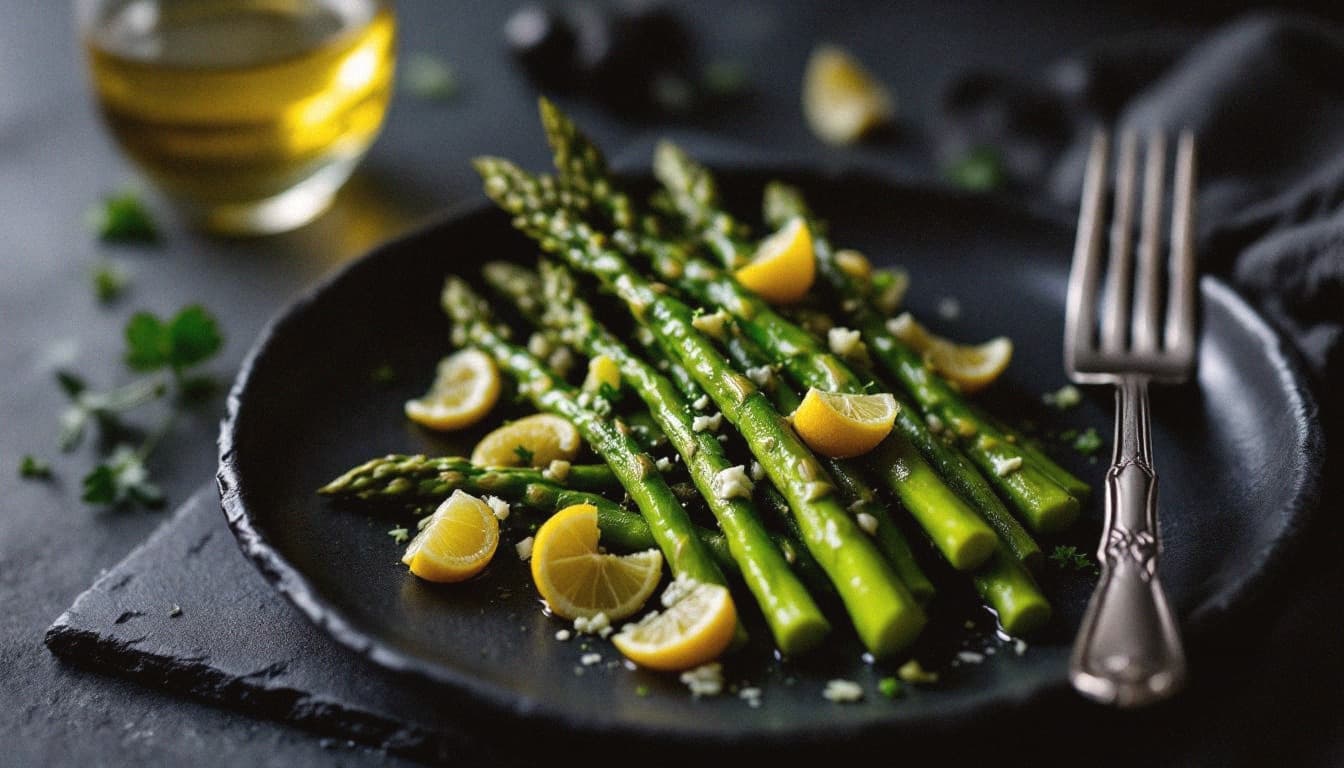
Aquavit already carries caraway and dill in its botanical makeup, so using it as a pickling base for asparagus is less a wild experiment and more a logical conclusion. Juniper berries crack open to release piney, resinous oils that cut through the brine's acidity, while dill seeds (not fronds) bring a rounder, almost anise-like depth that fresh dill never quite manages. The result is a jar of spears that taste like a Scandinavian forest floor in the best possible way.
Nettle-Ramp Atakilt Wat en Papillote with Spring Peas
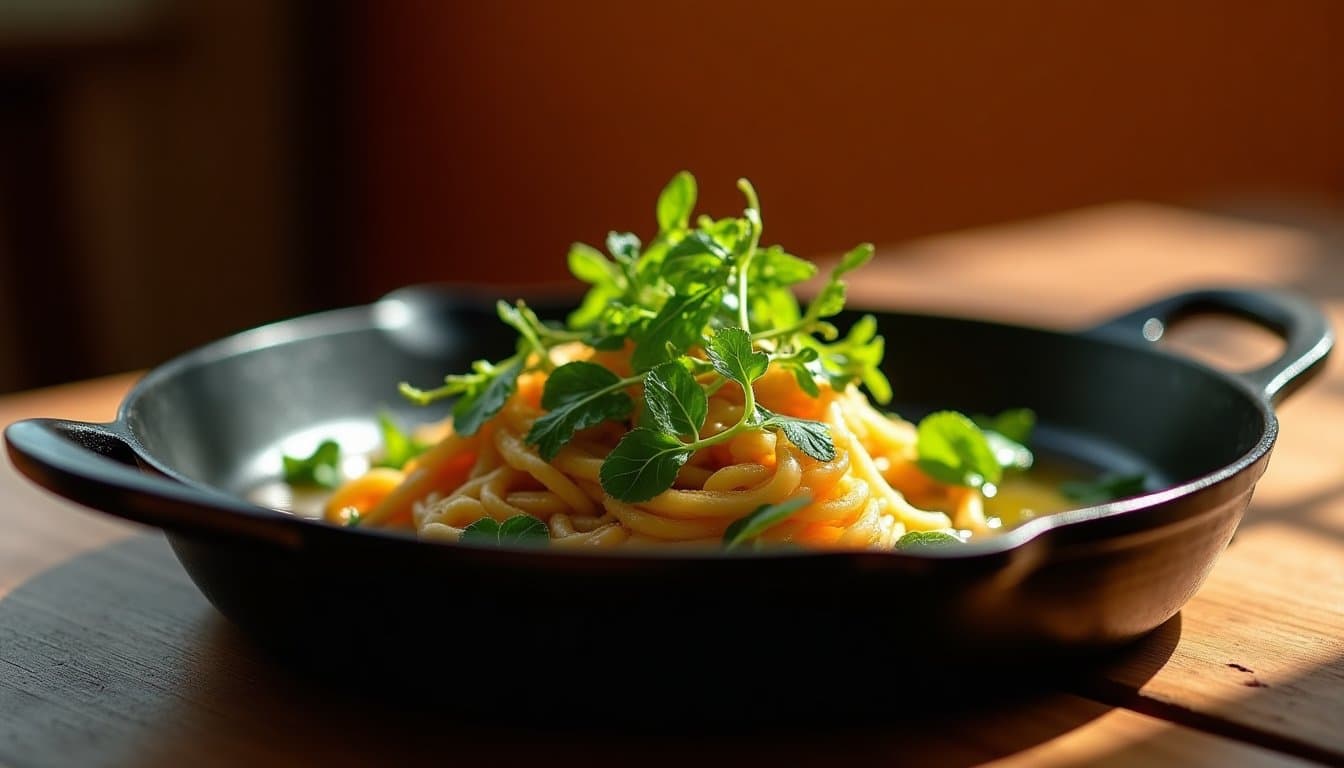
Atakilt wat, Ethiopia's cabbage-and-potato stew built on berbere and turmeric, has no business being this good when ramps and stinging nettles get involved, but here we are. Sealing the whole thing in parchment turns the sulfurous funk of ramp bulbs and the mineral bite of nettles into a pressurized aromatic steam that permeates every vegetable in the packet. Open it at the table so nobody misses the berbere sauna moment.
Saffron-Dried Lime Morel & Ramp Pilaf Baked in Parchment
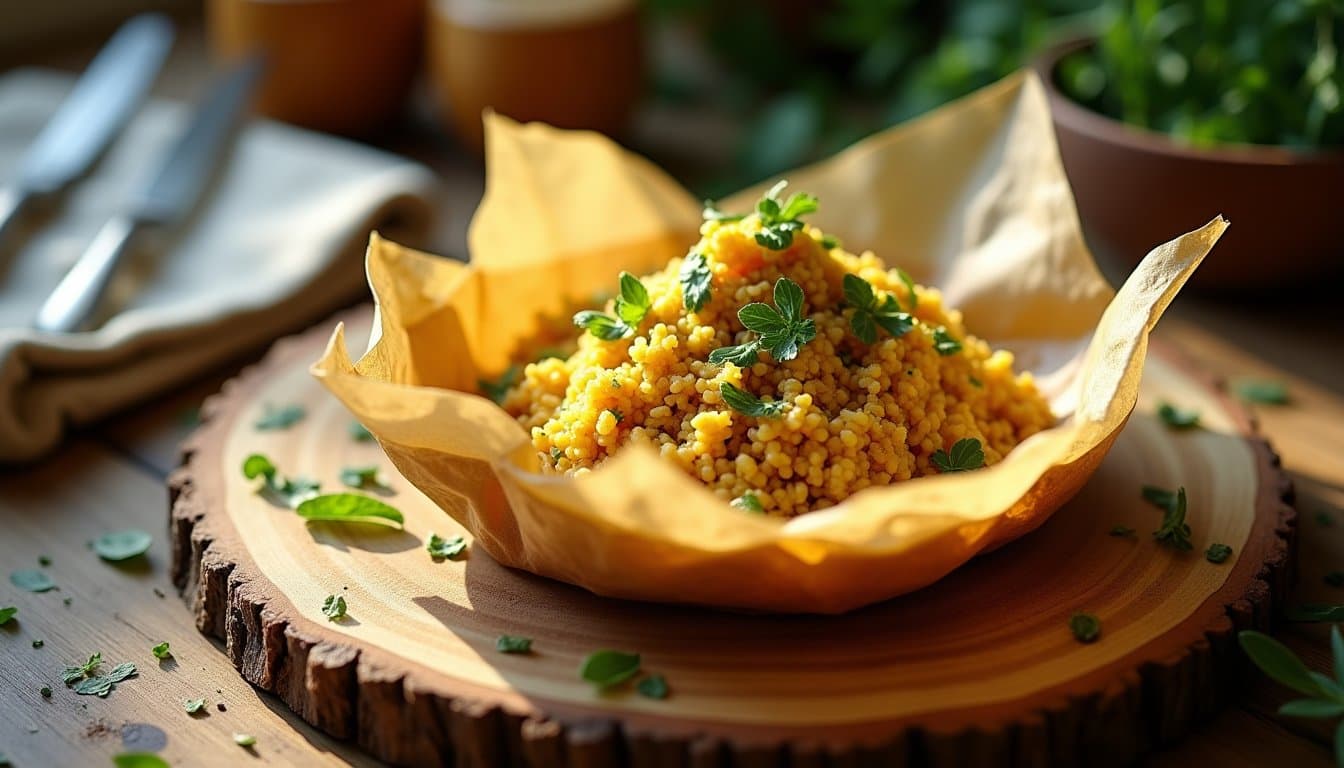
Persian chelow meets a foraged spring obsession: wild morel mushrooms and pungent ramps steam-locked inside parchment with bloomed saffron and whole dried limes (limu omani), producing a smoky-funky-floral rice that tastes like Nowruz celebrated in a forest. The en-papillote technique traps every volatile aromatic compound, ramp sulfides, saffron safranal, lime terpenes, in a pressurized flavor sauna instead of letting them drift off into your kitchen. It's weird, it's Persian, and it's deeply correct.
Get the free flavor science guide.
5 rules that explain why unusual combinations work — plus new recipes every week.
You can unsubscribe anytime. No spam, ever. Or just read the guide.