This post contains affiliate links. We may earn a small commission at no extra cost to you. Learn more
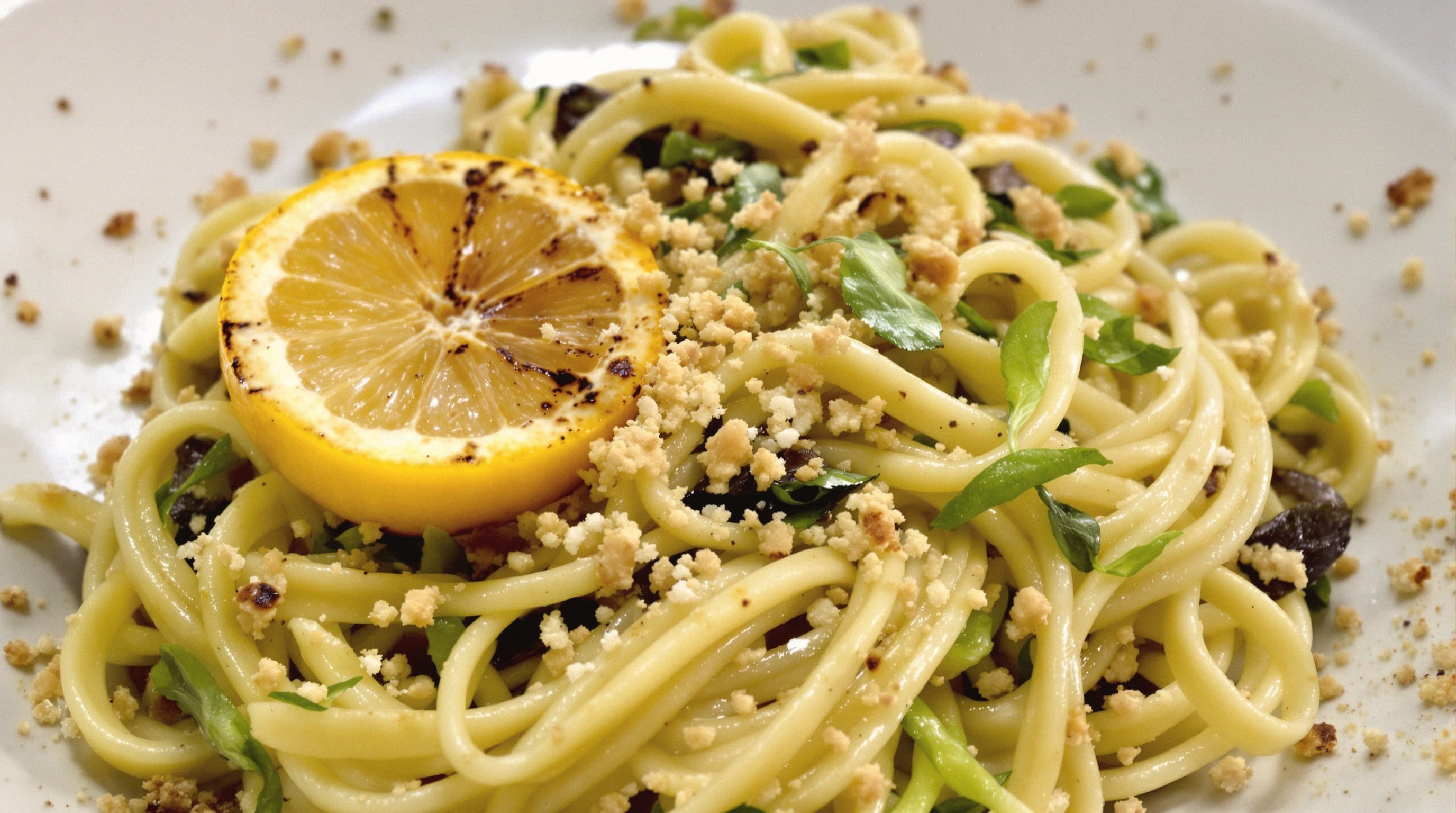
Wild Garlic and Anchovy Pasta with Toasted Breadcrumbs and Charred Lemon
what's this?
Strangeness scale
- 1 — Slightly odd
- 2 — Raises eyebrows
- 3 — Genuinely strange
- 4 — Deeply weird
- 5 — Unhinged
- Cook
- 20m
- Total
- 35m
- Difficulty
- Medium
- Serves
- 2
- Origin
- Italian
Wild garlic leaves pull double duty here, standing in for both the sauce and the cheese in a lunch that smells aggressively of the forest and tastes like Italy got lost in the woods. Melted anchovies disappear completely into the oil, leaving behind a wave of umami that makes every other ingredient louder without announcing itself. Toasted pangrattato takes Parmesan's place, and a charred lemon squeezed over the top does things to the dish that no raw lemon could manage.
Equipment
Why It Actually Works
Anchovies are roughly 40% glutamate by dry weight, and when they melt into warm oil they release free glutamates that work with the inosinate already present, multiplying perceived savouriness well beyond what either ingredient achieves on its own. Wild garlic contains allicin and related thiosulfinates just like cultivated garlic, but at lower concentrations, so it delivers a greener, more herbaceous note without the aggressive bite, bridging the briny anchovy base and the citrus finish. Charring the lemon drives Maillard reactions on the surface sugars and breaks down bitter compounds in the white pith, producing a sweeter, smokier juice with enough structural acidity to cut through the oil.
Learn the flavor science rules behind recipes like this →Ingredients
- 200g dried spaghetti or linguine
- 80g fresh wild garlic leaves (ramsons), washed and roughly torn
- 8 oil-packed anchovy fillets
- 4 tablespoons good extra-virgin olive oil, divided
- 1 teaspoon dried chilli flakes
- 2 cloves regular garlic, thinly sliced
- 1 lemon, halved
- 60g stale sourdough or ciabatta, blitzed into coarse crumbs
- 1 teaspoon lemon zest, finely grated
- 2 tablespoons flat-leaf parsley, finely chopped
- 1 teaspoon flaky sea salt, plus more for pasta water
- freshly cracked black pepper, to taste
- 2 tablespoons pasta cooking water, reserved
Instructions
1. Bring a large pot of heavily salted water to a rolling boil — it should taste like mild seawater. This is your only seasoning window for the pasta itself, so don't be shy.
2. While the water heats, place the lemon halves cut-side down in a dry cast-iron or heavy frying pan over high heat. Char them undisturbed for 3–4 minutes until the cut face is deeply blackened and caramelised. Set aside. Charring converts bitter limonene compounds into sweeter, smokier aromatics and concentrates the juice.
3. In the same pan over medium heat, add 2 tablespoons of olive oil and the breadcrumbs. Toast, stirring constantly, for 4–5 minutes until deeply golden and crisp. Add the lemon zest and parsley in the final 30 seconds, toss to combine, then tip onto a plate and set aside. The crumbs are your 'poor man's Parmesan' — pangrattato — and they need to stay crunchy.
4. Cook the pasta according to packet instructions minus 2 minutes (you'll finish it in the pan). Before draining, scoop out at least 4 tablespoons of starchy cooking water and reserve.
5. Return the pan to medium-low heat. Add the remaining 2 tablespoons of olive oil, sliced garlic, and anchovy fillets. Cook gently, pressing the anchovies with a wooden spoon, for 2–3 minutes until they completely dissolve into the oil and the garlic is soft but not coloured. Add chilli flakes and stir for 30 seconds.
6. Increase heat to medium-high. Add the drained pasta and 2 tablespoons of reserved pasta water directly to the anchovy pan. Toss vigorously for 1–2 minutes, letting the starchy water emulsify with the oil into a glossy, clingy sauce.
7. Remove the pan from heat. Add the wild garlic leaves all at once and toss rapidly — residual heat will wilt them in about 45 seconds without destroying their vivid green colour or volatile sulphur compounds. You want them silky, not grey.
8. Divide between two warmed bowls. Squeeze the charred lemon halves over the top (use a fork to catch seeds), pressing them hard to extract every drop of jammy, smoky juice. Shower generously with toasted pangrattato, crack over black pepper, and serve immediately before the crumbs lose their crunch.
Nutrition (estimated per serving)
- Calories
- 720
- Fat
- 32g
- Carbs
- 88g
- Protein
- 22g
- Fiber
- 6g
- Sodium
- 1340mg
Variations
- Vegan version: dissolve 1 tablespoon white miso paste and 1 teaspoon nori flakes into the oil instead of anchovies. You still get the deep umami base, and the seaweed picks up the briny thread.
- Egg yolk richness: toss a raw egg yolk into the pasta off the heat alongside the wild garlic. It pulls the dish toward carbonara territory and makes it noticeably more filling.
- Walnut pangrattato: replace half the breadcrumbs with finely chopped toasted walnuts. Their tannins and fat add an almost cheese-like bitterness that plays well against the garlic's sharpness.
Storage & Make-Ahead
The breadcrumbs are the first thing to suffer in the fridge, so store any leftovers in a separate small jar at room temperature where they'll stay crisp for up to three days. The dressed pasta keeps refrigerated for about two days, though the wild garlic will lose its brightness and the anchovies will mellow further into the oil, which isn't necessarily a bad thing. Reheat the pasta gently in a pan with a splash of water to loosen it, then scatter the breadcrumbs on at the last second. The charred lemon halves can be squeezed and stored ahead, but char them fresh if you can since the smoky caramelised cut face is most potent within an hour or two of cooking.
Reader Tips
No tips yet — be the first!
More Strange Recipes
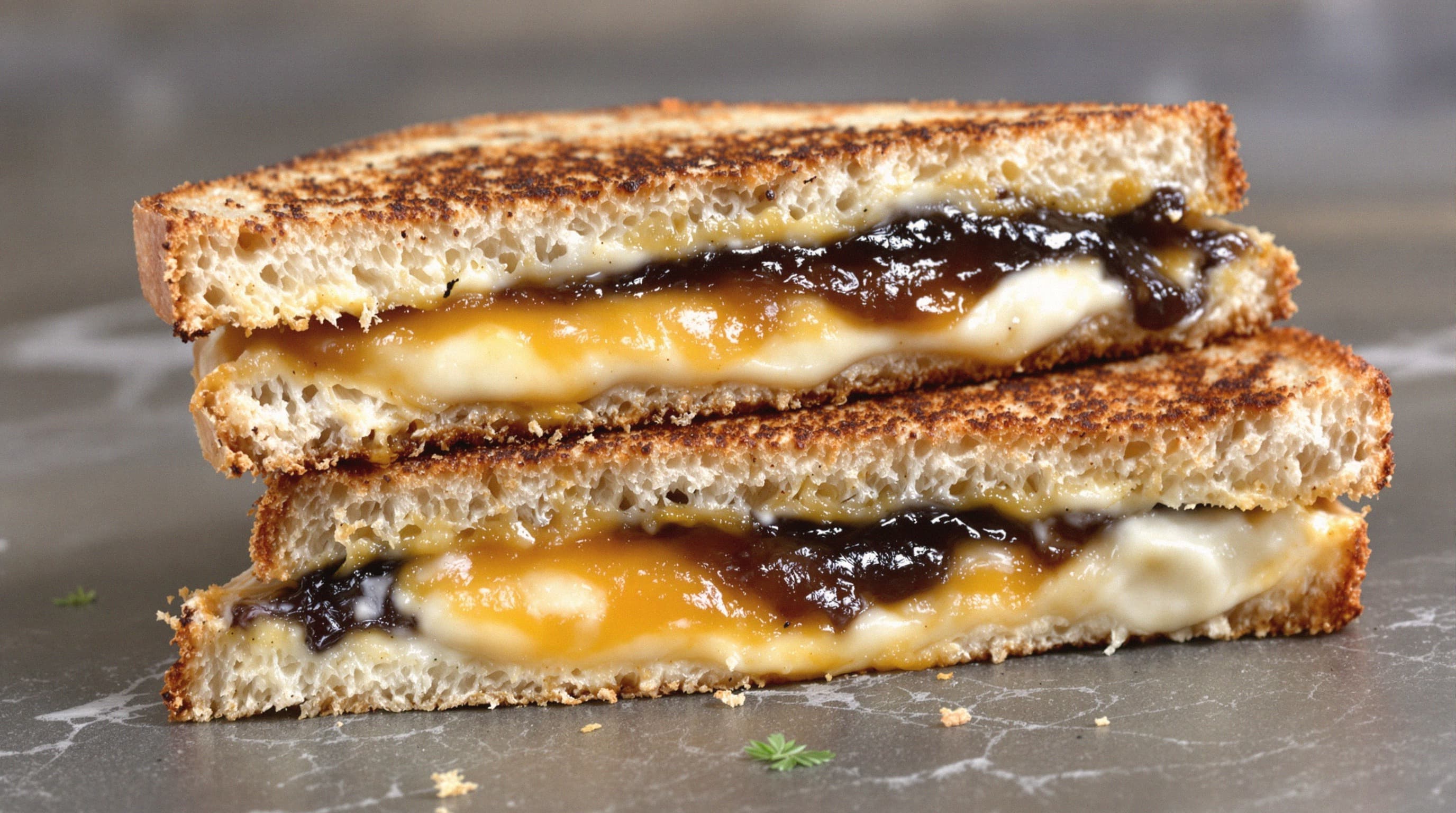
Black Garlic Grilled Cheese with Apricot Jam and Taleggio
Black garlic gets mashed directly into softened butter and spread on the bread before grilling, so its molasses-sweet, faintly funky depth is baked into every bite rather than lurking as an afterthought. Taleggio melts into something almost custardy, and the apricot jam cuts through its barnyard richness with just enough fruit acid to keep things from going heavy. This sandwich sits right at the edge of dessert without crossing over.
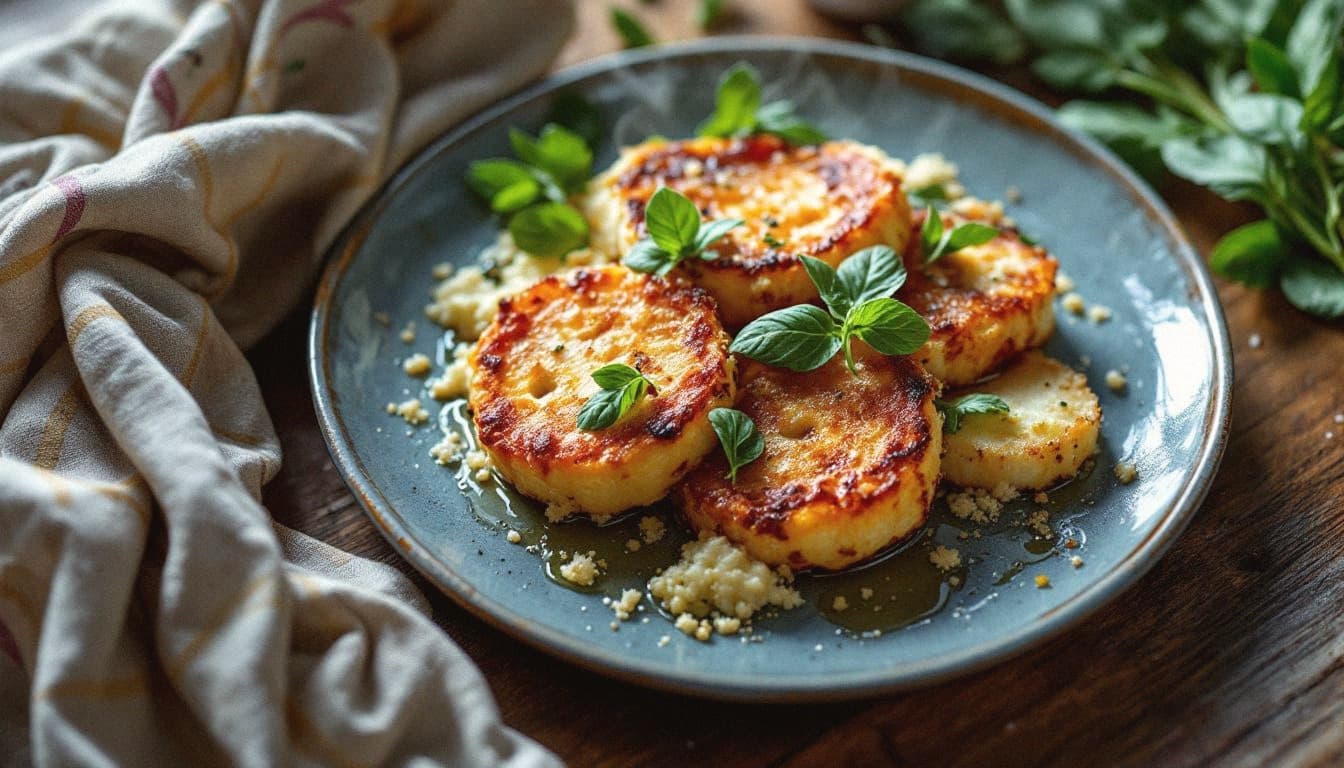
Wild Garlic Saganaki with Morel Mushrooms, Honey, and Ouzo
Frying halloumi with wild garlic and dried morels sounds like a recipe written by someone emptying their fridge, but the flavor logic is tighter than it looks. The morels push the cheese's savory depth somewhere almost meaty, the ouzo flame knocks the anise back to a whisper, and the thyme honey lands just in time to stop the whole thing from tipping into brine. Make this in late spring when wild garlic is still young enough to wilt in 45 seconds and smell like the forest floor.
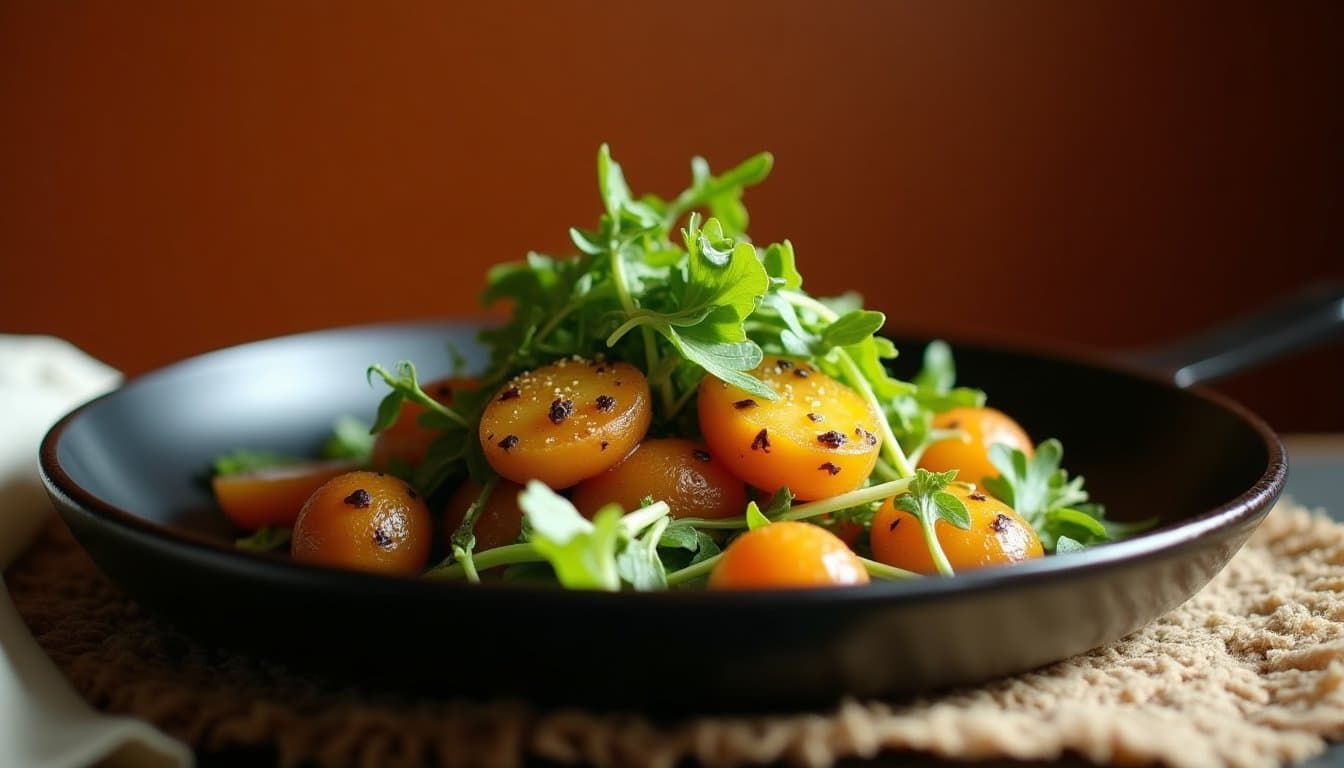
Anchovy-Kissed New Potato & Lamb's Lettuce Salad with Watercress Snow
New potatoes and anchovies are a perfectly reasonable bistro pairing, which is exactly why blitzing raw watercress into a near-frozen vinaigrette 'snow' that melts over warm potatoes feels so disorienting in the best way. The cold-hot contrast pulls the anchovy's glutamates forward while the peppery watercress oils bloom against the potato starch. No unusual ingredients, genuinely surprising results.
Get the free flavor science guide.
5 rules that explain why unusual combinations work — plus new recipes every week.
You can unsubscribe anytime. No spam, ever. Or just read the guide.