This post contains affiliate links. We may earn a small commission at no extra cost to you. Learn more
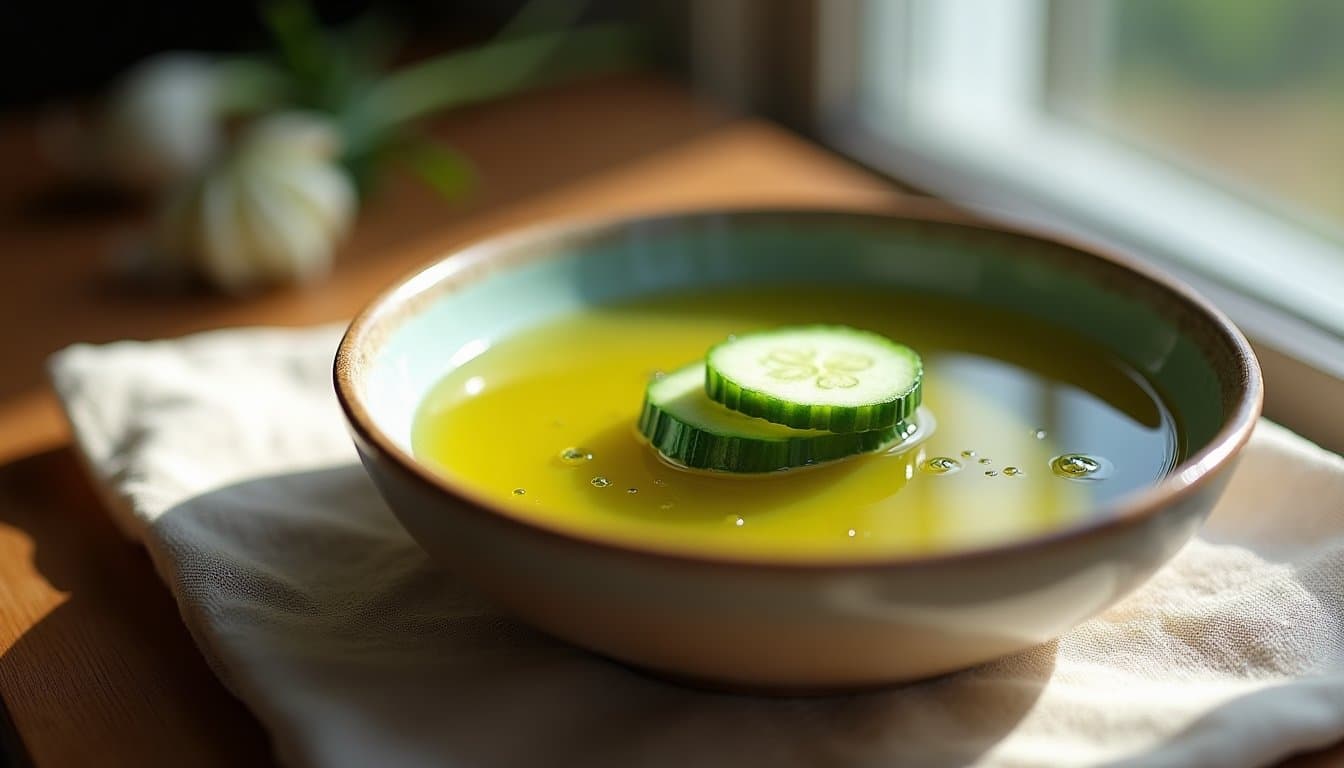
Bärlauch-Gurken Shrub: Wild Garlic & Cucumber Fermented Drinking Vinegar
what's this?
Strangeness scale
- 1 — Slightly odd
- 2 — Raises eyebrows
- 3 — Genuinely strange
- 4 — Deeply weird
- 5 — Unhinged
- Total
- 168h 30m
- Difficulty
- Medium
- Serves
- 8
- Origin
- German
Wild garlic, cucumber, and raw apple cider vinegar walk into a cold-process ferment sweetened with wildflower honey, and what comes out tastes like a German forest distilled into a drinking glass. The allicin in the Bärlauch mellows dramatically during maceration, trading its eye-watering punch for something floral and savory you won't see coming. Diluted with sparkling water, it's the strangest thing you'll drink all spring, and you'll want another glass before the first one's finished.
Equipment
Why It Actually Works
Wild garlic's sharpness comes from allicin, a volatile, water-soluble sulfur compound that partially converts into mellower thiosulfinates and polysulfides during cold maceration in an acidic honey environment, which is why the finished shrub reads as savory and floral rather than aggressively garlicky. Cucumber is over 96% water, and honey's osmotic pressure pulls that moisture out fast, creating a natural brine that carries cucumber's volatile green aldehydes, particularly (E,Z)-2,6-nonadienal, the compound behind its characteristic freshness, into suspension with the garlic aromatics. Raw apple cider vinegar's acetic acid drops the pH below 4.0, making the whole thing shelf-stable, while its wild enzyme activity keeps nudging the flavor forward, so the shrub on day 7 genuinely tastes different from the one on day 14.
Learn the flavor science rules behind recipes like this →Ingredients
- 80 g fresh wild garlic leaves (Bärlauch), washed and roughly torn
- 1 large cucumber (approx. 350 g), thinly sliced, unpeeled
- 200 g raw wildflower honey
- 240 ml raw unfiltered apple cider vinegar (with the mother)
- 1 tsp whole black peppercorns, lightly cracked
- 1 small sprig fresh dill
- 1 pinch fine sea salt
- sparkling mineral water, to serve
- ice cubes and cucumber ribbons, to garnish
Instructions
1. Sterilize a 1-litre wide-mouth glass jar by filling it with boiling water for 30 seconds, then draining and air-drying completely. Do not use soap — residue can interfere with fermentation.
2. Layer the torn wild garlic leaves and cucumber slices into the sterilized jar, alternating layers to distribute the aromatics evenly. Add the cracked peppercorns and dill sprig.
3. Pour the raw wildflower honey over the layered ingredients, distributing it as evenly as possible. Add the pinch of sea salt. At this stage the mixture will look alarmingly thick and unappetizing — this is correct.
4. Seal the jar loosely (do not fully airtight-seal, as CO2 needs to escape) and leave at cool room temperature (16–18°C / 61–64°F) for 24 hours. The honey will begin to liquefy as it draws moisture from the cucumber via osmosis.
5. After 24 hours, gently stir or invert the jar several times to redistribute the honey-liquid forming at the bottom. You should see the cucumber slices becoming translucent and the wild garlic beginning to wilt and darken slightly.
6. Continue macerating at room temperature for a further 48 hours (72 hours total), stirring gently once daily. A very faint fizzing or bubbling is normal and desirable — this indicates the raw honey's wild yeasts are beginning to activate.
7. After 72 hours of room-temperature maceration, pour in the raw apple cider vinegar. Stir to combine thoroughly. The mixture will smell intensely of garlic with a sharp vinegar note — the garlic pungency will soften considerably over the next few days.
8. Seal the jar fully and transfer to the refrigerator. Allow to cold-ferment and mellow for a minimum of 7 days, and ideally 10–14 days. The flavor develops significantly between day 7 and day 14 as the allicin compounds continue to transform.
9. After the cold-ferment period, strain the shrub through a fine-mesh sieve lined with cheesecloth, pressing the solids firmly to extract all liquid. Discard the spent solids (or blend into a salad dressing — no waste!).
10. Transfer the finished shrub syrup to a clean sealed bottle. It should be a pale golden-green color with a complex aroma: tangy, floral, faintly garlicky, and herbaceous. Store refrigerated for up to 3 months.
11. To serve: combine 30–45 ml of shrub syrup with 180–200 ml of ice-cold sparkling mineral water in a glass over ice. Stir gently and garnish with a thin cucumber ribbon. Adjust ratio to taste — more shrub for intensity, less for a subtler sip.
Nutrition (estimated per serving)
- Calories
- 112
- Fat
- 0g
- Carbs
- 28g
- Protein
- 1g
- Fiber
- 0g
- Sodium
- 41mg
Variations
- Replace sparkling mineral water with a light German Kölsch or non-alcoholic wheat beer for a fermented shrub shandy that bridges Bärlauch season and Biergarten season.
- Add 2 juniper berries, a strip of lemon peel, and a 2cm piece of fresh horseradish to the maceration jar for a darker, more resinous shrub with serious Black Forest energy.
- Skip the room-temperature maceration entirely, blend all ingredients, strain immediately, and use within a day or two. You'll lose the fermented complexity, but you'll still have a genuinely strange and delicious shrub in under an hour.
Storage & Make-Ahead
Once strained, the finished shrub keeps in a sealed glass bottle in the fridge for up to 3 months, and the flavor actually improves after the first week as the wild garlic mellows and the cucumber rounds out. Don't freeze it, the acidity holds it perfectly well at refrigerator temperature and freezing dulls the brightness you worked to build. If you want to get ahead, you can start the maceration up to 5 days before straining, just keep the jar in a cool, dark spot and press the solids down daily. Store cucumber ribbon garnishes separately in cold water and use them within 24 hours, they go limp and sad quickly once cut.
Reader Tips
No tips yet — be the first!
More Strange Recipes
Wild Garlic & Lime Agua Fresca with Chili and Tajín
Yes, we put wild garlic in a drink, and no, you won't regret it. Blanching and flash-chilling the leaves strips out the harsh bite while leaving a grassy, allium-sweet backbone that makes lime pop in ways citrus alone never could. Tajín's chili-lime-salt crust on the rim turns this Mexican spring cooler into a full sensory event.
Smoked Watercress and Ramp Bloody Mary with Pickled Asparagus
Cold-smoking watercress and ramps over cherry wood before blending them with aji amarillo, chicha de jora vinegar, and fire-roasted tomatoes produces a Bloody Mary that tastes like a garden that actually caught fire. The pickled asparagus spear does real work here, adding a grassy, briny snap that makes the tired celery stick look like a prop. This is a Peruvian-inflected brunch drink with enough going on that you'll want to make it on a Tuesday.
Spring Onion & Ginger Bubble Tea with Taro Sesame Milk
Taiwanese bubble tea doesn't usually start with a hot wok, but this one does. Spring onions and ginger get wok-bloomed using the same technique behind scallion oil noodles, then folded into a creamy taro and black sesame milk base. The drink lands somewhere between Taiwan's best street food stall and a boba shop, with a subtly umami, lightly floral flavor you won't find anywhere on a standard menu.
Get the free flavor science guide.
5 rules that explain why unusual combinations work — plus new recipes every week.
You can unsubscribe anytime. No spam, ever. Or just read the guide.