This post contains affiliate links. We may earn a small commission at no extra cost to you. Learn more
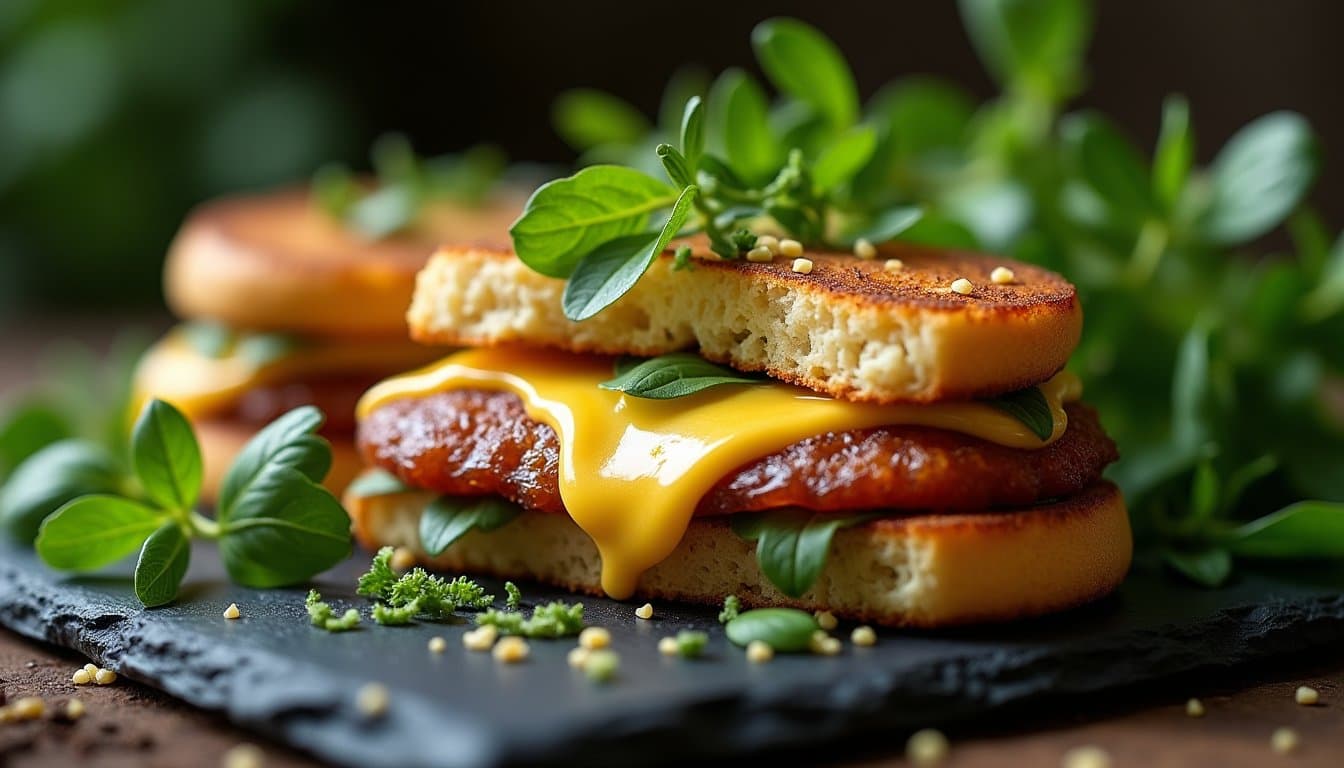
Morel & Gruyère Croque Monsieur with Wild Garlic Béchamel
what's this?
Strangeness scale
- 1 — Slightly odd
- 2 — Raises eyebrows
- 3 — Genuinely strange
- 4 — Deeply weird
- 5 — Unhinged
- Cook
- 20m
- Total
- 45m
- Difficulty
- Medium
- Serves
- 2
- Origin
- French
A croque monsieur that went to finishing school in Burgundy and never came back. Earthy, honeycomb-textured morel mushrooms replace the ham entirely, their deep umami punch amplified by a wild garlic béchamel that smells like a forest floor after spring rain, in the best possible way. The result is a gilded, bubbling, slightly unhinged luxury sandwich that makes you question every croque you've eaten before.
Equipment
Why It Actually Works
Dried and rehydrated morel mushrooms are extraordinarily high in glutamates, the same free amino acids that give Parmesan and aged beef their addictive savory depth, making them a structurally sound and arguably superior replacement for ham's salty, cured umami hit. Wild garlic (Allium ursinum) contains thiosulfinates and volatile sulfur compounds chemically related to those in regular garlic but far more delicate; cooking them briefly in residual heat rather than direct flame preserves those aromatics while mellowing their raw bite, and the fat in the béchamel carries the fat-soluble flavor molecules, distributing them evenly across every bite. Gruyère's long aging produces a complex matrix of crystallized amino acids and lactic acid compounds that harmonize with both the forest earthiness of the morels and the green, slightly pungent wild garlic, so the cheese acts as a flavor bridge between two very different but chemically compatible ingredients.
Learn the flavor science rules behind recipes like this →Ingredients
- 4 slices thick-cut brioche or pain de mie, about 1.5cm thick
- 120g dried morel mushrooms, rehydrated in 250ml warm water for 20 minutes
- 2 tbsp unsalted butter, divided
- 1 small shallot, finely minced
- 2 tbsp dry sherry or dry white wine
- 1 tsp fresh thyme leaves
- salt and freshly cracked black pepper, to taste
- 120g Gruyère cheese, coarsely grated, divided
- 2 tbsp Dijon mustard
- 30g unsalted butter, for béchamel
- 2 tbsp all-purpose flour
- 300ml whole milk, warmed
- 40g wild garlic leaves (ramsons), washed and very finely chopped
- pinch of freshly grated nutmeg
- 20g Gruyère cheese, extra, for topping béchamel
Instructions
1. Rehydrate the morels: Place dried morels in a bowl with 250ml warm (not boiling) water. Let soak 20 minutes until soft and plump. Lift morels out gently — do NOT discard the soaking liquid. Strain the liquid through a fine sieve or coffee filter to remove grit. Roughly chop the rehydrated morels and set aside. Reserve 3 tbsp of the strained soaking liquid.
2. Sauté the morels: In a medium skillet over medium-high heat, melt 1 tbsp butter until foamy. Add the shallot and cook 2 minutes until softened and translucent. Add the chopped morels and thyme, cooking 3 minutes until fragrant. Pour in the sherry and reserved morel soaking liquid, stirring and scraping up any fond. Cook until liquid is almost fully absorbed, about 3 minutes. Season generously with salt and pepper. Remove from heat and set aside.
3. Make the wild garlic béchamel: In a small saucepan over medium heat, melt 30g butter. Whisk in the flour and cook, stirring constantly, for 90 seconds until the roux smells slightly nutty but has not browned. Gradually whisk in the warm milk in a thin stream, whisking vigorously to prevent lumps. Cook, stirring, until the sauce thickens to a consistency that coats the back of a spoon, about 4 minutes. Remove from heat and immediately stir in the finely chopped wild garlic leaves, nutmeg, and a generous pinch of salt. The residual heat will wilt the garlic and bloom its allicin compounds without destroying the bright green color. Set aside.
4. Preheat oven to 220°C (425°F) with the broiler/grill element ready to use at the end. Line a baking sheet with parchment paper.
5. Assemble the sandwiches: Lay all four bread slices on the prepared baking sheet. Spread a thin layer of Dijon mustard on all four slices. Divide half the grated Gruyère (60g) between two of the slices, mounding it in the center. Spoon the morel mixture evenly over the Gruyère on those two slices. Top with the remaining 60g Gruyère, then press the other two mustard-side-down bread slices firmly on top to form two sandwiches.
6. First bake: Transfer the baking sheet to the oven and bake at 220°C for 8 minutes until the bread is beginning to turn golden and the cheese inside is melting. Remove from oven.
7. Top with béchamel: Spoon the wild garlic béchamel generously over the top surface of each sandwich, spreading it to the edges with the back of a spoon — be liberal, this is not the time for restraint. Scatter the extra 20g Gruyère evenly over the béchamel-topped sandwiches.
8. Broil to finish: Switch the oven to broil/grill on high. Return the baking sheet to the top rack and broil for 3-5 minutes, watching closely, until the béchamel is gloriously golden, bubbling, and spotted with dark caramelized patches. The wild garlic will have turned a vivid, lacquered green under the browned cheese.
9. Rest and serve: Allow sandwiches to rest on the baking sheet for 2 minutes — the filling is volcanic. Slice diagonally and serve immediately, ideally with a small bitter green salad dressed with a sharp sherry vinaigrette to cut through the richness.
Nutrition (estimated per serving)
- Calories
- 920
- Fat
- 54g
- Carbs
- 72g
- Protein
- 38g
- Fiber
- 5g
- Sodium
- 980mg
Variations
- Drizzle 1 tsp of good black truffle oil over the béchamel just before broiling. It deepens the morel's earthiness without tipping the whole thing into truffle-oil-on-everything territory, provided you don't overdo it.
- Swap aged Comté for the Gruyère and replace the wild garlic with a large bunch of finely snipped chives stirred into the béchamel. The result is milder and more herbaceous, and it's the right move in summer when wild garlic is out of season.
- After broiling, slide a fried egg with a runny yolk straight onto each sandwich. The yolk breaks into the wild garlic béchamel and creates a third sauce situation that is genuinely chaotic in the best way, which is the croque madame version of this recipe.
Storage & Make-Ahead
The wild garlic béchamel keeps well in the fridge for up to 3 days — press plastic wrap directly onto its surface before sealing to prevent a skin forming, then reheat gently in a small saucepan with a splash of milk to loosen it. The sautéed morel filling can be made a day ahead and refrigerated separately; the assembled, unbaked sandwiches will turn soggy if left overnight, so build them just before broiling. Leftover cooked croques reheat best in a dry skillet over medium heat for 2 to 3 minutes per side, which revives the crisp crust far better than a microwave ever will. The strained morel soaking liquid is worth freezing in an ice cube tray — it adds serious depth to soups and sauces for months.
Reader Tips
No tips yet — be the first!
4 avg · 1 rating
More Strange Recipes
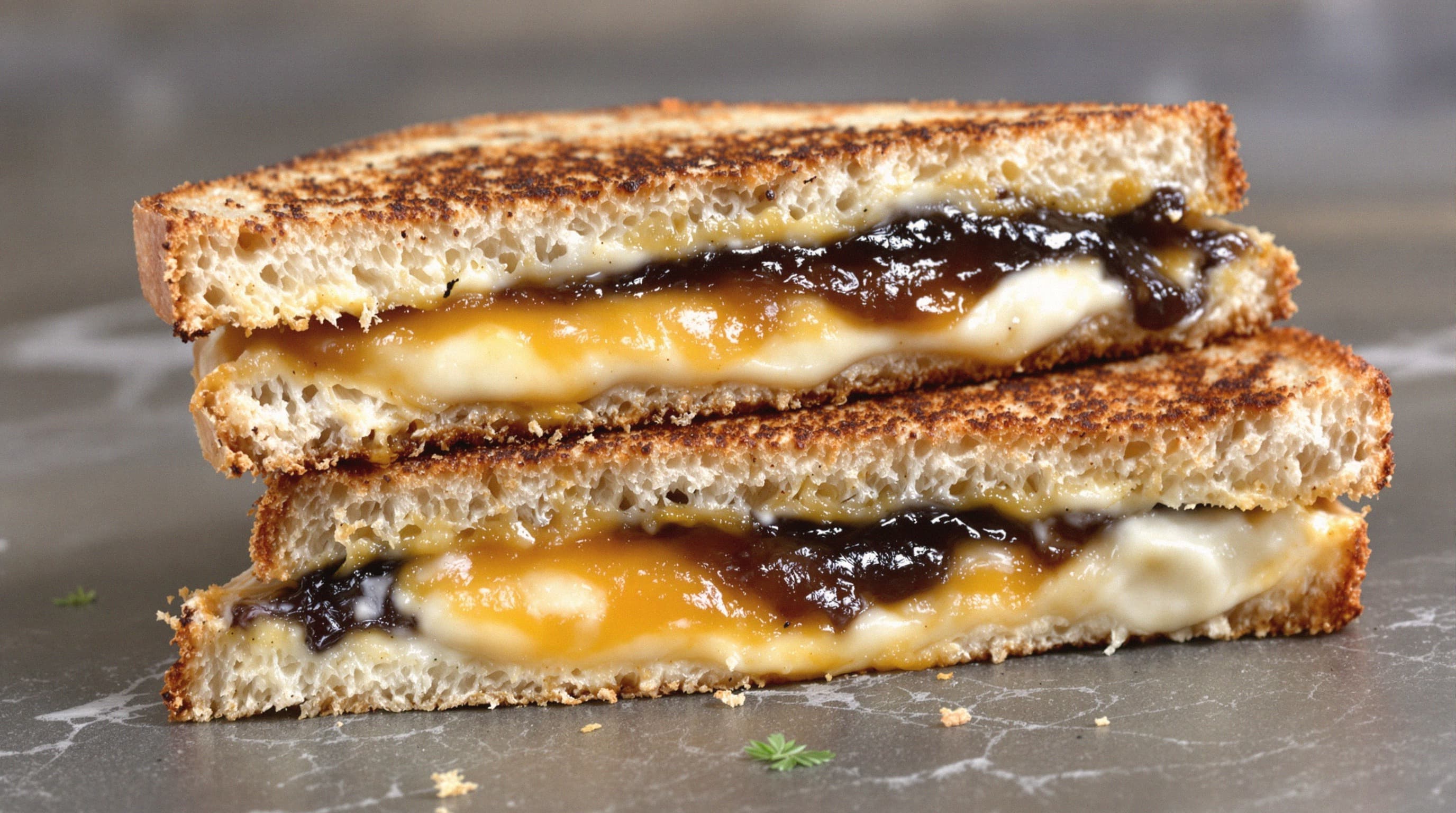
Black Garlic Grilled Cheese with Apricot Jam and Taleggio
Black garlic gets mashed directly into softened butter and spread on the bread before grilling, so its molasses-sweet, faintly funky depth is baked into every bite rather than lurking as an afterthought. Taleggio melts into something almost custardy, and the apricot jam cuts through its barnyard richness with just enough fruit acid to keep things from going heavy. This sandwich sits right at the edge of dessert without crossing over.
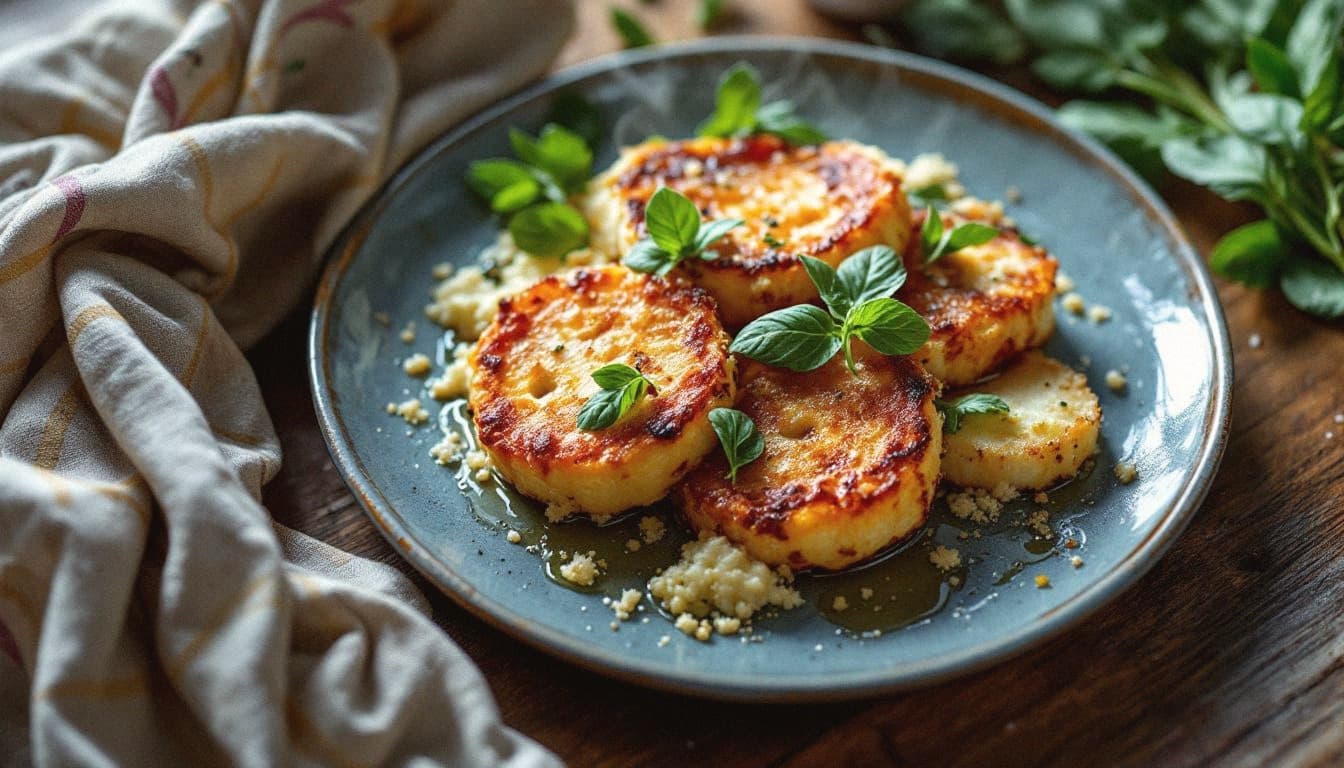
Wild Garlic Saganaki with Morel Mushrooms, Honey, and Ouzo
Frying halloumi with wild garlic and dried morels sounds like a recipe written by someone emptying their fridge, but the flavor logic is tighter than it looks. The morels push the cheese's savory depth somewhere almost meaty, the ouzo flame knocks the anise back to a whisper, and the thyme honey lands just in time to stop the whole thing from tipping into brine. Make this in late spring when wild garlic is still young enough to wilt in 45 seconds and smell like the forest floor.
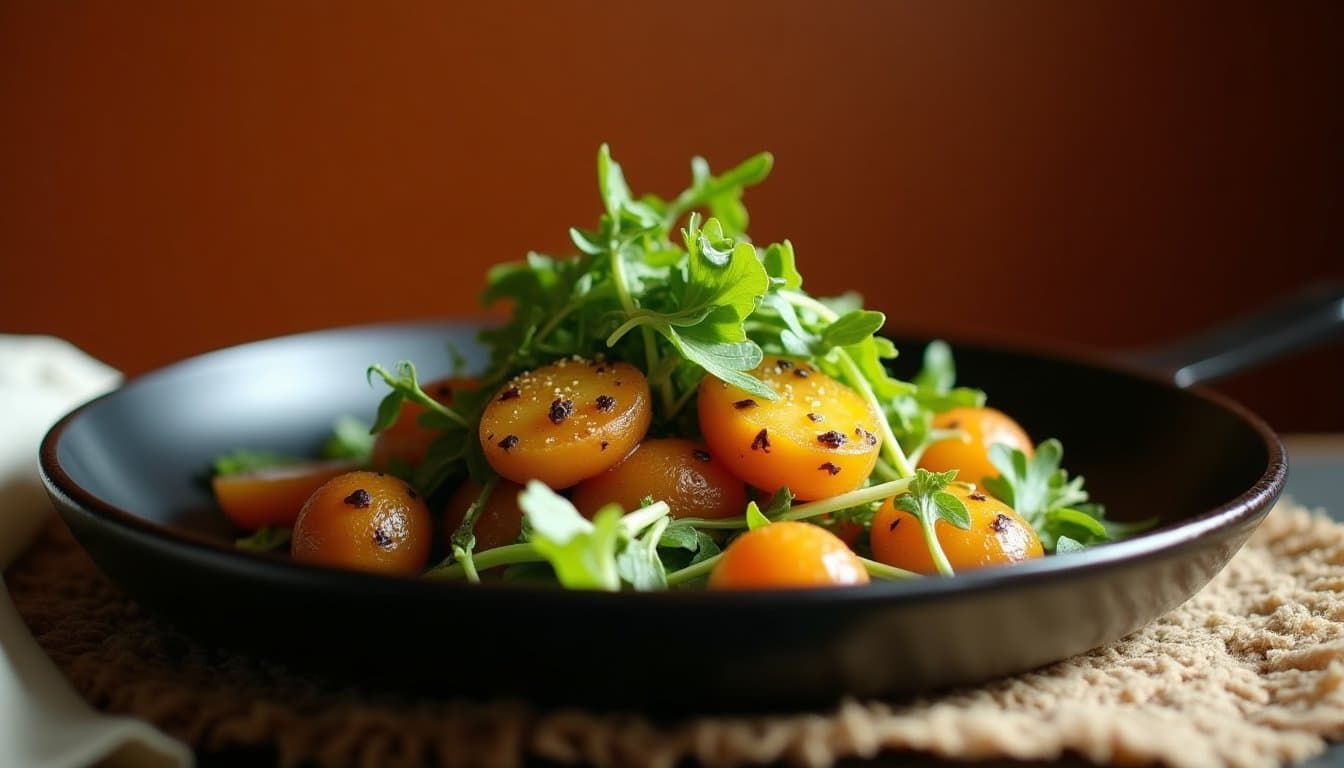
Anchovy-Kissed New Potato & Lamb's Lettuce Salad with Watercress Snow
New potatoes and anchovies are a perfectly reasonable bistro pairing, which is exactly why blitzing raw watercress into a near-frozen vinaigrette 'snow' that melts over warm potatoes feels so disorienting in the best way. The cold-hot contrast pulls the anchovy's glutamates forward while the peppery watercress oils bloom against the potato starch. No unusual ingredients, genuinely surprising results.
Get the free flavor science guide.
5 rules that explain why unusual combinations work — plus new recipes every week.
You can unsubscribe anytime. No spam, ever. Or just read the guide.