This post contains affiliate links. We may earn a small commission at no extra cost to you. Learn more
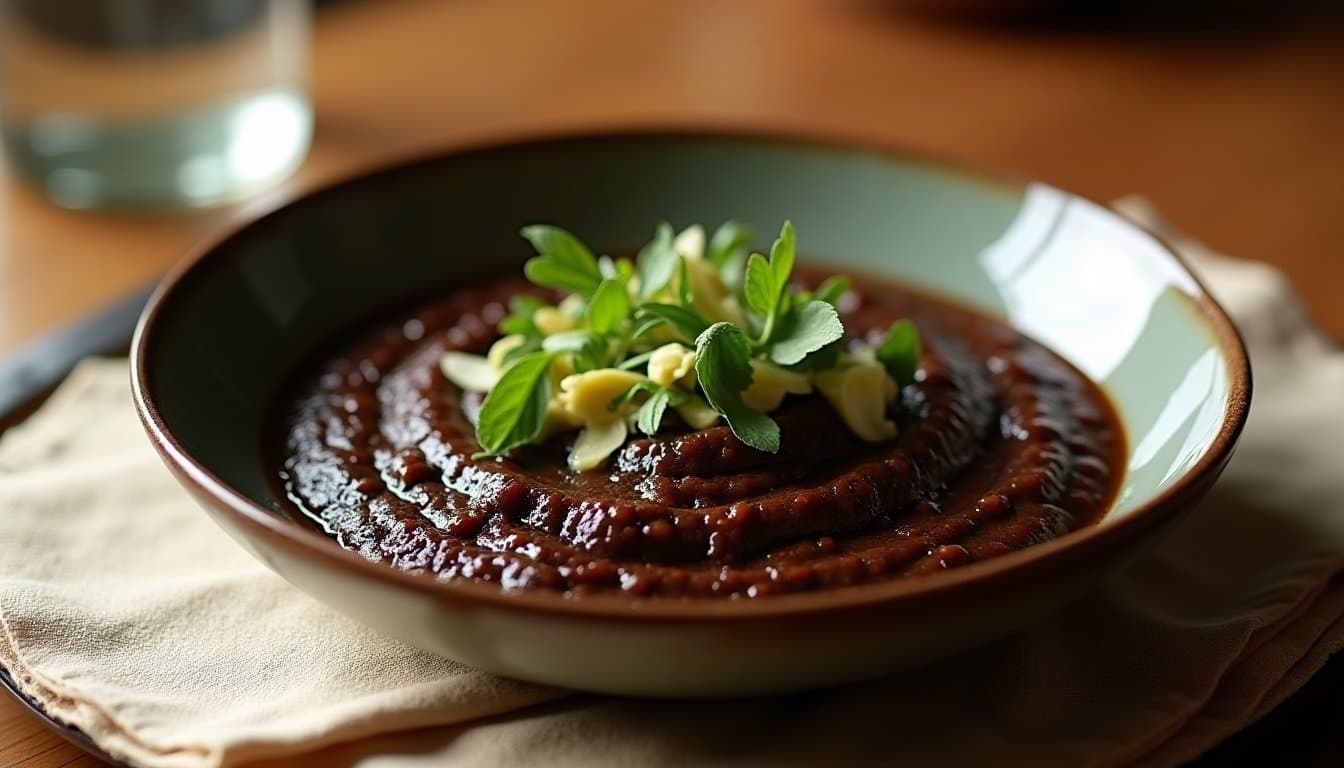
Wild Garlic Mole Negro with 100% Dark Chocolate and Smoked Duck
what's this?
Strangeness scale
- 1 — Slightly odd
- 2 — Raises eyebrows
- 3 — Genuinely strange
- 4 — Deeply weird
- 5 — Unhinged
- Cook
- 3h
- Total
- 4h
- Difficulty
- Hard
- Serves
- 6
- Origin
- Mexican
This mole negro swaps traditional garlic for wild garlic (ramps), and that single change drags in a forest-floor funk that the sauce's volcanic complexity seems to have been waiting for all along. A full 100g of 100% cacao, zero sugar, pure bitter darkness, anchors the sauce alongside dried chiles, toasted seeds, and char-blackened aromatics. It tastes ancient and alien at the same time, like Oaxaca dreamed it up after a walk through a Scottish forest.
Equipment
Why It Actually Works
Wild garlic contains allicin and thiosulfinates, the same sulphur compounds as regular garlic, but it also carries chlorophyll-rich volatile aromatics that survive brief cooking and contribute a vegetal, almost floral top note that cuts through mole negro's notoriously heavy, tannin-laden base. The 100% unsweetened cacao brings procyanidins and theobromine that bind to capsaicin compounds in the dried chiles, modulating heat perception and extending the flavour finish on the palate without sweetness muddying the sauce. Charring the aromatics to genuine blackness generates Maillard and pyrolysis compounds, specifically furfurals and pyrazines, that are chemically identical to the smoky, roasted notes already in the chiles, which is why the sauce tastes impossibly deep despite having no single dominant ingredient.
Learn the flavor science rules behind recipes like this →Ingredients
- 6 whole duck legs, trimmed of excess fat
- 2 tsp fine sea salt, plus more to taste
- 2 tbsp rendered duck fat or lard, for searing
- 100g 100% unsweetened dark chocolate (cacao paste or baking block), roughly chopped
- 80g wild garlic leaves (ramps), roughly torn
- 20g wild garlic bulbs (ramps), peeled and smashed
- 4 whole dried mulato chiles, stems and seeds removed, seeds reserved
- 3 whole dried ancho chiles, stems and seeds removed, seeds reserved
- 2 whole dried pasilla negro chiles, stems and seeds removed, seeds reserved
- 2 whole dried chipotle morita chiles, stems and seeds removed
- 1 whole dried chile negro (chilhuacle negro), stem and seeds removed
- 1 large white onion, halved through the root
- 8 cloves regular garlic, unpeeled
- 2 large ripe roma tomatoes, halved
- 4 whole tomatillos, husked and halved
- 1 tbsp black sesame seeds
- 1 tbsp white sesame seeds
- 2 tbsp raw pumpkin seeds (pepitas)
- 1 tbsp whole black peppercorns
- 1 tsp whole cumin seeds
- 4 whole cloves
- 1 small cinnamon stick (Mexican canela, about 5cm)
- 2 whole dried avocado leaves (or 1 fresh bay leaf as substitute)
- 3 tbsp raisins
- 1 corn tortilla, stale or toasted, torn into pieces
- 1 tbsp apple cider vinegar
- 1 litre good-quality chicken or duck stock, warm
- 2 tbsp coconut sugar or piloncillo, grated (adjust to balance bitterness)
- 2 tbsp neutral oil (avocado or sunflower), for frying paste
- Fresh wild garlic flowers or micro herbs, to garnish
- Toasted sesame seeds, to garnish
- White rice or warm corn tortillas, to serve
Instructions
1. CHAR THE BASE AROMATICS: Place a dry cast-iron skillet or comal over high heat until smoking. Add the halved onion cut-side down, unpeeled garlic cloves, halved tomatoes, and tomatillos. Char aggressively — you want deep black patches on all surfaces, not just browning. This takes 8–12 minutes total, turning occasionally. The blackened bits are not burned mistakes; they are the soul of mole negro. Set aside. Once garlic is cool enough to handle, squeeze cloves from skins.
2. TOAST AND REHYDRATE THE CHILES: In the same dry skillet over medium heat, toast each chile variety individually for 20–30 seconds per side until they blister, puff slightly, and release a fragrant, slightly smoky aroma. Do not let them go fully black or they will turn acrid. Reserve the seeds from the mulato and ancho chiles — you'll toast a tablespoon of these too for extra depth. Transfer all toasted chiles to a heatproof bowl, pour over 600ml of boiling water, weight them down with a small plate, and soak for 25 minutes until completely pliable.
3. TOAST THE SEEDS AND SPICES: Return the skillet to medium-low heat. Toast the reserved chile seeds (about 1 tbsp) until they begin to darken and smoke — these add an intentional slight bitterness that defines mole negro. Remove and set aside. In the same pan, toast the black and white sesame seeds, pepitas, peppercorns, cumin seeds, cloves, and cinnamon stick together, stirring constantly for 3–4 minutes until golden and aromatic. Add the avocado leaves for the final 30 seconds. Transfer everything to a spice grinder or high-powered blender and grind to a coarse powder.
4. BLOOM THE WILD GARLIC: In a small pan, warm 1 tbsp of duck fat over medium-low heat. Add the smashed wild garlic bulbs and sauté for 3 minutes until soft and fragrant — they should smell like a forest crossed with a French bistro. Add the wild garlic leaves and cook for 1 minute until just wilted. Remove from heat. Reserve a small handful of the wilted leaves for garnish if desired.
5. BUILD THE MOLE PASTE: Drain the rehydrated chiles, reserving 200ml of the soaking liquid. In a high-powered blender, combine the drained chiles, charred onion, charred garlic, charred tomatoes, charred tomatillos, sautéed wild garlic (bulbs and leaves), raisins, torn tortilla pieces, toasted spice powder, toasted chile seeds, apple cider vinegar, and 150ml of the reserved chile soaking liquid. Blend on high for 3–4 minutes, scraping down sides, until you have an extremely smooth, dark, almost black paste. Add more soaking liquid only if the blender stalls. The paste should be thick enough to coat a spoon.
6. FRY THE MOLE PASTE: In a large, heavy-bottomed Dutch oven or cazuela, heat 2 tbsp neutral oil over medium-high heat until shimmering. Pour in the mole paste — it will splatter dramatically, so stand back and use a splatter screen if you have one. Fry the paste, stirring constantly with a wooden spoon, for 8–10 minutes. The paste will darken further, thicken, and begin to pull away from the sides of the pot. This step is non-negotiable: it cooks out the raw chile flavour and develops deep, roasted complexity.
7. ADD CHOCOLATE AND STOCK: Reduce heat to medium-low. Add the chopped 100% dark chocolate to the fried paste and stir until fully melted and incorporated — about 2 minutes. The sauce will seize briefly then loosen. Gradually pour in the warm stock, stirring constantly to prevent lumps, until you have a fluid but coating sauce. Add the coconut sugar or piloncillo, taste, and adjust: add more sugar to tame bitterness, more salt for depth, a splash more vinegar for brightness. The sauce should taste complex, slightly bitter, smoky, and deeply savoury — not sweet.
8. SEAR THE DUCK LEGS: Pat the duck legs completely dry with paper towels and season generously with sea salt. In a separate large skillet, heat the remaining duck fat over high heat. Sear the duck legs skin-side down for 6–8 minutes until the skin is deeply golden and has rendered significant fat. Flip and sear the flesh side for 2 minutes. Work in batches to avoid crowding. Transfer seared duck legs to the Dutch oven with the mole sauce.
9. BRAISE LOW AND SLOW: Nestle the seared duck legs into the mole sauce — they should be mostly submerged. If needed, add a splash more stock. Bring to a gentle simmer, then reduce heat to the lowest setting, cover with a tight-fitting lid, and braise for 1 hour 45 minutes to 2 hours. Check every 30 minutes, turning the duck legs and stirring the sauce. The duck is done when the meat is completely tender and pulls easily from the bone. The mole will have thickened considerably around it.
10. REST AND FINISH: Remove the duck legs carefully and set on a wire rack. Allow the mole sauce to simmer uncovered for 10 minutes to concentrate further. Taste one final time and adjust seasoning. Skim any excess duck fat from the surface (save it — it's liquid gold for future cooking). Return the duck legs to the sauce to rewarm for 5 minutes before serving.
11. PLATE AND GARNISH: Spoon a generous pool of mole negro onto each plate. Place a duck leg on top, then ladle more sauce over the meat. Garnish with toasted sesame seeds, wild garlic flowers or fresh wild garlic leaves (raw this time — their bright, sharp punch cuts the richness beautifully), and a light drizzle of reserved duck fat if feeling indulgent. Serve immediately with white rice or warm corn tortillas.
Nutrition (estimated per serving)
- Calories
- 720
- Fat
- 48g
- Carbs
- 28g
- Protein
- 52g
- Fiber
- 7g
- Sodium
- 890mg
Variations
- For a vegan version, use thick-cut king oyster mushroom steaks and whole roasted cauliflower florets in place of duck legs, swap duck fat for coconut oil, use vegetable stock, and braise for only 45 minutes. The wild garlic and 100% cacao do the same work regardless.
- Bone-in turkey thighs are a more traditional mole negro pairing. Increase braising time to 2 hours 15 minutes. Turkey's milder fat lets the wild garlic's herbaceous quality come through even more clearly than duck does.
- Replace the fresh wild garlic with 3 tbsp of lacto-fermented wild garlic paste, made by fermenting the leaves in a 2% salt brine for 5 days. The fermentation adds a funky, tangy depth that makes the mole taste like it's been ageing for centuries.
Storage & Make-Ahead
The mole negro actually improves after a day in the fridge as the chocolate, chiles, and wild garlic meld together, so make the sauce up to 4 days ahead and store it separately from the duck legs in a sealed container. The braised duck legs keep for 3 days refrigerated; reheat them gently in the mole over low heat with a splash of stock to loosen the sauce, which thickens considerably when cold. Both the mole and the duck freeze well for up to 3 months — freeze them together in portions for the easiest weeknight reheat. Hold the wild garlic flowers and toasted sesame garnishes until you're ready to serve, since the flowers wilt within an hour of plating.
Reader Tips
No tips yet — be the first!
More Strange Recipes
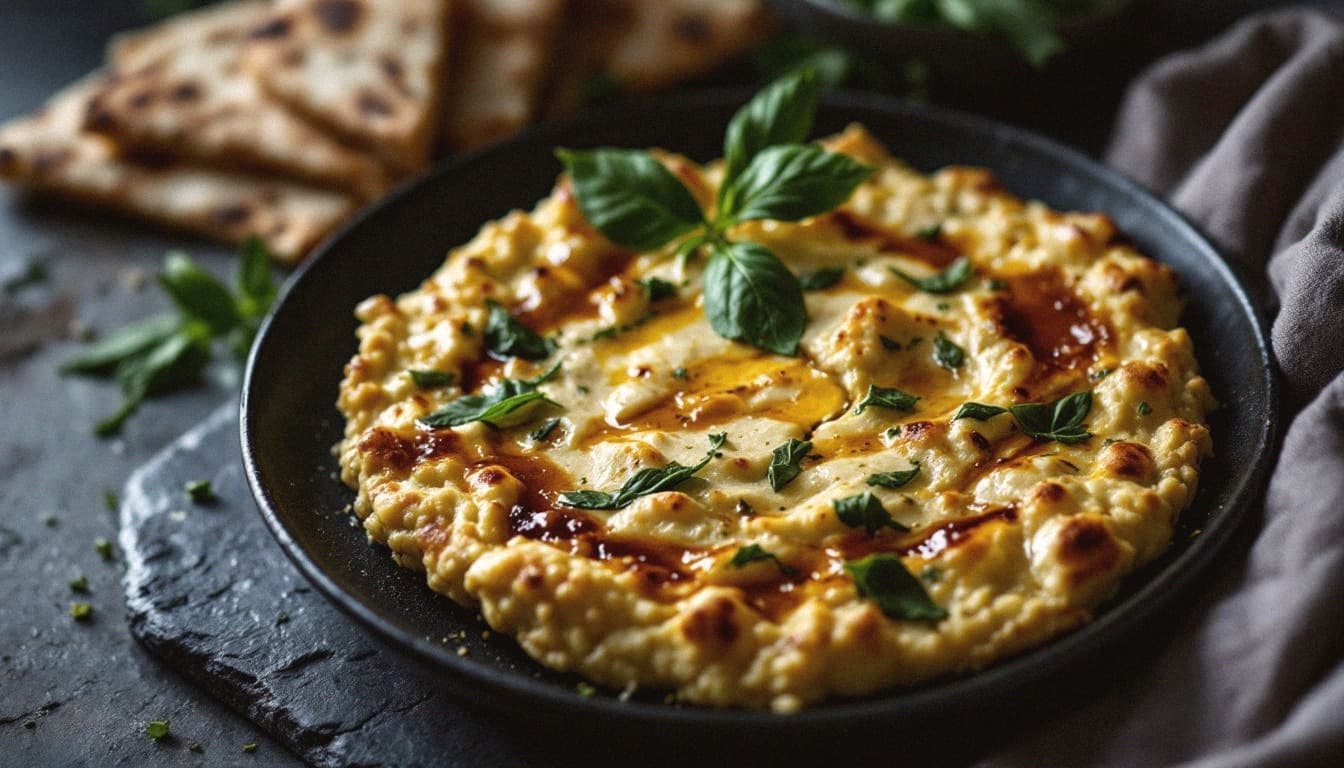
Wild Garlic Fatteh with Spring Peas and Pomegranate Molasses
Fatteh without yogurt sounds like a mistake, but wild garlic sauce and pomegranate molasses together do exactly what yogurt does: cut the richness of chickpeas with acid and funk. The wild garlic loses its raw, almost aggressive bite when it hits warm broth, settling into something foresty and complex that no restaurant version of this dish has ever tasted like. Make it while wild garlic is actually in season, because ramps or dried garlic won't get you there.
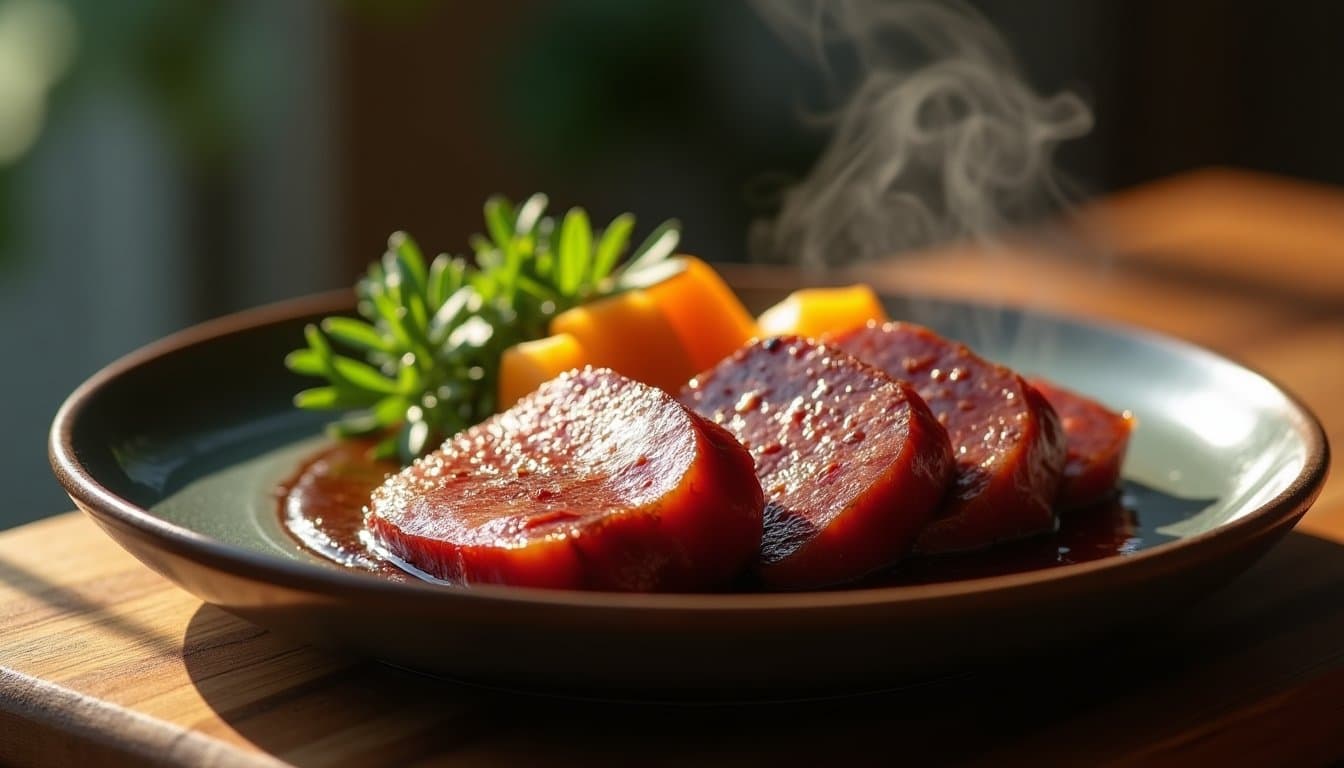
Cold-Smoked Duck Breast with Rhubarb-Ramp Gastrique and Spring Pea Purée
Duck breast gets cold-smoked over juniper and birch, seared to a lacquered crisp, then laid over sweet spring pea purée with a glossy rhubarb-ramp gastrique that is equal parts savage and elegant. Rhubarb's oxalic tartness cuts clean through the duck's subcutaneous fat, while wild ramps bring a sulfurous, garlicky funk that somehow tastes like the forest floor decided to dress for dinner. Nordic spring on a plate: fleeting, feral, and worth every step.
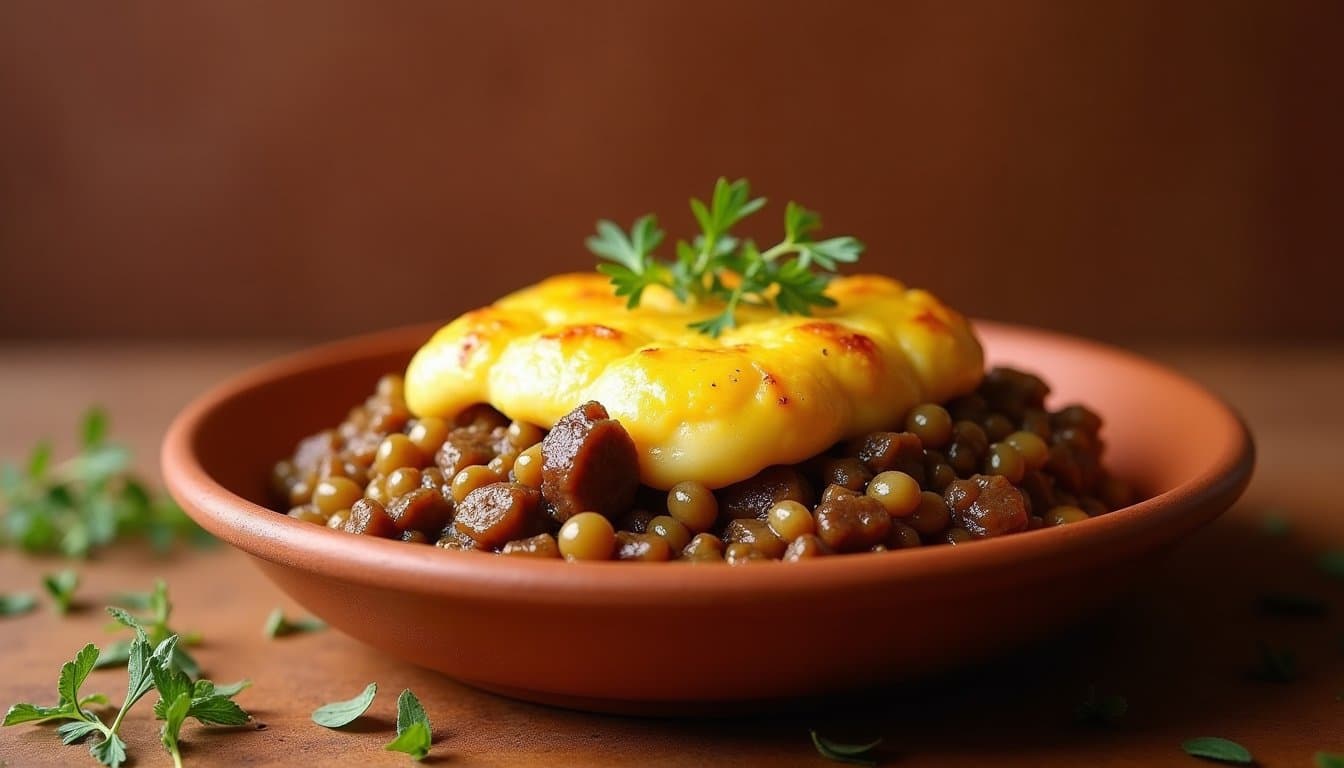
Wild Garlic Lamb Keema Shepherd's Pie with Ramp Mash and Pickled Pea Topping
A British pub kitchen meets a Mumbai dhaba, and neither one blinks. Spiced lamb keema loaded with wild garlic replaces the usual mince filling, a ramp-infused mash crowns the top, and bright pickled peas cut through the richness like a vinegar slap. Comfort food with a passport and a mild identity crisis — exactly how we like it.
Get the free flavor science guide.
5 rules that explain why unusual combinations work — plus new recipes every week.
You can unsubscribe anytime. No spam, ever. Or just read the guide.