This post contains affiliate links. We may earn a small commission at no extra cost to you. Learn more
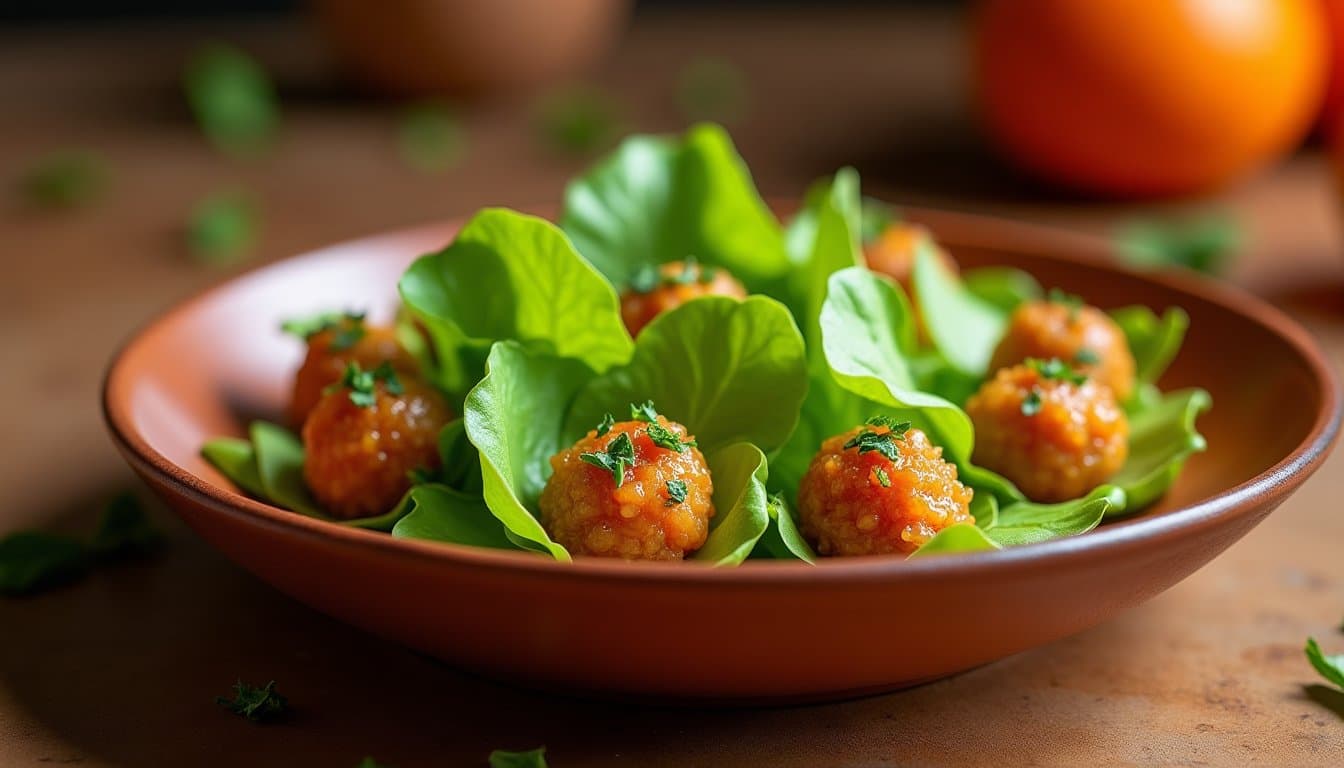
Blood Orange Cured Lamb's Lettuce Bites with Miso Aioli and Pickled Ramps
what's this?
Strangeness scale
- 1 — Slightly odd
- 2 — Raises eyebrows
- 3 — Genuinely strange
- 4 — Deeply weird
- 5 — Unhinged
- Cook
- 15m
- Total
- 2h 55m
- Difficulty
- Medium
- Serves
- 6
- Origin
- Peruvian
Lamb's lettuce cured in blood orange juice and aji amarillo salt until the leaves go silky and crimson, then piled onto crispy quinoa crackers with fermented miso aioli and pickled ramps. It sounds unhinged. It works because citric acid does the same thing here that it does in ceviche, and the ramps' sulfurous bite has more in common with miso than you'd expect. Osaka meets Lima, and neither one is apologizing.
Equipment
Why It Actually Works
Curing lamb's lettuce in blood orange juice mimics the denaturation process in Peruvian ceviche: citric acid breaks down cell walls, releasing water and concentrating the leaves' mild, nutty flavor, while aji amarillo contributes fat-soluble capsaicin that the miso aioli's emulsified oil then carries across the palate. Shiro miso and ramps share a volatile sulfur compound family, allyl thiosulfates in the ramps and glutamate-linked sulfur compounds in the miso, so they amplify each other's savory depth rather than fighting for attention. Blood orange's anthocyanin pigments are pH-sensitive and turn the cure a dramatic crimson, which signals acidity visually before the first bite and actually primes your salivary response.
Learn the flavor science rules behind recipes like this →Ingredients
- 120 g lamb's lettuce (mâche), roots trimmed, left in rosette clusters
- 2 large blood oranges, zested and juiced (approximately 120 ml juice)
- 1 tbsp aji amarillo paste
- 1.5 tsp fine sea salt
- 1 tsp caster sugar
- 0.5 tsp ground white pepper
- 8 ramp bulbs with lower stems, cleaned and halved lengthwise
- 80 ml rice wine vinegar, unseasoned
- 60 ml water
- 1 tsp honey
- 0.5 tsp coriander seeds, lightly crushed
- 1 small dried aji panca chile, crumbled
- 2 large egg yolks, room temperature
- 1 tbsp white shiro miso
- 1 tsp yuzu juice (or additional blood orange juice)
- 1 small garlic clove, microplaned
- 180 ml neutral oil such as grapeseed
- 1 tsp toasted sesame oil
- 200 g quinoa flour
- 0.5 tsp fine sea salt
- 2 tbsp olive oil
- 60 ml cold water, approximately
- 1 tbsp black sesame seeds
- 1 tbsp white sesame seeds
- 0.5 tsp huacatay paste (optional, for finishing)
- 1 small blood orange, sliced into paper-thin rounds for garnish
- edible flowers such as borage or viola, for garnish
Instructions
1. PICKLE THE RAMPS (2 hours ahead): Combine rice wine vinegar, water, honey, coriander seeds, and crumbled aji panca in a small saucepan. Bring to a bare simmer over medium heat, stirring until honey dissolves, about 2 minutes. Pour hot brine over ramp halves in a heatproof jar. Cool to room temperature, then refrigerate for at least 90 minutes. Ramps should turn vivid pink-purple and smell bracingly funky-sweet.
2. CURE THE LAMB'S LETTUCE: Whisk together blood orange juice, aji amarillo paste, sea salt, caster sugar, and white pepper in a wide, shallow bowl until salt and sugar dissolve completely. Taste — it should be aggressively salty, sour, and gently spicy, like a ceviche leche de tigre. Gently submerge lamb's lettuce rosettes in the cure, pressing down lightly. The leaves will begin to wilt and deepen in color within 10 minutes. Cure for exactly 20 minutes at room temperature, turning once halfway. Do not over-cure or the leaves will turn mushy rather than silky.
3. MAKE QUINOA CRACKERS: Preheat oven to 180°C (350°F). Combine quinoa flour, fine sea salt, both sesame seeds, and olive oil in a bowl. Add cold water one tablespoon at a time, mixing with a fork until dough just comes together — it should feel like Play-Doh, not sticky. Roll between two sheets of parchment paper to 2 mm thickness. Peel off top sheet, score into rough 5 cm rectangles with a bench scraper or knife. Bake 12–15 minutes until edges are golden and crackers feel dry to the touch. Cool completely on the pan — they crisp as they cool.
4. MAKE MISO AIOLI: Place egg yolks, shiro miso, yuzu juice, and microplaned garlic in a tall jar or the cup of an immersion blender. Blend briefly to combine. With blender running, drizzle in grapeseed oil in a very thin, steady stream until a thick, glossy emulsion forms. Finish by drizzling in sesame oil and blending 5 more seconds. Taste — it should be deeply savory, slightly sweet, and faintly nutty. Adjust with a drop more yuzu if it tastes flat. Transfer to a piping bag or squeeze bottle and refrigerate until assembly.
5. DRAIN AND FINISH THE CURE: After 20 minutes, lift lamb's lettuce from the cure using a slotted spoon or spider. The leaves should be glistening, slightly collapsed, and stained a deep orange-red at their tips. Shake off excess liquid gently. Reserve 2 tablespoons of the cure liquid — you will use this as a finishing drizzle. If using huacatay paste, stir it into the reserved cure liquid now for an herbal, marigold-funk dimension.
6. ASSEMBLE THE BITES: Arrange quinoa crackers on a serving board. Pipe a small, confident swoosh of miso aioli onto each cracker — roughly 1 teaspoon. Nestle a small cluster of cured lamb's lettuce on top, allowing it to drape naturally over the cracker edges. Add one pickled ramp half per bite, curling it artfully. Lay a blood orange paper-round over each bite at a slight angle. Drizzle the reserved cure liquid (or huacatay cure) over the assembled bites from a spoon for a glossy, luminous finish.
7. GARNISH AND SERVE IMMEDIATELY: Scatter edible flowers across the board. Serve within 10 minutes of assembly — the quinoa crackers will absorb moisture from the lettuce and soften if left too long, which is actually also delicious in a different, more contemplative way.
Nutrition (estimated per serving)
- Calories
- 487
- Fat
- 38g
- Carbs
- 31g
- Protein
- 8g
- Fiber
- 3g
- Sodium
- 620mg
Variations
- Replace the egg yolks in the aioli with 60 ml aquafaba and 1 teaspoon Dijon mustard. The emulsion is slightly less stable but equally funky and rich. Use an immersion blender for best results.
- Lay a thin slice of tiradito-style raw yellowtail or hamachi beneath the cured lettuce before assembly. The fish cures slightly from contact with the aioli and residual citrus, which puts this firmly in Nikkei tiradito territory.
- Swap shiro miso for mugi (barley) miso and stir 0.25 teaspoon smoked paprika into the aioli, then replace aji amarillo with aji panca paste in the cure. The flavor profile shifts toward darker, more chocolatey, and campfire-adjacent.
Storage & Make-Ahead
The pickled ramps are the best make-ahead element here: pack them into their brine and refrigerate up to two weeks, where they'll only get more deeply flavored. The miso aioli keeps in a sealed jar for three days in the fridge, though it may thicken slightly, so whisk in a few drops of cold water before serving. The quinoa crackers lose their snap fast, so bake them the day of and store at room temperature in a single layer, loosely covered. Once the lamb's lettuce rosettes are cured and assembled with garnishes, serve within an hour, as the miso aioli will wilt the delicate leaves and the blood orange rounds will bleed into everything if left to sit.
Reader Tips
No tips yet — be the first!
More Strange Recipes
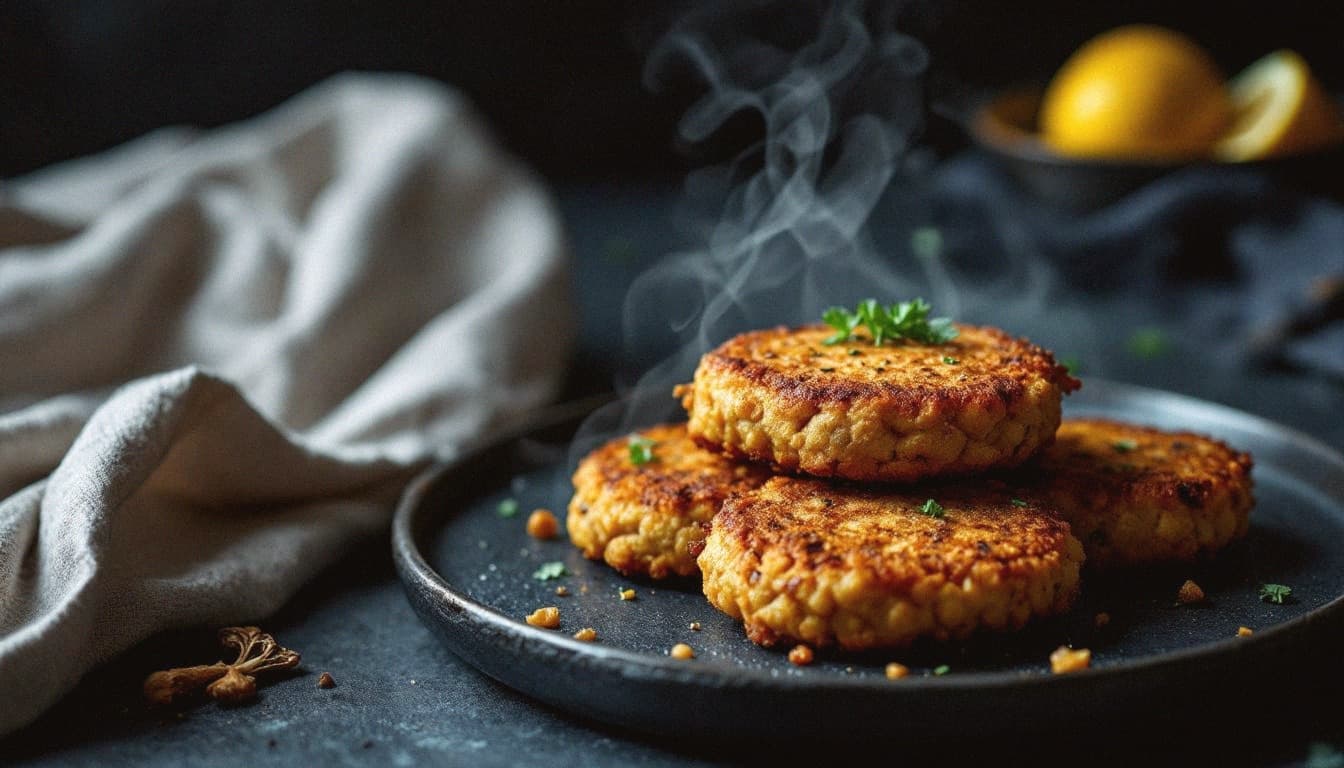
Suya-Spiced Morel Mushroom Fritters with Ramp-Tamarind Dipping Sauce
Dried morel mushrooms carry more glutamates per gram than almost any other fungus, and suya spice's roasted groundnut base clings to those honeycomb cavities like it was born there. Wild garlic folds into the batter for a sharp, grassy counterpoint, while a ramp-tamarind sauce brings enough acid and allium funk to cut through the fry. It's West African street-food logic applied to foraged forest ingredients, and it makes complete sense once you taste it.
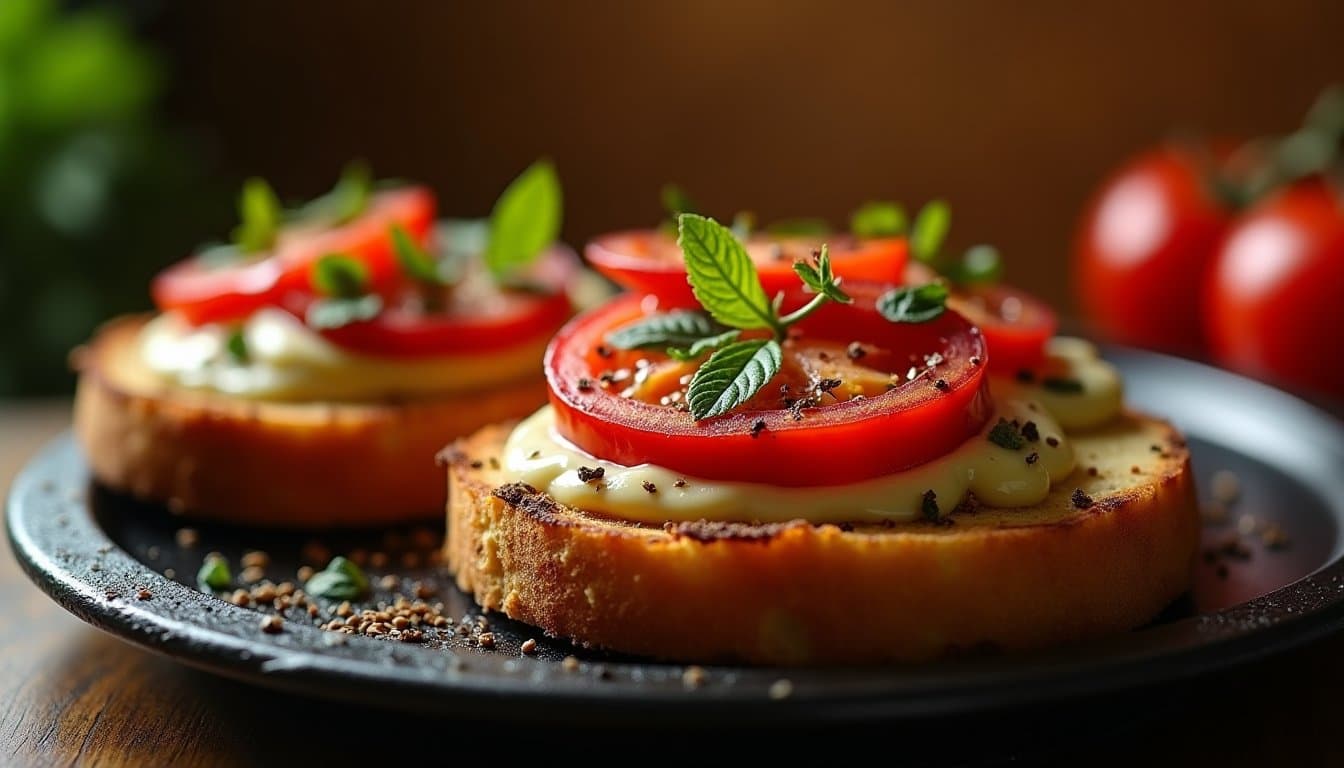
Black Garlic Morel Pan Con Tomate with Smoked Tomato Jam
Pan con tomate has no business being this weird, and yet here we are. Grilled sourdough gets rubbed with smoked tomato jam, piled with sautéed morel mushrooms, and finished with a swipe of black garlic paste that tastes like someone left balsamic vinegar alone with molasses for a month. The bright tomato acid cuts through the earthiness of both the mushrooms and the garlic, which is the only reason this doesn't collapse under its own intensity.
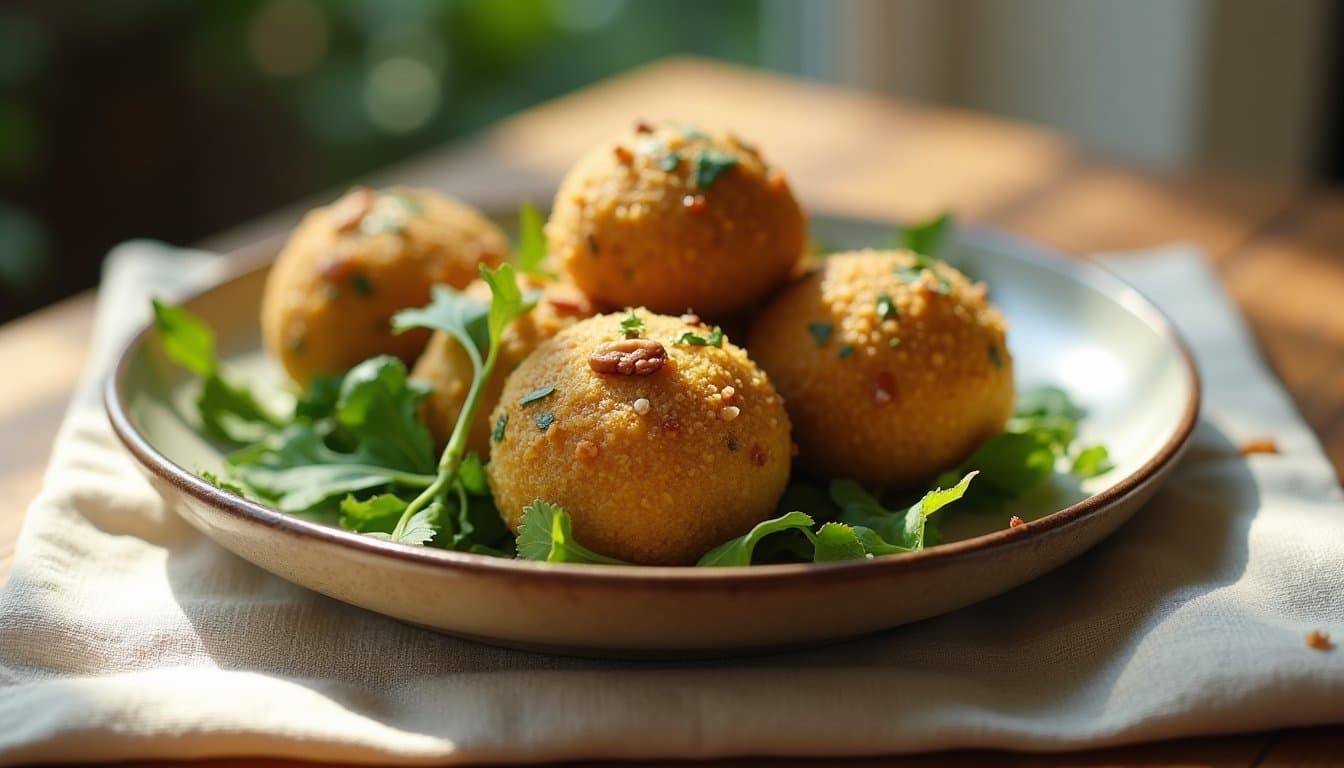
Stinging Nettle & Walnut Pkhali Bites with Pomegranate and Wild Herb Oil
Pkhali is Georgia's answer to a question nobody else thought to ask: what if blanched greens and raw walnuts became something that tastes genuinely magical? This version uses stinging nettles, whose formic acid gets neutralized by blanching, leaving behind a deep, almost meaty minerality that pairs beautifully with walnut's bitter tannins and pomegranate's bright punch. The wild herb oil isn't garnish. It's the bridge that makes the whole weird thing work.
Get the free flavor science guide.
5 rules that explain why unusual combinations work — plus new recipes every week.
You can unsubscribe anytime. No spam, ever. Or just read the guide.