This post contains affiliate links. We may earn a small commission at no extra cost to you. Learn more
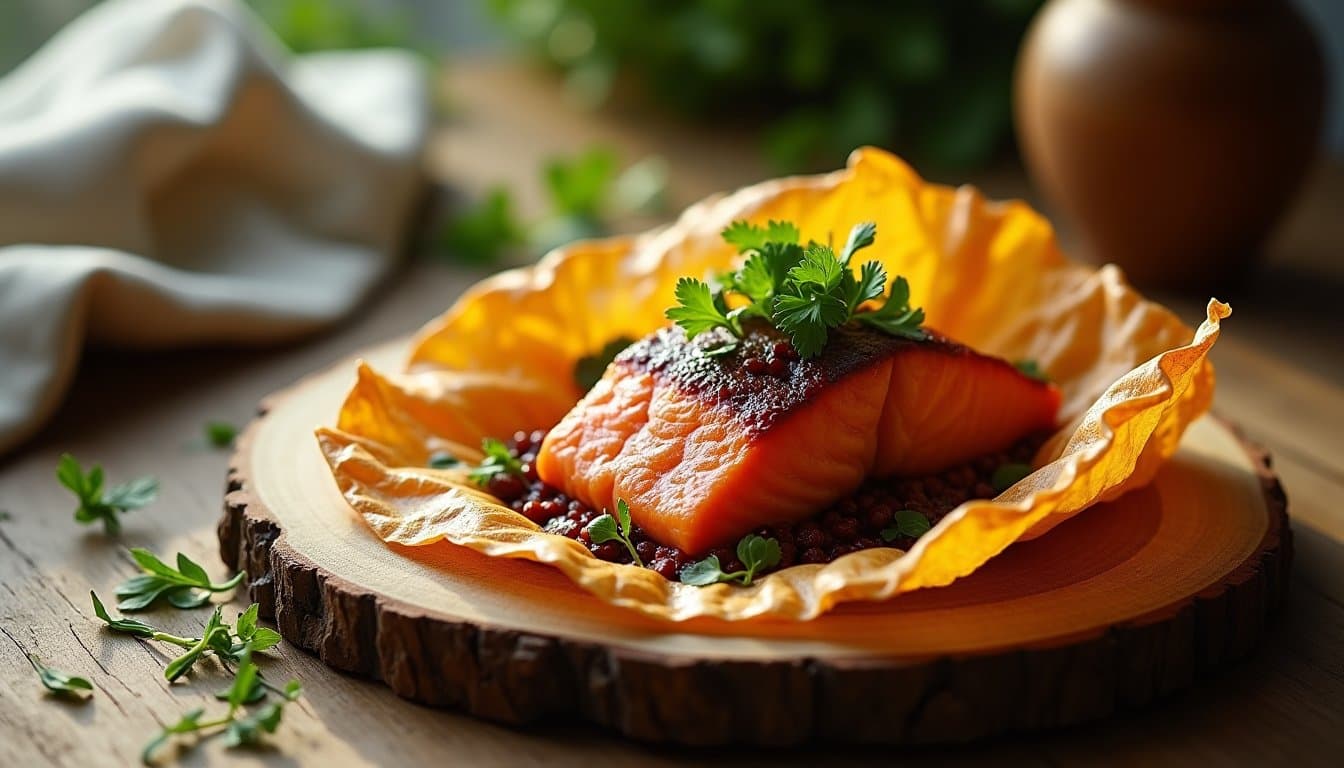
Fermented Black Bean Salmon en Papillote with Asparagus and Ginger Dashi Butter
what's this?
Strangeness scale
- 1 — Slightly odd
- 2 — Raises eyebrows
- 3 — Genuinely strange
- 4 — Deeply weird
- 5 — Unhinged
- Cook
- 18m
- Total
- 43m
- Difficulty
- Medium
- Serves
- 2
- Origin
- Chinese
A Cantonese dim sum kitchen collides with a Parisian bistro, and somehow the result is better than either. Fermented black beans bring a funky, oceanic depth that mirrors the salmon's own umami richness, while a ginger-spiked dashi butter melts inside the parchment packet into a broth that belongs to neither cuisine and tastes completely its own. The papillote locks in volatile aromatics that would otherwise cook off, so every bit of that weird, wonderful funk lands directly on the fish.
Equipment
Why It Actually Works
Fermented black beans (douchi) and salmon are a natural umami stack: douchi is loaded with glutamates, salmon with inosinates, and when those two compound classes meet they trigger synergistic amplification that makes the combination taste far more savoury than either ingredient alone. Sealing the packet matters because the volatile thiol compounds released by douchi during heating can't escape, so they dissolve into the dashi butter instead, giving the liquid both French richness and Chinese fermented depth at once. Ginger pulls double duty: its gingerols suppress the salmon's fishiness while its sharpness cuts through the butter fat, keeping the dish from tipping into heaviness.
Learn the flavor science rules behind recipes like this →Ingredients
- 2 x 180g skin-on salmon fillets, pin-boned and patted dry
- 2 tablespoons fermented black beans (douchi), rinsed once and roughly chopped
- 250ml dashi stock (kombu and bonito, gluten-free certified), chilled
- 60g unsalted butter, cold and cubed
- 1 tablespoon fresh ginger, peeled and cut into fine matchsticks
- 2 teaspoons toasted sesame oil
- 1 tablespoon Shaoxing rice wine (use dry sherry if strict gluten-free is needed)
- 1 teaspoon coconut aminos (gluten-free soy sauce substitute)
- 200g asparagus, woody ends snapped, stalks halved on the diagonal
- 2 spring onions (scallions), thinly sliced on the diagonal, whites and greens separated
- 1 small red chilli, deseeded and finely sliced
- 1 teaspoon white sugar
- 1/2 teaspoon ground white pepper
- 2 teaspoons rice vinegar
- 2 large sheets parchment paper, approximately 40cm x 50cm each
- Flaky sea salt, to taste
- Fresh coriander leaves, to garnish
Instructions
1. Preheat your oven to 210°C (410°F) fan-forced. Place a heavy baking sheet on the middle rack while the oven heats — this hot surface will create an immediate burst of steam inside the packets.
2. Make the ginger dashi butter: combine the cold dashi stock, cubed butter, ginger matchsticks, rice vinegar, and white sugar in a small saucepan over medium heat. Whisk constantly until the butter is just emulsified into the stock and the mixture is glossy but not broken — about 3 minutes. Remove from heat, stir in the sesame oil and coconut aminos, and season with white pepper. Set aside.
3. Prepare the fermented black bean paste: place the rinsed, chopped douchi in a small bowl. Add the Shaoxing rice wine and the spring onion whites and mash very lightly with a fork — you want texture, not a smooth paste. The rinsing removes excess salt but preserves the complex fermented funk; do not rinse more than once.
4. Build the papillote packets: fold each parchment sheet in half to crease, then open flat. On one half of each sheet, lay down a neat bed of asparagus pieces. Place a salmon fillet skin-side down on top of the asparagus.
5. Spoon half the fermented black bean mixture directly onto the flesh of each salmon fillet, pressing gently so it adheres. Scatter the sliced red chilli over the top. Season very lightly with flaky sea salt — the douchi is already salty, so exercise restraint.
6. Spoon 3 tablespoons of the warm ginger dashi butter over each fillet, letting it pool slightly around the asparagus. Reserve remaining dashi butter for serving.
7. Seal the packets: fold the empty parchment half over the fish. Starting at one corner, make tight overlapping folds along the open edges to create a sealed half-moon parcel. The seal must be airtight — any gap will let steam escape and your fish will steam unevenly. Twist the final fold firmly under the packet.
8. Carefully slide the packets onto the preheated baking sheet. Bake for 16–18 minutes. The packets will puff dramatically — this is the steam doing its job and is extremely satisfying. Do not open early.
9. While the fish cooks, gently reheat the remaining dashi butter over very low heat, whisking to re-emulsify if needed. Taste and adjust with a few drops of rice vinegar if it needs brightness.
10. Bring the puffed packets directly to the table on the baking sheet or transfer to plates — half the drama is in the tableside opening. Cut open with scissors, being careful of the rush of hot steam. Garnish with spring onion greens and fresh coriander. Spoon extra dashi butter around the fish and serve immediately.
Nutrition (estimated per serving)
- Calories
- 620
- Fat
- 42g
- Carbs
- 12g
- Protein
- 45g
- Fiber
- 3g
- Sodium
- 780mg
Variations
- Swap salmon for whole sea bream fillets and reduce cook time to 13 minutes. The more delicate flesh lets the fermented black bean flavour take centre stage without salmon fat competing for attention.
- Replace the butter with 60ml of full-fat coconut cream whisked into the dashi for a dairy-free version. The coconut's lactones harmonise surprisingly well with the douchi's earthiness and push the flavour profile toward something almost Thai-adjacent.
- Add 30g of finely sliced preserved lemon rind to the black bean mixture. It sounds unhinged, but preserved lemon shares the same lactic-acid fermentation chemistry as douchi, so the two funky, bright flavours reinforce each other rather than clashing.
Storage & Make-Ahead
The assembled, uncooked packets can be refrigerated for up to 4 hours before baking, which makes this a solid dinner-party option if you prep in the afternoon. The ginger dashi butter can be made up to 2 days ahead and kept in a sealed jar in the fridge; reheat it gently over low heat, whisking to re-emulsify before spooning over the fish. Once baked, the salmon doesn't hold well, as the asparagus turns limp and the delicate butter sauce absorbs into the parchment on standing, so plan to serve straight from the oven. If you do have leftovers, store them in a shallow container for up to 24 hours and reheat covered in a 160°C oven for 8 minutes, adding the coriander and spring onion greens fresh.
Reader Tips
No tips yet — be the first!
More Strange Recipes
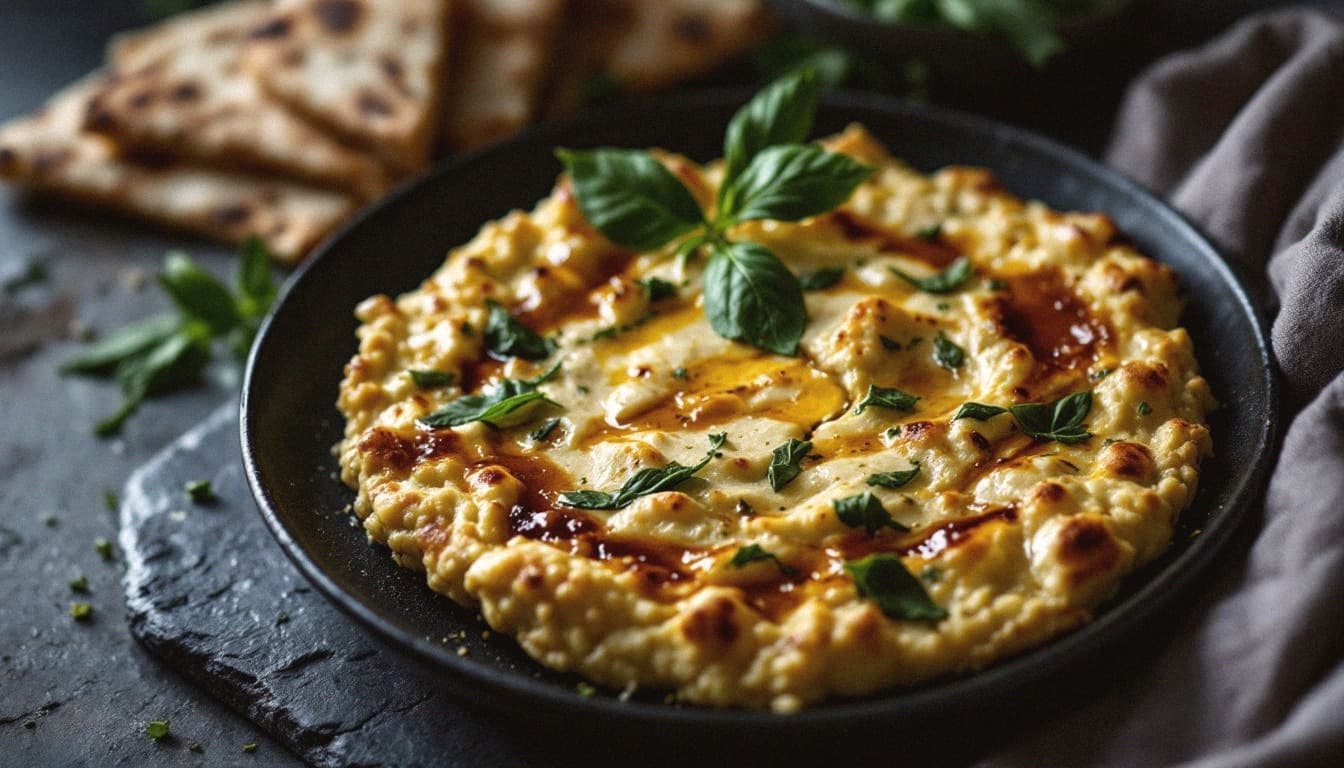
Wild Garlic Fatteh with Spring Peas and Pomegranate Molasses
Fatteh without yogurt sounds like a mistake, but wild garlic sauce and pomegranate molasses together do exactly what yogurt does: cut the richness of chickpeas with acid and funk. The wild garlic loses its raw, almost aggressive bite when it hits warm broth, settling into something foresty and complex that no restaurant version of this dish has ever tasted like. Make it while wild garlic is actually in season, because ramps or dried garlic won't get you there.
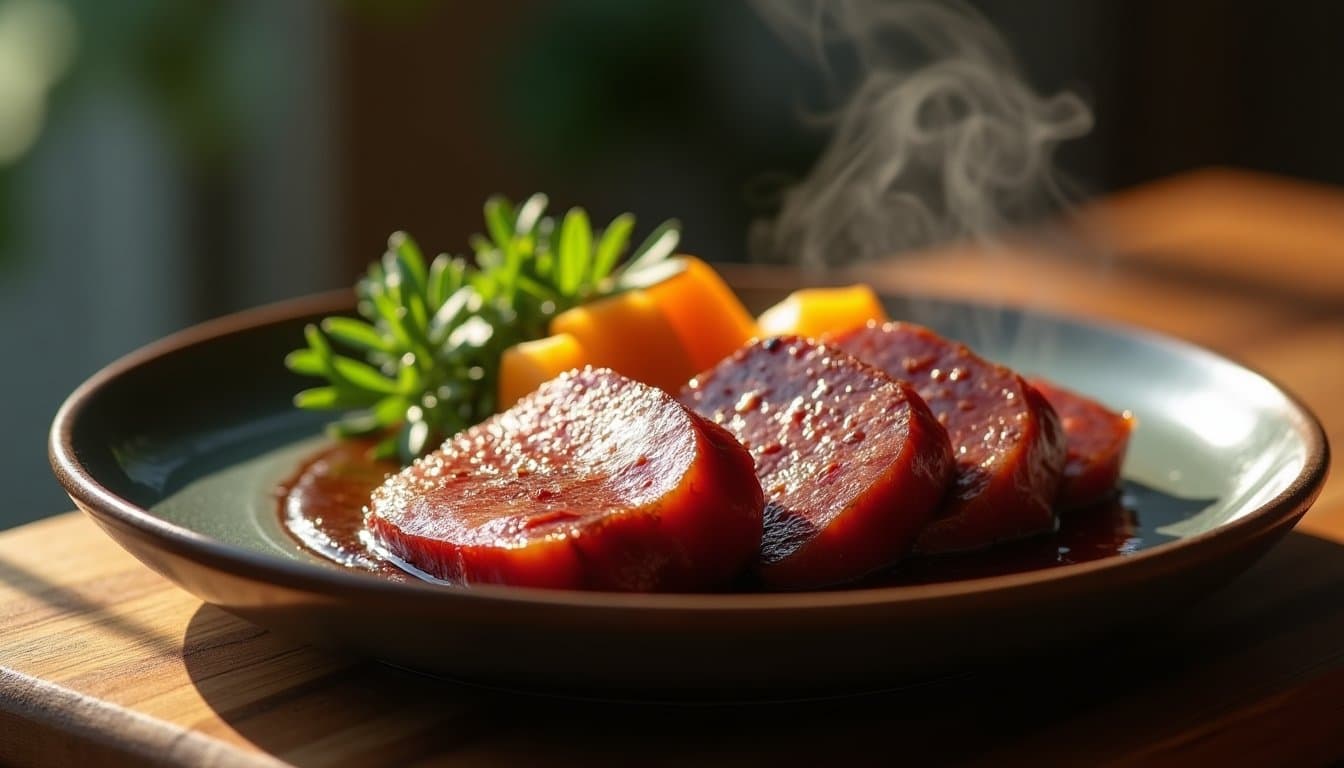
Cold-Smoked Duck Breast with Rhubarb-Ramp Gastrique and Spring Pea Purée
Duck breast gets cold-smoked over juniper and birch, seared to a lacquered crisp, then laid over sweet spring pea purée with a glossy rhubarb-ramp gastrique that is equal parts savage and elegant. Rhubarb's oxalic tartness cuts clean through the duck's subcutaneous fat, while wild ramps bring a sulfurous, garlicky funk that somehow tastes like the forest floor decided to dress for dinner. Nordic spring on a plate: fleeting, feral, and worth every step.
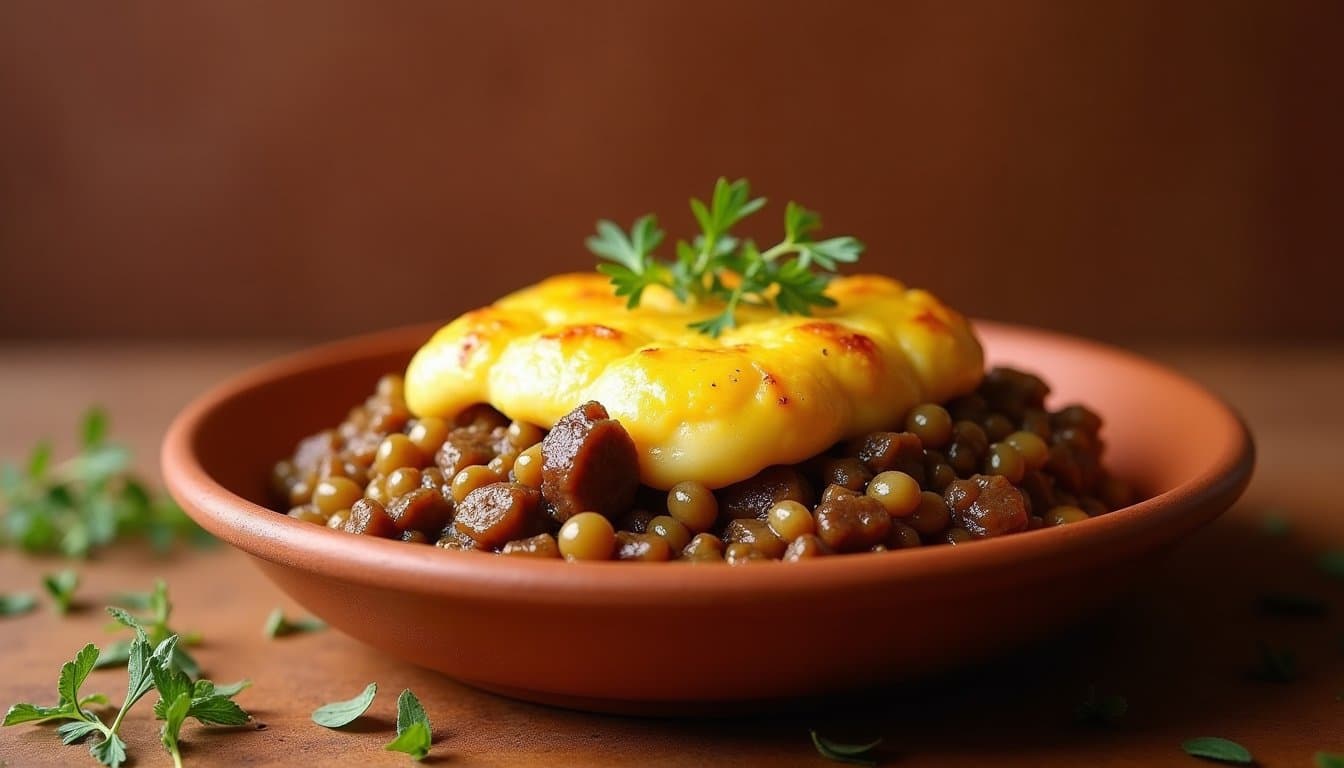
Wild Garlic Lamb Keema Shepherd's Pie with Ramp Mash and Pickled Pea Topping
A British pub kitchen meets a Mumbai dhaba, and neither one blinks. Spiced lamb keema loaded with wild garlic replaces the usual mince filling, a ramp-infused mash crowns the top, and bright pickled peas cut through the richness like a vinegar slap. Comfort food with a passport and a mild identity crisis — exactly how we like it.
Get the free flavor science guide.
5 rules that explain why unusual combinations work — plus new recipes every week.
You can unsubscribe anytime. No spam, ever. Or just read the guide.