This post contains affiliate links. We may earn a small commission at no extra cost to you. Learn more
Georgian Foraged Nettle-Walnut Pesto with Wild Garlic and Dehydrated Sulguni
what's this?
Strangeness scale
- 1 — Slightly odd
- 2 — Raises eyebrows
- 3 — Genuinely strange
- 4 — Deeply weird
- 5 — Unhinged
- Cook
- 3h
- Total
- 3h 25m
- Difficulty
- Medium
- Serves
- 6
- Origin
- Georgian
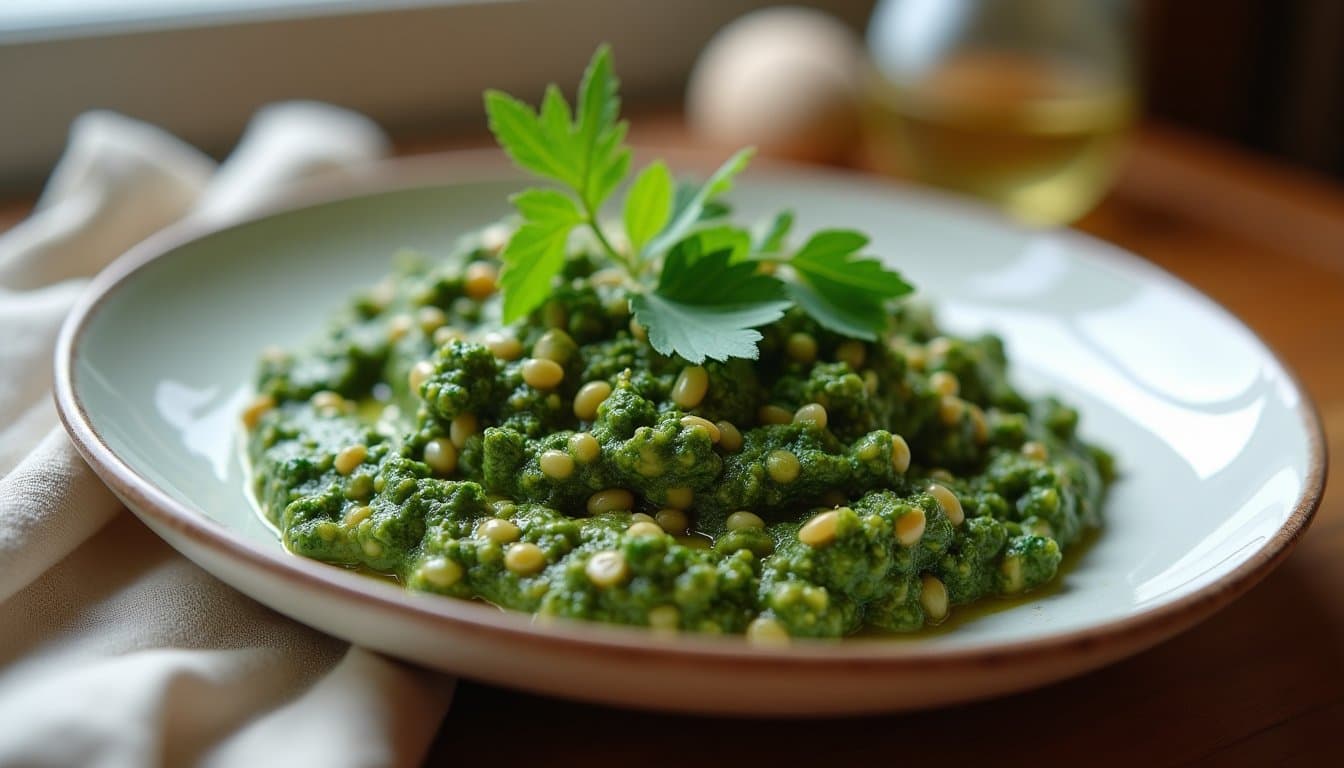
Picture a Caucasian mountain grandmother who discovered Italian pesto and immediately decided it needed stinging nettles, wild garlic, and crumbled dehydrated sulguni cheese. This is that sauce. The dehydration step concentrates the grassy chlorophyll punch of the nettles while amplifying the lactic tang of the sheep's milk cheese into something almost parmesan-adjacent, and the walnuts bring that deeply Georgian bazhe energy. It shouldn't work this well, but Georgian flavor logic is basically built for exactly this kind of green, nutty, funky chaos.
Equipment
Why It Actually Works
Dehydrating both the nettles and the sulguni is the critical move: removing water concentrates the Maillard-adjacent compounds in the cheese and the chlorophyll-bound flavor molecules in the nettle, making both ingredients punch far above their raw weight and preventing the watery dilution that kills most herb-based sauces. Georgian walnut sauces like bazhe are already built around the tannin-fat interaction between walnut polyphenols and oil, which creates a creamy emulsion without any dairy. The dehydrated sulguni crumbs then reintroduce lactic acid and calcium in a slow-release, textural way that mimics aged hard cheese without overpowering the green notes. Wild garlic contributes allicin and sulfur compounds that mirror the pungency of regular garlic in bazhe while adding a fresh, almost leek-like top note that bridges the grassy nettles and the nutty base.
Learn the flavor science rules behind recipes like this →Ingredients
- 200g fresh stinging nettle tops, young leaves only, blanched 30 seconds and squeezed dry
- 80g sulguni cheese (or other Georgian sheep's milk cheese), thinly sliced
- 100g raw Georgian walnuts, lightly toasted
- 40g wild garlic leaves (ramsons), washed and roughly torn
- 2 cloves regular garlic, peeled
- 60ml cold-pressed walnut oil, plus extra to finish
- 1 tbsp unfiltered apple cider vinegar
- 1 tsp dried fenugreek (utskho suneli), ground
- 0.5 tsp dried marigold petals (imeruli zafrana), ground
- 0.5 tsp dried coriander seed, ground
- 0.25 tsp dried chilli flakes
- 1 tsp flaky sea salt, plus more to taste
- 2 tbsp cold water, as needed to loosen
Instructions
1. DEHYDRATE THE CHEESE: Preheat your dehydrator to 57°C (135°F). Arrange the thinly sliced sulguni in a single layer on a mesh dehydrator tray. Dehydrate for 2.5 to 3 hours until the slices are completely dry, hard, and pale golden — they should snap cleanly and smell intensely of sour milk and grass. If you don't have a dehydrator, use your oven on its lowest setting with the door cracked open. Allow to cool completely on the tray.
2. DEHYDRATE THE NETTLE PULP: Blanch your nettle tops in boiling salted water for 30 seconds (this neutralises the sting — do not skip this), drain immediately into ice water, then squeeze out every drop of moisture you can. Spread the squeezed nettle paste thinly across a second dehydrator tray and dehydrate at 52°C (125°F) for 45 to 60 minutes until it forms a crumbly, dark green sheet. You are concentrating the chlorophyll and removing the watery grassiness that would make the final pesto thin and muddy.
3. GRIND THE DEHYDRATED ELEMENTS: Break the dehydrated sulguni into rough pieces and blitz in a small food processor or spice grinder until it resembles coarse, sandy crumbs — about 20 seconds. Do the same with the dehydrated nettle sheet, pulsing until you have a dark green powder with some chunky bits. Set both aside separately.
4. BUILD THE WALNUT BASE: In a food processor, combine the toasted walnuts, regular garlic cloves, fenugreek, marigold petals, ground coriander, and chilli flakes. Pulse 8 to 10 times until you have a coarse, crumbly paste — you want texture, not walnut butter. The Georgian bazhe tradition demands you respect the walnut's structure.
5. ADD THE AROMATICS: Add the wild garlic leaves to the walnut paste and pulse another 5 times. The wild garlic should be visibly shredded but not completely obliterated. Add the apple cider vinegar and walnut oil, then pulse 3 more times to combine. The mixture will look rough and slightly oily — this is correct.
6. FOLD IN THE DEHYDRATED ELEMENTS: Transfer the walnut-wild garlic mixture to a bowl. Add the dehydrated nettle powder and three-quarters of the dehydrated sulguni crumbs. Fold together with a spatula rather than blending — you want layers of texture. Add cold water one tablespoon at a time until the sauce just comes together into a thick, spreadable consistency. It should hold a peak when you pull the spatula away.
7. SEASON AND REST: Taste and season with flaky sea salt. The cheese will already bring significant salt, so go carefully. Drizzle the surface with a little extra walnut oil and scatter the reserved sulguni crumbs on top. Allow the pesto to rest at room temperature for at least 15 minutes before serving — this lets the dehydrated nettle powder rehydrate slightly and the flavours knit together. The colour will deepen from bright green to a complex forest green.
8. SERVE: Use as a sauce over roasted vegetables, grilled chicken, or khinkali dumplings. It keeps refrigerated under a thin layer of walnut oil for up to 5 days. The flavour intensifies significantly on day two.
Nutrition (estimated per serving)
- Calories
- 248
- Fat
- 22g
- Carbs
- 6g
- Protein
- 7g
- Fiber
- 2g
- Sodium
- 420mg
Variations
- Replace half the walnuts with sunflower seeds and add 1 tsp ground dried pomegranate seeds (narsharab powder) for a more classic bazhe structure with a fruity acid backbone.
- Skip the sulguni and use 60g dehydrated cashews blended with 1 tsp white miso and 1 tsp nutritional yeast to mimic the lactic funk. The umami profile actually gets weirder and more interesting.
- Stir in 1 tablespoon of red adjika paste after folding in the dehydrated elements for a fiery, brick-red swirled version that leans into Georgia's spice-forward western regional cooking.
Storage & Make-Ahead
The pesto base keeps in the fridge for up to 4 days in a small jar with a thin layer of walnut oil pressed directly onto the surface to slow oxidation. The dehydrated sulguni is the one component worth making well ahead, since it keeps at room temperature in a sealed container for up to 2 weeks and only gets more intensely flavored. Store it separately from the pesto or it will reabsorb moisture and lose that satisfying snap. The pesto freezes reasonably well for up to 6 weeks, though the wild garlic loses some of its sharpness after thawing, so stir in a few fresh torn leaves if you have them.
Reader Tips
No tips yet — be the first!
More Strange Recipes
Kashk-e Bademjan Roasted Eggplant Dip with Ramp Oil and Wok-Charred Walnuts
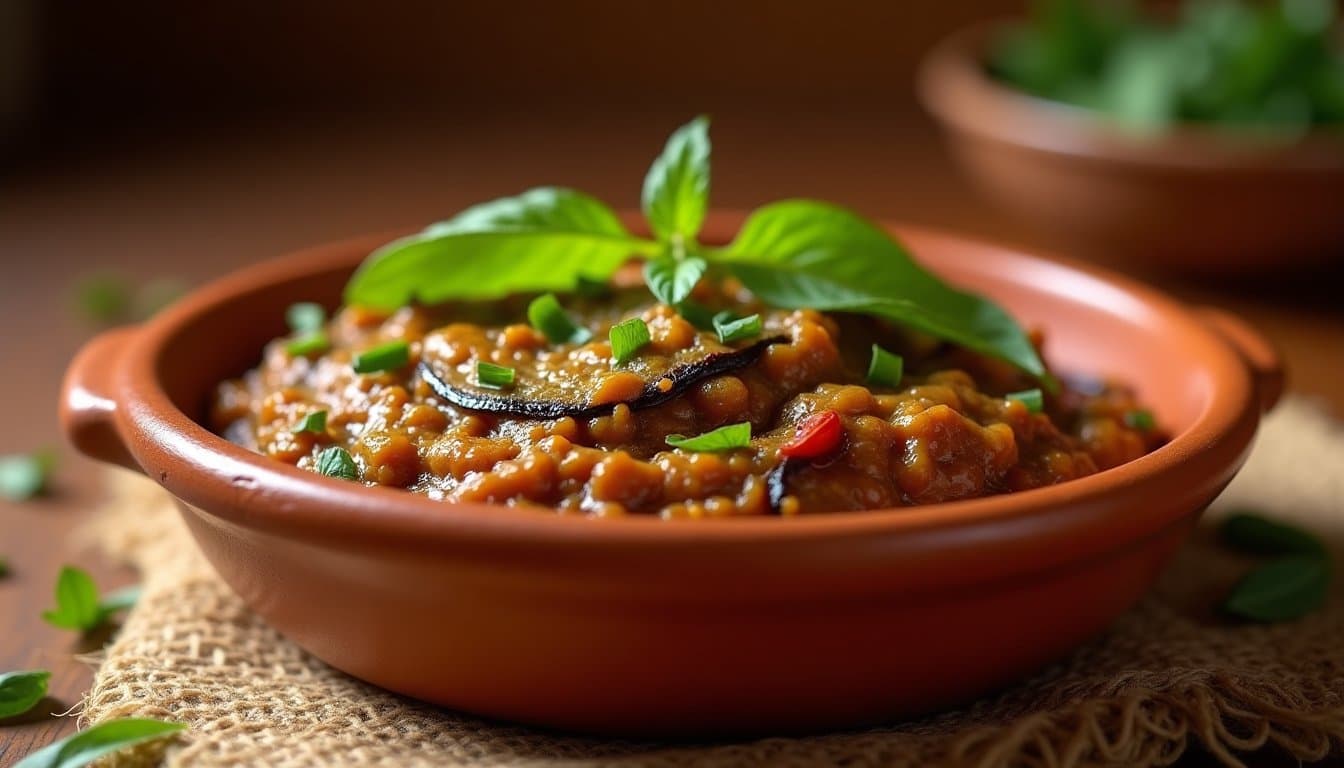
Persian kashk-e bademjan's feral spring cousin. Smoky roasted eggplant and tangy fermented whey get ambushed by a neon-green ramp oil and walnuts dry-toasted in a screaming-hot wok until they're borderline burnt and magnificent. The ramps bring a garlicky sharpness that makes the funky kashk taste even more ancient, while the wok char on the walnuts cuts straight through the eggplant's natural sweetness.
Caramelized Fish Sauce & Tamarind Glaze with Wild Garlic and Ramps
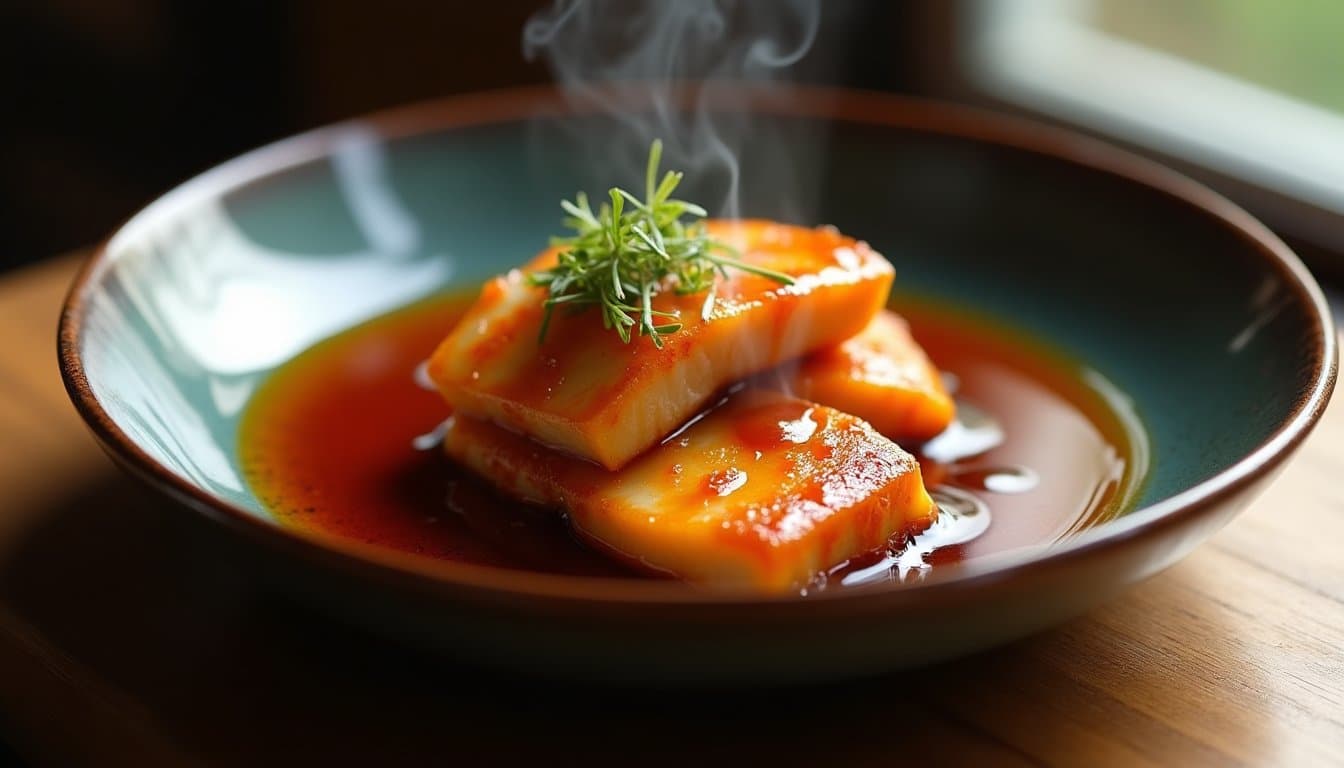
Fish sauce, cooked down until it turns syrupy and almost jammy, smells like a dare and tastes like a revelation. This Vietnamese-inspired glaze pushes that caramelized funk into genuinely strange territory by pulling in tamarind's fruity acid and wild garlic and ramps, two alliums that go feral when they hit warm oil. The result is something that belongs on grilled meat, noodles, or a spoon held over the sink at midnight.
Sous-Vide Wild Garlic Aioli with Preserved Lemon and Smoked Paprika
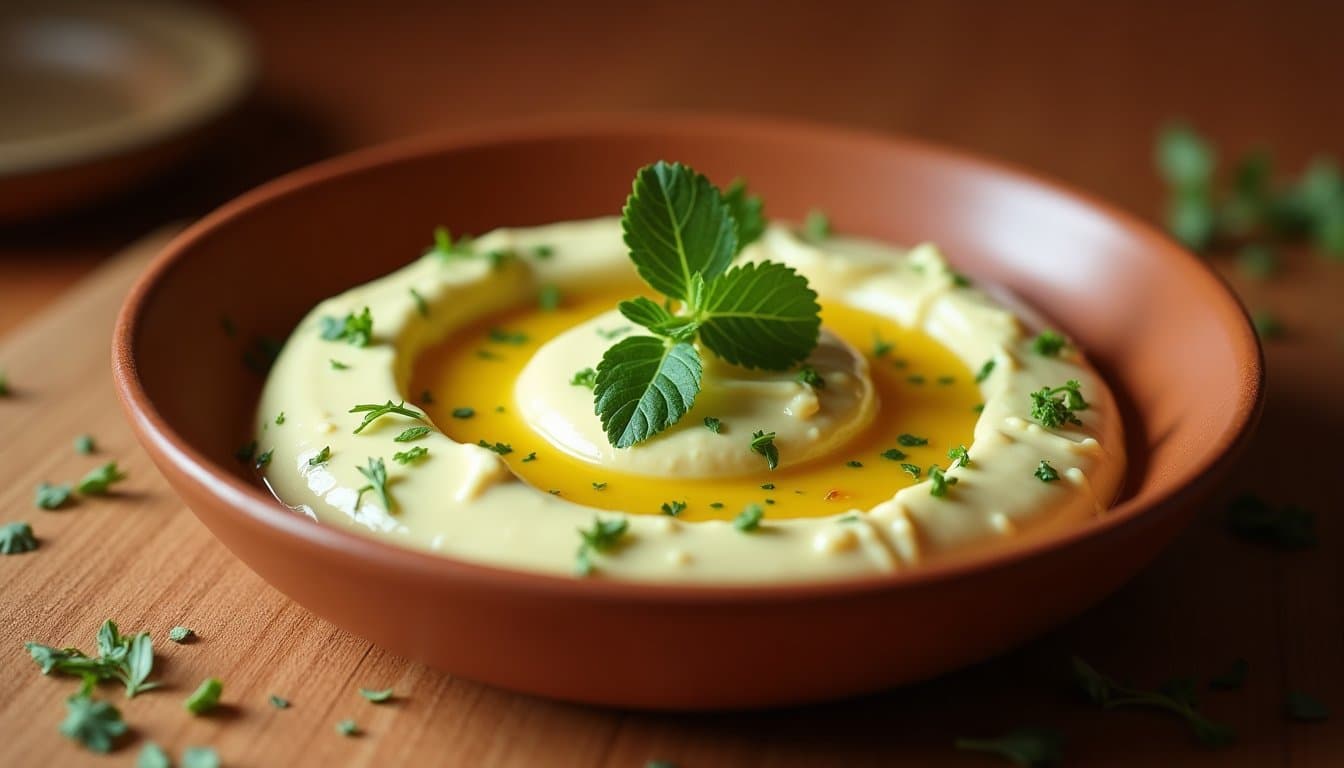
Wild garlic has a window of maybe six weeks a year, and this sauce is the best argument for using every bit of it. A sous-vide oil infusion pulls out the fat-soluble aromatics before they vanish, then the whole thing gets shaken up with preserved lemon brine and smoked paprika in a move borrowed loosely from Argentine chimichurri. The result is simultaneously ancient and a little alien, and it's the most intensely garlicky aioli you'll make without shedding a tear.
Get the free flavor science guide.
5 rules that explain why unusual combinations work — plus new recipes every week.
You can unsubscribe anytime. No spam, ever. Or just read the guide.