This post contains affiliate links. We may earn a small commission at no extra cost to you. Learn more
Kimchi Potato Hash with Crispy Fried Egg and Gochujang Brown Butter
what's this?
Strangeness scale
- 1 — Slightly odd
- 2 — Raises eyebrows
- 3 — Genuinely strange
- 4 — Deeply weird
- 5 — Unhinged
- Cook
- 25m
- Total
- 35m
- Difficulty
- Medium
- Serves
- 2
- Origin
- Korean
Fermented kimchi has no business being this good in a breakfast hash, and yet here we are. The lactic acid does the deglazing work for you, lifting every caramelized potato bit off the pan while the cabbage edges char into something almost smoky. A lacy fried egg goes on top, gochujang brown butter goes over that, and suddenly your Saturday morning has a point of view.
Equipment
Why It Actually Works
Kimchi's lactic and acetic acids hit the hot pan and dissolve the Maillard-reaction fond from the potatoes, concentrating flavor instead of washing it away. Gochujang, a fermented chili paste loaded with glutamates from its koji-fermented soybean base, meets the brown butter's diacetyl-rich fat molecules and produces a layered umami depth that neither ingredient pulls off on its own. The runny yolk, rich in lecithin, emulsifies on contact with the gochujang butter and kimchi brine, turning what could be a greasy mess into a cohesive, glossy sauce without a drop of cream.
Learn the flavor science rules behind recipes like this →Ingredients
- 2 medium Yukon Gold potatoes, about 400g, cut into 1.5cm cubes
- 1 cup napa cabbage kimchi, roughly chopped, plus 2 tbsp kimchi brine reserved
- 3 tbsp neutral oil, such as grapeseed or avocado, divided
- 2 tbsp unsalted butter
- 1 tbsp gochujang paste
- 3 cloves garlic, thinly sliced
- 1 tsp toasted sesame oil
- 2 large eggs
- 2 scallions, thinly sliced, white and green parts separated
- 1 tsp toasted sesame seeds
- 0.5 tsp kosher salt, plus more to taste
- 0.25 tsp freshly ground black pepper
- 1 sheet roasted nori, torn into small shards, for garnish
Instructions
1. Parboil the potato cubes in salted boiling water for 5 minutes until just barely fork-tender but still holding their shape. Drain thoroughly and spread on a paper towel-lined plate; pat very dry. Dry potatoes equal crispy hash — this step is non-negotiable.
2. Heat a large cast-iron or heavy stainless skillet over medium-high until it just begins to smoke. Add 2 tablespoons of neutral oil and swirl to coat. Add the parboiled potatoes in a single layer and press down gently with a spatula. Cook undisturbed for 4 to 5 minutes until a deep golden crust forms on the bottom.
3. Flip the potatoes in sections, add the sliced garlic and scallion whites, and cook another 3 to 4 minutes until the second side is equally golden. Season with salt and pepper.
4. Push the potatoes to the perimeter of the pan. Add the chopped kimchi to the center and cook, pressing down, for 2 to 3 minutes until the kimchi edges char slightly and the raw fermented smell mellows into something nutty and caramelized.
5. Pour the reserved 2 tablespoons of kimchi brine over everything and toss to combine. The brine will sizzle violently, deglazing the fond and coating every potato cube in tangy, fermented goodness. Drizzle with sesame oil, toss once more, and transfer the hash to a warm serving plate.
6. Make the gochujang brown butter: wipe the pan clean with a paper towel (carefully). Over medium heat, melt the butter and cook, swirling constantly, until the milk solids turn amber and the butter smells nutty, about 3 minutes. Remove from heat, wait 30 seconds for the bubbling to subside, then whisk in the gochujang paste. It will seize slightly — that's fine. Whisk until smooth.
7. Return the pan to medium-high heat and add the remaining 1 tablespoon of neutral oil. When shimmering, crack in the eggs. Fry until the whites are fully set with crispy, lacy, frilled edges but the yolks are still runny, about 2 to 3 minutes. Tilt the pan and baste the whites with the hot oil if needed.
8. Lay the crispy fried eggs over the hash. Drizzle the gochujang brown butter over both eggs and hash. Garnish with scallion greens, sesame seeds, and torn nori shards. Serve immediately and eat fast — the yolk is the sauce.
Nutrition (estimated per serving)
- Calories
- 520
- Fat
- 32g
- Carbs
- 45g
- Protein
- 12g
- Fiber
- 5g
- Sodium
- 820mg
Variations
- Dice half a can of Spam into 1cm cubes and fry them in the pan before the potatoes. It's hyper-specific Korean convenience-store energy, and it works better than it has any right to.
- For a vegan version, press and slice extra-firm tofu 1cm thick, fry it until crispy in place of the egg, and swap the butter for vegan butter or coconut oil. The brown butter step still works fine.
- Skip the potatoes entirely and stir in 1 cup of day-old short-grain rice with the kimchi for a hash-fried-rice hybrid that can't decide what meal it belongs to, in the best possible way.
Storage & Make-Ahead
The parboiled potatoes can be made up to 2 days ahead: drain, pat dry, and refrigerate them uncovered on a sheet pan so they dry out further, which actually improves crispiness when you fry them. The full cooked hash keeps in the fridge for up to 3 days in a sealed container, though it will soften; reheat it in a dry cast-iron skillet over medium-high for 5 to 7 minutes to bring back some crust. Skip storing the gochujang brown butter with the hash since it absorbs into the potatoes and turns greasy overnight, so make a fresh batch when reheating. Fry the eggs fresh each time, and hold the nori shards separately at room temperature since they turn chewy and limp within minutes of hitting moisture.
Reader Tips
No tips yet — be the first!
More Strange Recipes

Spring Pea Tapioca Crepes with Charred Lime and Watercress Oil
Brazilian tapioca crepes get a raw-food makeover with blended fresh spring peas folded straight into the batter, then finished with a punchy watercress oil and limes charred directly over a gas flame. The starch in tapioca flour binds without heat, so the pea flavor stays grassy and bright rather than cooked into sweetness. It's a breakfast that genuinely tastes like the moment before summer shows up.
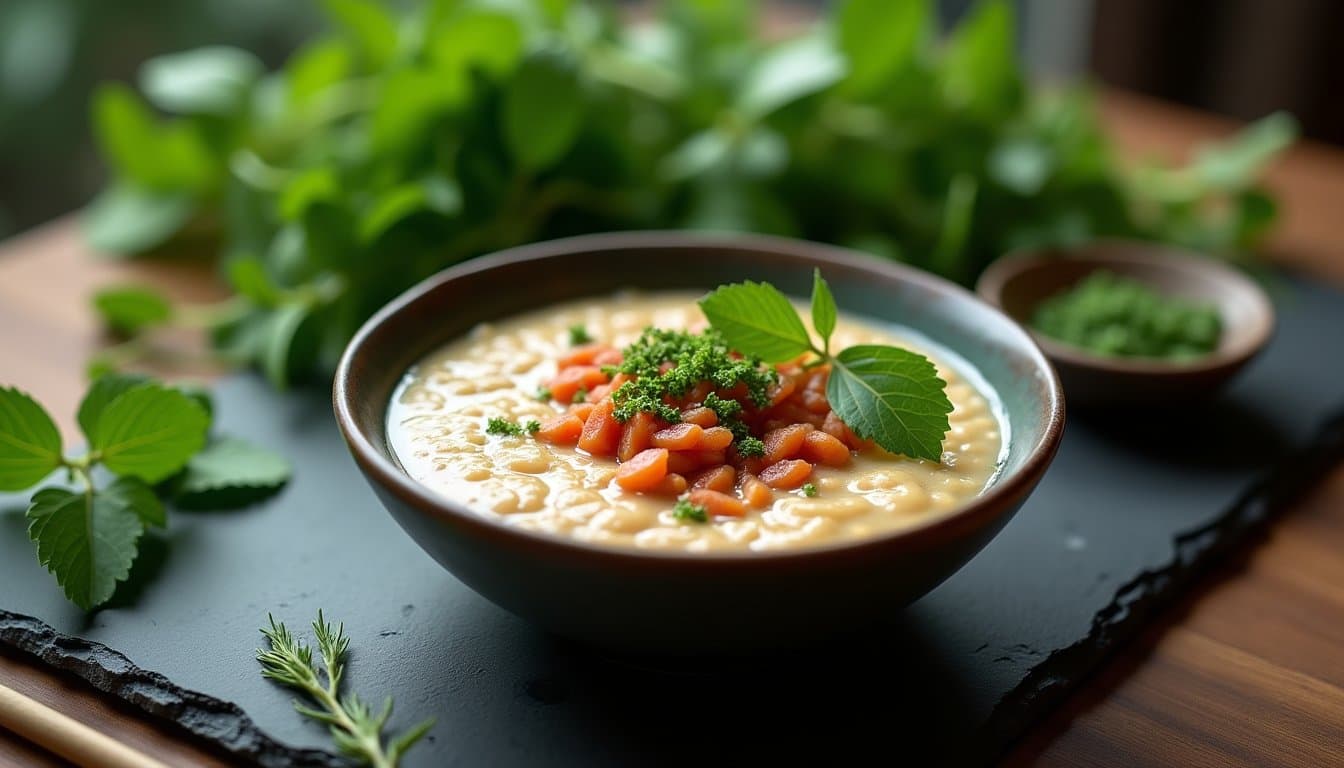
Fermented Oat and Anchovy Congee with Crispy Shallots
Picture a Nordic fisherman and a Cantonese grandmother snowed in together, arguing about breakfast until they land on something neither culture would claim but both should. Lacto-fermented rolled oats break down into a silky, congee-like base with a gentle tang that makes the briny, glutamate-rich anchovies sing rather than shout. The crispy shallots and spring onion cut through the richness with real textural contrast, and the result is simultaneously ancient, weird, and deeply correct.

Morel Dutch Baby with Truffle Butter and Ramp Confiture
A Dutch baby is already a strange thing: pancake batter poured into a screaming-hot cast-iron skillet, then ballooned into a golden, custardy bowl by oven steam. This one goes further. Finely chopped morels go into the batter, truffle butter melts into the skillet's hot edge, and a jammy ramp confiture brings wild-onion sweetness to every bite. It tastes like a fine-dining tasting menu crashed your Sunday brunch. That's the whole idea.
Get the free flavor science guide.
5 rules that explain why unusual combinations work — plus new recipes every week.
You can unsubscribe anytime. No spam, ever. Or just read the guide.