This post contains affiliate links. We may earn a small commission at no extra cost to you. Learn more
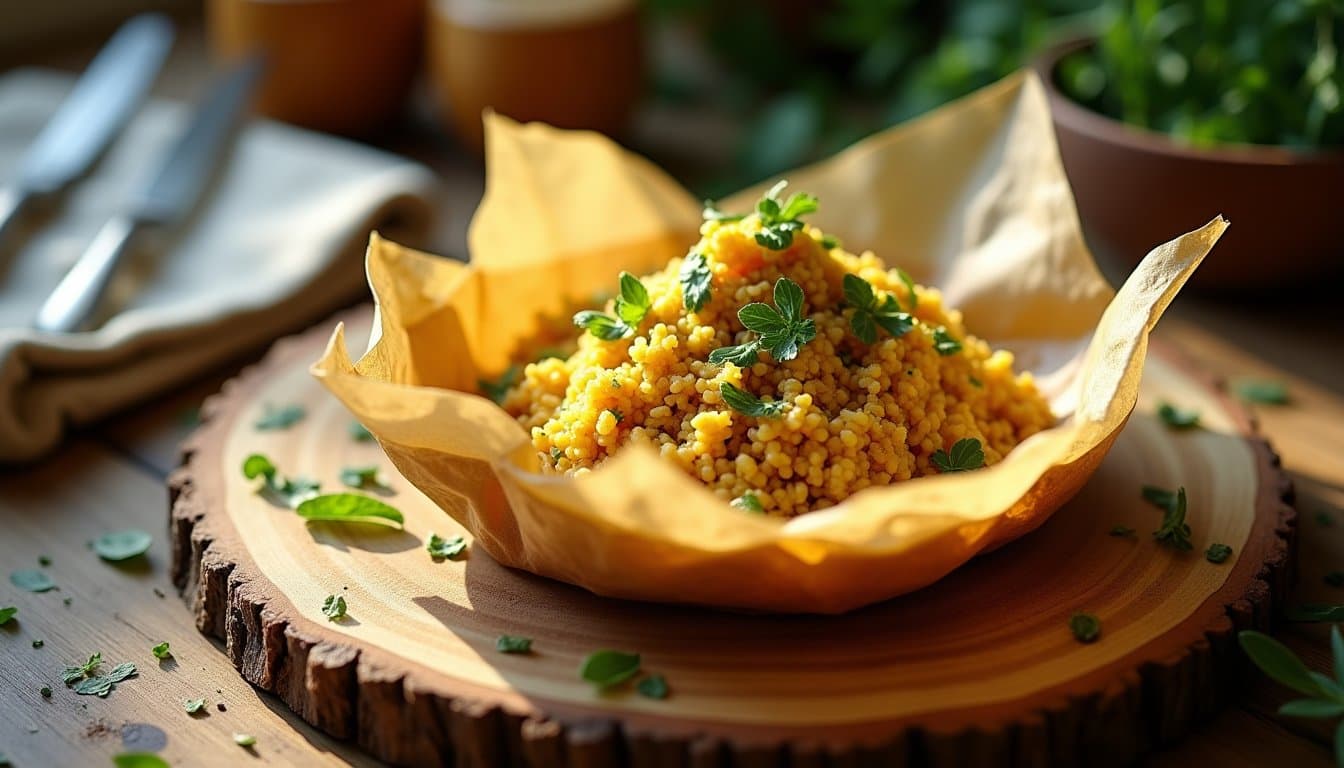
Saffron-Dried Lime Morel & Ramp Pilaf Baked in Parchment
what's this?
Strangeness scale
- 1 — Slightly odd
- 2 — Raises eyebrows
- 3 — Genuinely strange
- 4 — Deeply weird
- 5 — Unhinged
- Cook
- 45m
- Total
- 1h 15m
- Difficulty
- Medium
- Serves
- 4
- Origin
- Persian
Persian chelow meets a foraged spring obsession: wild morel mushrooms and pungent ramps steam-locked inside parchment with bloomed saffron and whole dried limes (limu omani), producing a smoky-funky-floral rice that tastes like Nowruz celebrated in a forest. The en-papillote technique traps every volatile aromatic compound, ramp sulfides, saffron safranal, lime terpenes, in a pressurized flavor sauna instead of letting them drift off into your kitchen. It's weird, it's Persian, and it's deeply correct.
Equipment
Why It Actually Works
Dried Persian limes are fermented and sun-dried whole fruits whose cell walls have broken down to concentrate citric acid, terpene-rich volatile oils, and Maillard-reaction compounds from the drying process. Piercing them lets those molecules leach slowly into the rice's steam environment, building a sour-smoky background note similar to what tamarind does in South Asian cooking. Ramps contain organosulfur compounds, more complex than those in garlic or onion, that bond with the glutamates naturally present in morel mushrooms, producing a synergistic umami amplification well beyond what either ingredient manages alone. Cooking en papillote closes the system so safranal, saffron's primary aromatic compound that evaporates quickly in an open pot, gets trapped and reabsorbed into the rice grains instead of disappearing.
Learn the flavor science rules behind recipes like this →Ingredients
- 1.5 cups basmati rice, soaked in cold salted water for 1 hour then drained
- 1.75 cups vegetable stock, warm
- 0.5 tsp saffron threads, bloomed in 3 tbsp hot water for 15 minutes
- 2 whole dried Persian limes (limu omani), pierced 6 times each with a skewer
- 200 g fresh morel mushrooms, halved lengthwise and gently brushed clean
- 1 bunch ramps (wild leeks), roots trimmed, bulbs and leaves separated and roughly chopped
- 3 tbsp good-quality olive oil, divided
- 1 tsp ground turmeric
- 0.5 tsp ground cumin
- 0.25 tsp ground cinnamon
- 0.25 tsp ground black pepper, freshly ground
- 1.5 tsp kosher salt, plus more to taste
- 2 tbsp dried barberries (zereshk), rinsed
- 2 tbsp toasted slivered almonds
- 1 tbsp fresh dill fronds, roughly torn, for garnish
- 1 tsp dried rose petals (culinary grade), for garnish
Instructions
Preheat your oven to 400°F (205°C). Tear four sheets of parchment paper, each roughly 16 × 20 inches. Bloom your saffron now: crush threads into a small bowl, add 3 tbsp just-boiled water, and let it steep while you prep everything else.
Parboil the drained basmati by bringing a large pot of heavily salted water to a rolling boil, adding the rice, and cooking for exactly 5 minutes. It should be tender on the outside but still chalky at the core. Drain immediately through a fine-mesh sieve, rinse briefly with cool water to stop cooking, and set aside. This partial cook ensures the rice finishes perfectly inside the sealed parcel.
Warm 2 tbsp olive oil in a skillet over medium-high heat. Add the ramp bulbs and cook for 2 minutes until just softened and fragrant. Add the morel mushrooms and a pinch of salt, then sauté for 3 to 4 minutes until they release their liquid and the edges start to brown. Add the ramp leaves, turmeric, cumin, cinnamon, and black pepper and toss for 60 seconds. Pull off the heat and fold in the barberries. Taste and adjust salt.
In a large bowl, gently combine the parboiled rice with the mushroom-ramp mixture, all of the bloomed saffron water, 1.5 tsp kosher salt, and the warm vegetable stock. Stir just until combined. Overworking the rice makes it gummy.
Divide the rice mixture evenly among the four parchment sheets, mounding it in the center. Press one pierced dried lime deep into the center of each mound. Drizzle each portion with the remaining 1 tbsp olive oil divided among the four.
Fold each parcel by bringing the two long edges of parchment together above the rice, folding down tightly in 1-inch accordion folds three times, then twisting and tucking the short ends underneath to create a sealed, puffy packet. The seal must be tight. Pressure buildup is what steams the rice through. Place all four parcels on a large rimmed baking sheet.
Bake at 400°F for 35 to 38 minutes. The parcels will puff dramatically and may show small steam wisps at the seams. Do not open early. You will lose the pressurized aromatics that make this dish what it is.
Remove from the oven and let the parcels rest, still sealed, for 5 minutes. This allows steam to redistribute and the rice to finish absorbing. Bring the sealed parcels to the table, then carefully cut or tear open the top with scissors, angling away from faces as a burst of saffron-lime steam will escape.
Scatter toasted slivered almonds, fresh dill fronds, and dried rose petals over each opened parcel. The dried lime will be soft enough to squeeze a bit of its intensely sour, slightly smoky juice directly over the rice. Encourage your guests to do this. Serve immediately, eating directly from the parchment.
Nutrition (estimated per serving)
- Calories
- 387
- Fat
- 13g
- Carbs
- 59g
- Protein
- 9g
- Fiber
- 4g
- Sodium
- 720mg
Variations
- After step 6, set the parcels on a preheated cast-iron skillet for the first 10 minutes of baking to develop a crispy bottom crust through the parchment, a direct nod to the sacred Persian tahdig.
- Swap 50g of the fresh morels for rehydrated dried morels and use the strained soaking liquid in place of some vegetable stock. The result is a deeper, more concentrated forest funk that plays off the dried lime's smokiness.
- Stir 2 tbsp each of chopped dried apricots and golden raisins into the rice mixture in step 4 for a sweeter, more celebratory profile that pulls the dish toward Persian jeweled rice (morassa polo).
Storage & Make-Ahead
The baked pilaf keeps well in the fridge for up to 3 days sealed in an airtight container, though the morels will soften further and lose some of their texture by day two. Reheat gently with a splash of vegetable stock in a covered skillet over low heat, or in a 325°F oven wrapped in fresh parchment for about 10 minutes, to revive the rice without drying it out. The dried barberries, toasted almonds, dill, and rose petals should be stored separately and added only after reheating, since the petals turn papery and the almonds go soggy if left on the rice overnight. This pilaf doesn't freeze well, as the parboiled basmati turns grainy and the morels become waterlogged on thawing.
Reader Tips
No tips yet — be the first!
More Strange Recipes
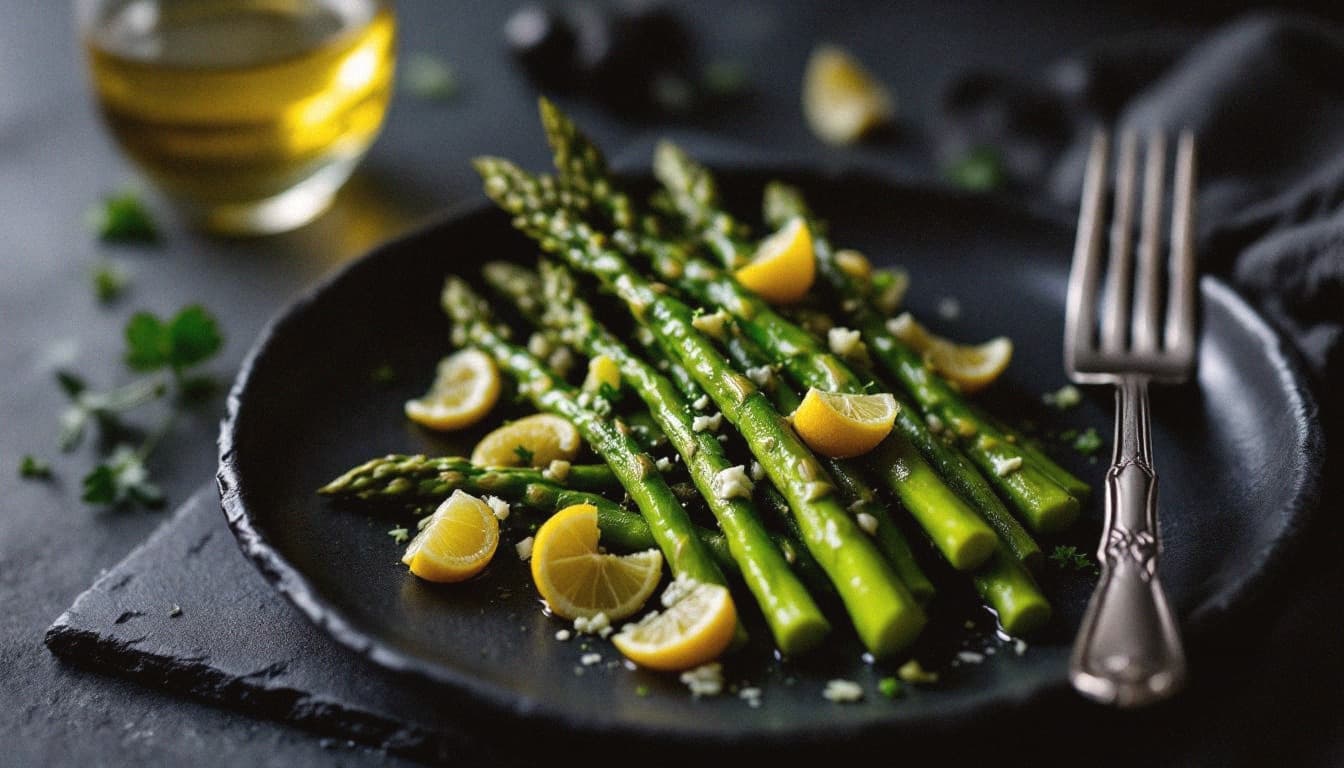
Aquavit-Pickled Asparagus with Juniper and Dill Seed
Aquavit already carries caraway and dill in its botanical makeup, so using it as a pickling base for asparagus is less a wild experiment and more a logical conclusion. Juniper berries crack open to release piney, resinous oils that cut through the brine's acidity, while dill seeds (not fronds) bring a rounder, almost anise-like depth that fresh dill never quite manages. The result is a jar of spears that taste like a Scandinavian forest floor in the best possible way.
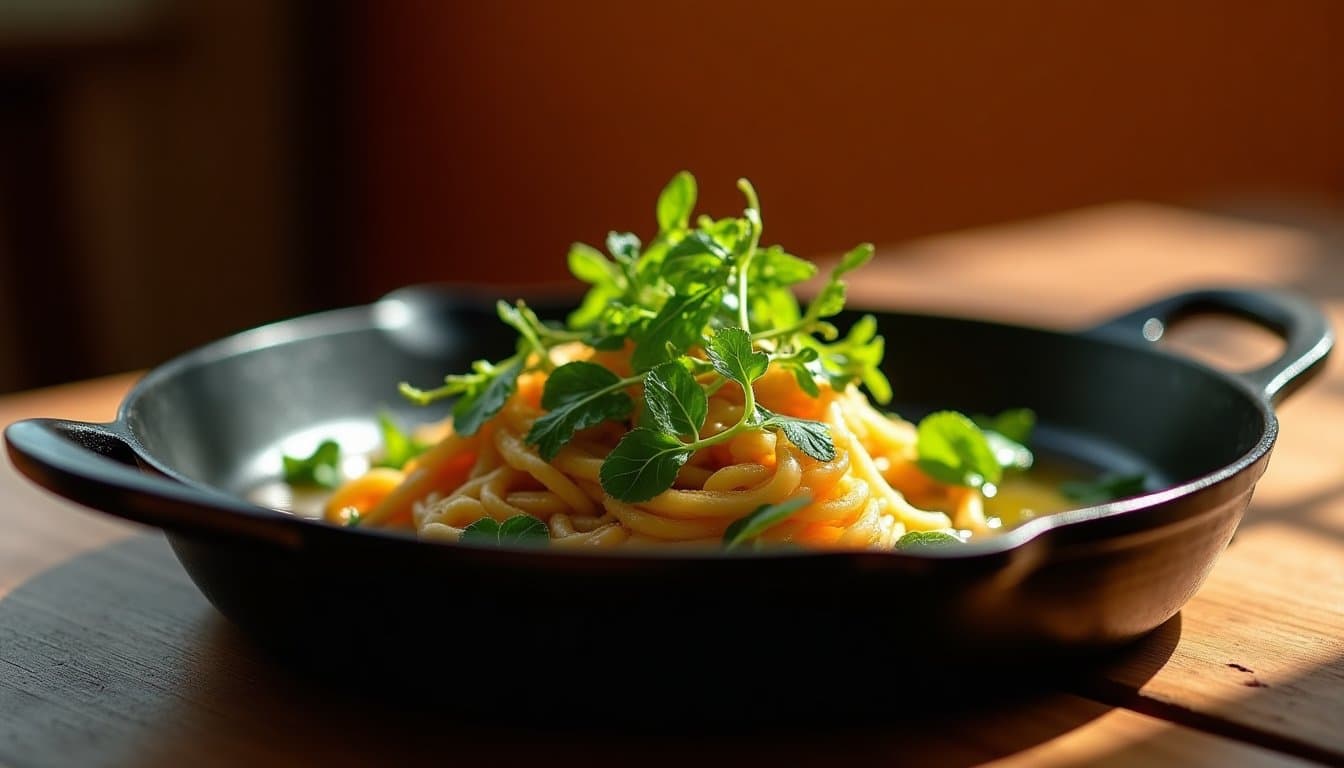
Nettle-Ramp Atakilt Wat en Papillote with Spring Peas
Atakilt wat, Ethiopia's cabbage-and-potato stew built on berbere and turmeric, has no business being this good when ramps and stinging nettles get involved, but here we are. Sealing the whole thing in parchment turns the sulfurous funk of ramp bulbs and the mineral bite of nettles into a pressurized aromatic steam that permeates every vegetable in the packet. Open it at the table so nobody misses the berbere sauna moment.
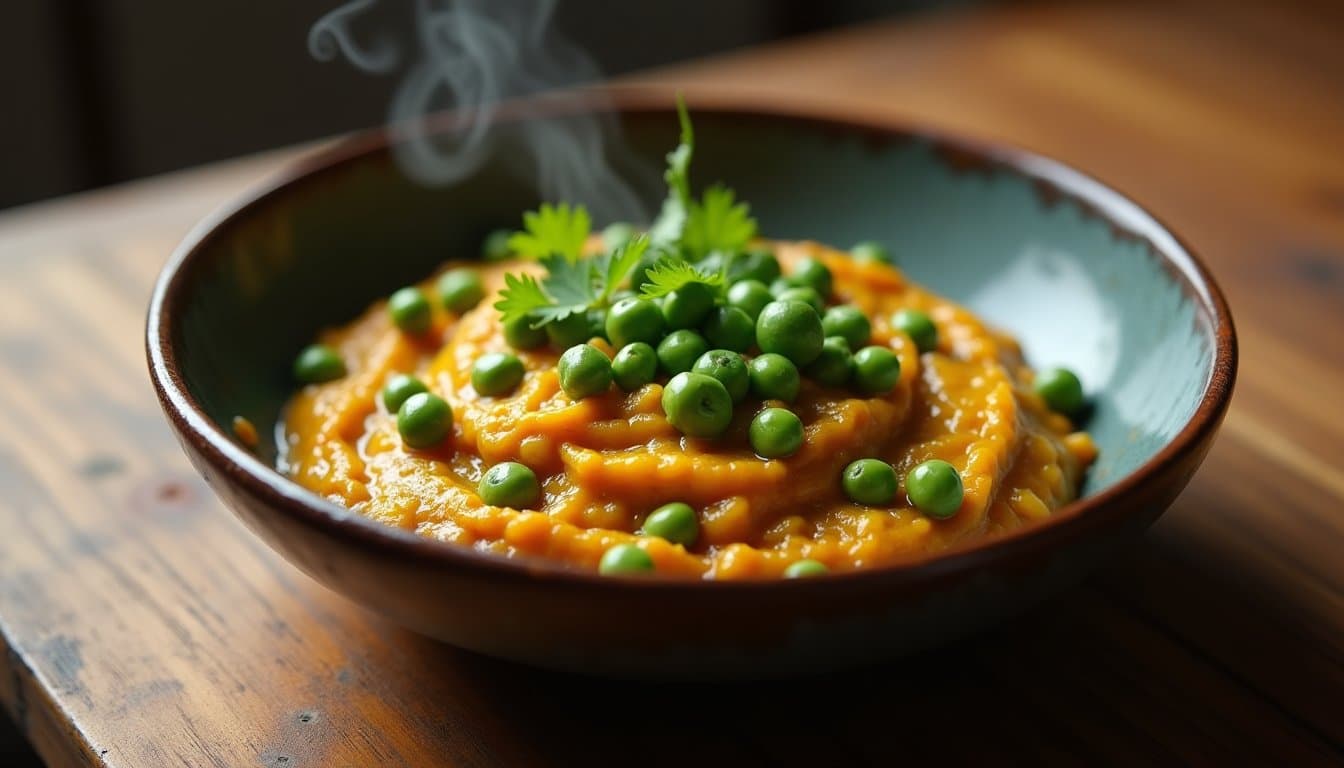
Spring Pea and Ramp Dal with Wild Garlic Tadka and Crispy Curry Leaves
Appalachian foraged ramps have no business being in a Bengali masoor dal, and yet here we are. The sulfurous, leek-meets-garlic punch of ramps and wild garlic replaces the traditional onion-garlic base entirely, while spring peas dissolve into the lentils and bring a grassy sweetness dal has never had before. The plot twist is a screaming-hot wok tadka of curry leaves, black mustard seeds, and raw wild garlic poured over the top at the last second.
Get the free flavor science guide.
5 rules that explain why unusual combinations work — plus new recipes every week.
You can unsubscribe anytime. No spam, ever. Or just read the guide.