This post contains affiliate links. We may earn a small commission at no extra cost to you. Learn more
Aquavit-Pickled Asparagus with Juniper and Dill Seed
what's this?
Strangeness scale
- 1 — Slightly odd
- 2 — Raises eyebrows
- 3 — Genuinely strange
- 4 — Deeply weird
- 5 — Unhinged
- Cook
- 10m
- Total
- 24h 30m
- Difficulty
- Easy
- Serves
- 6
- Origin
- Scandinavian
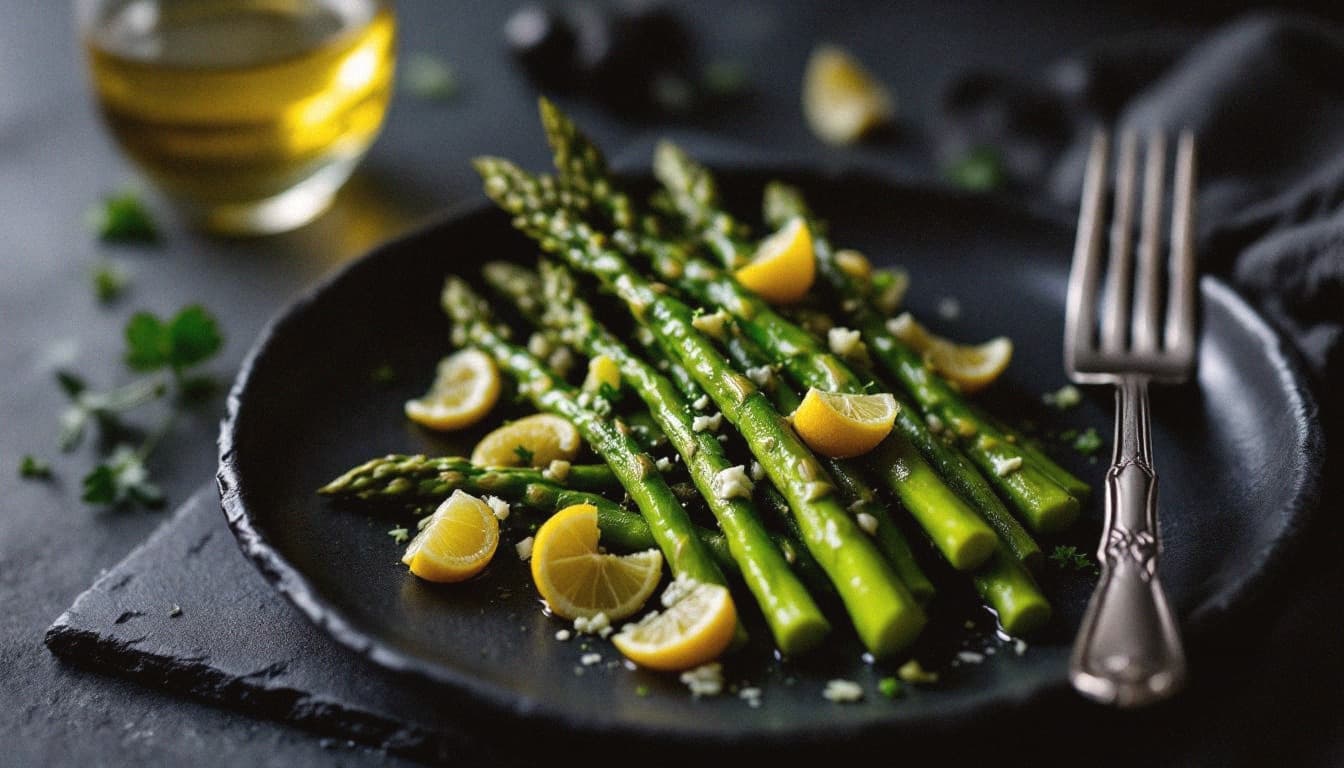
Aquavit already carries caraway and dill in its botanical makeup, so using it as a pickling base for asparagus is less a wild experiment and more a logical conclusion. Juniper berries crack open to release piney, resinous oils that cut through the brine's acidity, while dill seeds (not fronds) bring a rounder, almost anise-like depth that fresh dill never quite manages. The result is a jar of spears that taste like a Scandinavian forest floor in the best possible way.
Equipment
Why It Actually Works
Aquavit's botanicals, primarily caraway and dill, share aromatic compounds (carvone, limonene) with the asparagus family, so the spirit amplifies the vegetable's natural flavor rather than competing with it. Juniper berries contain alpha-pinene and myrcene, resinous terpenes that bind to fat-soluble receptors on the tongue and register as a pleasant bitterness that cuts through the vinegar's sharpness. Dill seeds have had time to concentrate their essential oils compared to fresh fronds, so they release a slower, warmer anise note that rounds out the brine's acidity during the 24-hour rest.
Learn the flavor science rules behind recipes like this →Ingredients
- 500 g asparagus, woody ends snapped off and trimmed to fit a 1-litre jar
- 120 ml aquavit (caraway-forward style such as Linie or Aalborg)
- 240 ml white wine vinegar
- 240 ml water
- 2 tbsp granulated sugar
- 1.5 tbsp fine sea salt
- 1 tbsp dill seeds
- 1 tsp juniper berries, lightly cracked with a knife
- 0.5 tsp black peppercorns
- 2 cloves garlic, peeled and halved
- 1 small shallot, thinly sliced into rings
- 1 strip lemon zest, about 5 cm long
Instructions
Sterilise a 1-litre wide-mouth jar and its lid by running them through a hot dishwasher cycle or submerging in boiling water for 10 minutes. Set them on a clean towel to air-dry completely before you fill them.
Bring a large pot of well-salted water to a rolling boil. Drop in the asparagus and blanch for exactly 90 seconds, then lift straight into a bowl of ice water. The ice bath locks in the color and softens the cell walls just enough to let the brine penetrate without turning the spears limp.
Drain the asparagus and pat the spears completely dry. Stand them upright in the jar, tips facing up, then tuck the garlic halves, shallot rings, and lemon zest strip in among them.
Combine the white wine vinegar, water, sugar, and salt in a small saucepan over medium heat. Stir until everything dissolves, about 3 minutes. Pull the pan off the heat.
Add the dill seeds, cracked juniper berries, and black peppercorns directly to the hot brine and let them steep off the heat for 5 minutes. This blooms their volatile oils without cooking them into bitterness.
Pour the aquavit into the warm brine and stir to combine. Don't let the aquavit boil at any point; heat drives off the aromatic compounds you're actually after.
Pour the brine over the asparagus until the spears are fully submerged. Tap the jar firmly on the counter a few times to release any trapped air. The spears may float slightly; that's fine.
Seal the jar and let it cool to room temperature, about 30 minutes, then refrigerate for at least 24 hours before opening. At 48 hours the flavor is noticeably deeper. They'll keep refrigerated for up to 3 weeks.
Nutrition (estimated per serving)
- Calories
- 55
- Fat
- 0g
- Carbs
- 7g
- Protein
- 2g
- Fiber
- 2g
- Sodium
- 620mg
Variations
- Swap aquavit for a juniper-forward dry gin like Tanqueray for a more citrus-driven brine, which works particularly well alongside smoked salmon.
- If your aquavit leans dill rather than caraway, add 0.5 tsp of caraway seeds alongside the dill seeds to keep the spice balance from going one-dimensional.
- For a winter version, drop one small dried red chilli and a thin slice of fresh ginger into the jar before pouring the brine; the heat plays surprisingly well against the piney juniper.
Storage & Make-Ahead
The pickled asparagus needs at least 48 hours in the fridge before serving, which gives the brine time to push the aquavit and juniper flavors all the way through the spears. Once fully pickled, the jar keeps well for up to three weeks in the refrigerator, though the asparagus softens gradually after the first week, so plan to eat it while it still has some snap. Freezing isn't worth attempting here, the texture turns to mush once thawed. You can make the brine up to a week ahead and store it separately in the fridge, then blanch the asparagus and assemble the jar the day you want to start the pickling clock.
Reader Tips
No tips yet — be the first!
More Strange Recipes
Nettle-Ramp Atakilt Wat en Papillote with Spring Peas
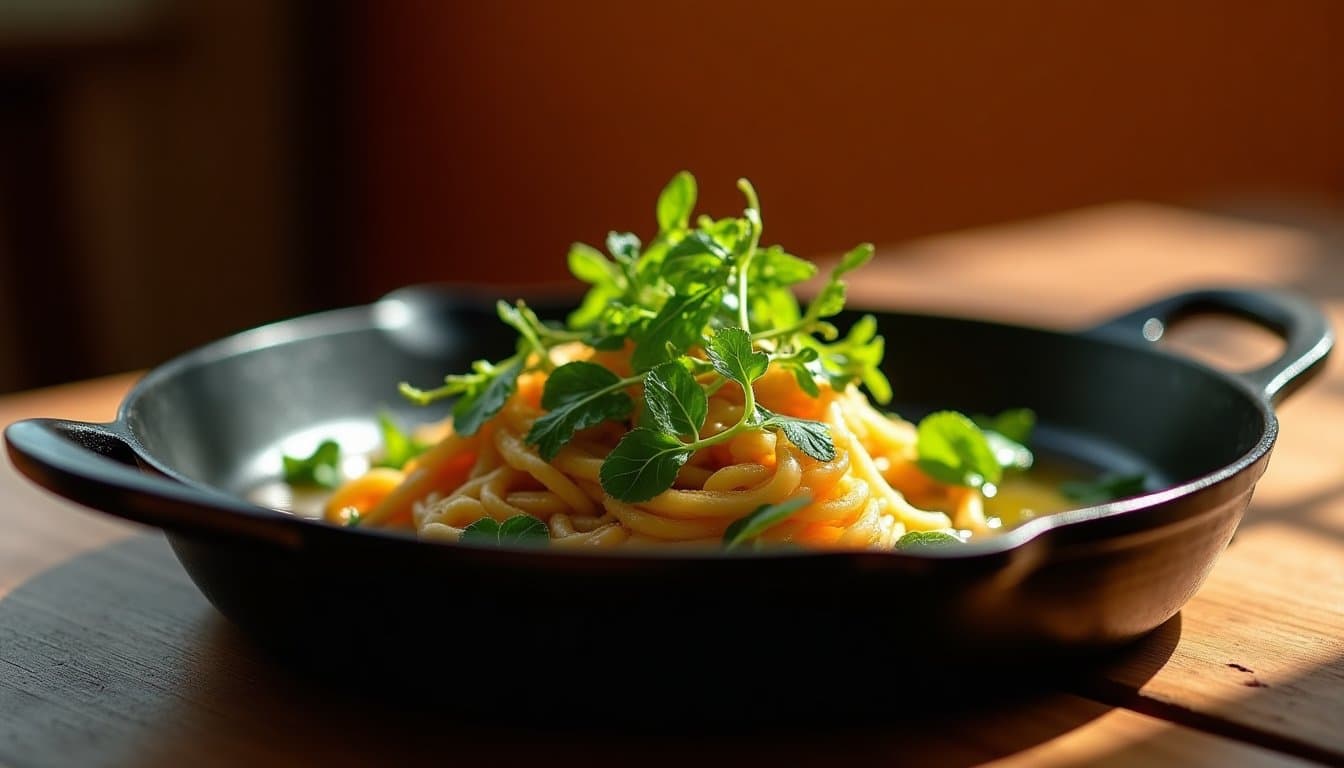
Atakilt wat, Ethiopia's cabbage-and-potato stew built on berbere and turmeric, has no business being this good when ramps and stinging nettles get involved, but here we are. Sealing the whole thing in parchment turns the sulfurous funk of ramp bulbs and the mineral bite of nettles into a pressurized aromatic steam that permeates every vegetable in the packet. Open it at the table so nobody misses the berbere sauna moment.
Spring Pea and Ramp Dal with Wild Garlic Tadka and Crispy Curry Leaves
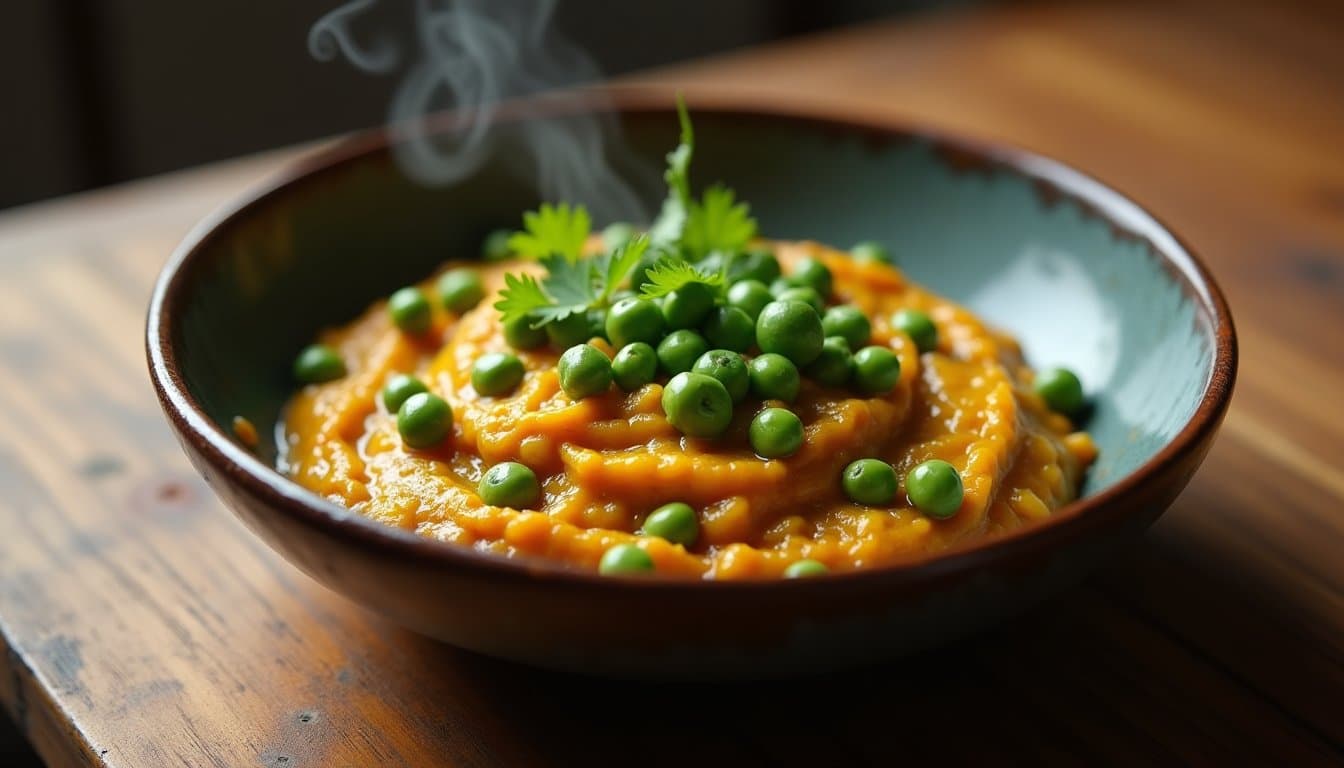
Appalachian foraged ramps have no business being in a Bengali masoor dal, and yet here we are. The sulfurous, leek-meets-garlic punch of ramps and wild garlic replaces the traditional onion-garlic base entirely, while spring peas dissolve into the lentils and bring a grassy sweetness dal has never had before. The plot twist is a screaming-hot wok tadka of curry leaves, black mustard seeds, and raw wild garlic poured over the top at the last second.
Saffron-Dried Lime Morel & Ramp Pilaf Baked in Parchment
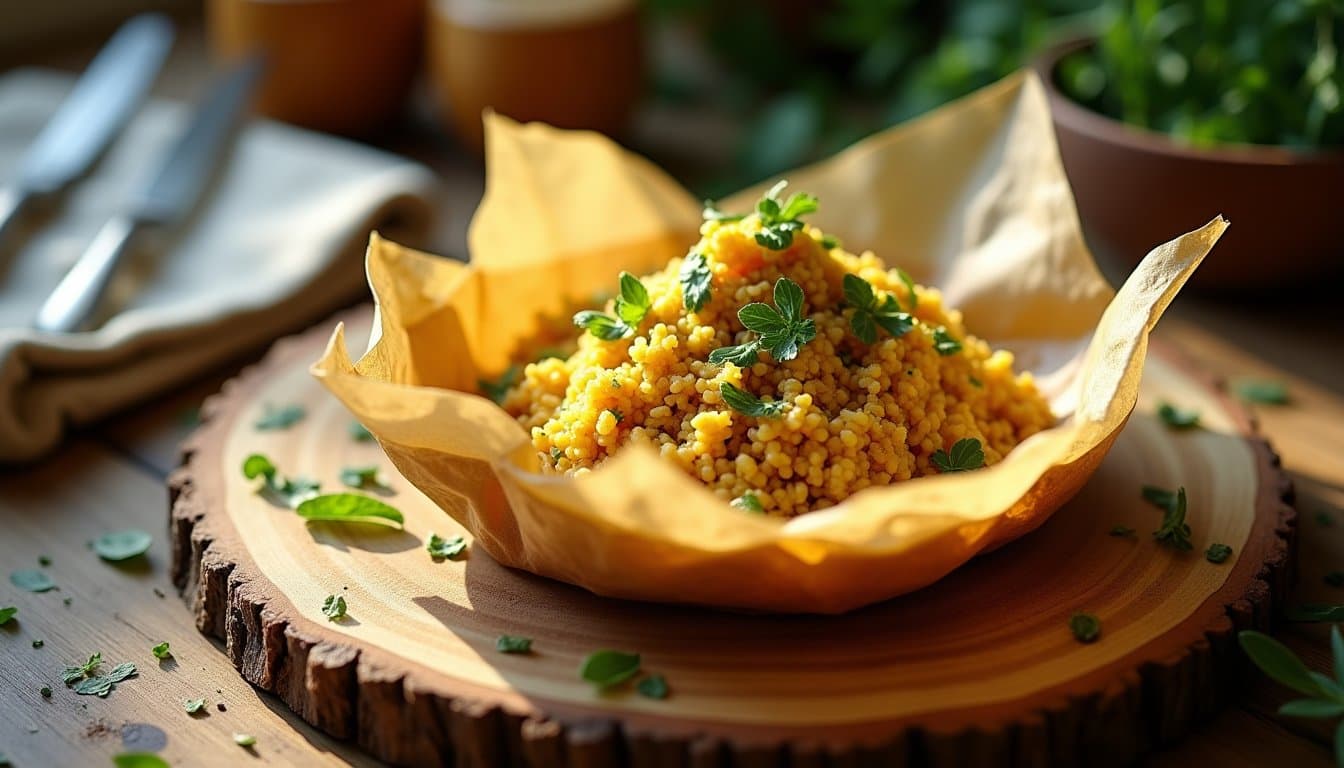
Persian chelow meets a foraged spring obsession: wild morel mushrooms and pungent ramps steam-locked inside parchment with bloomed saffron and whole dried limes (limu omani), producing a smoky-funky-floral rice that tastes like Nowruz celebrated in a forest. The en-papillote technique traps every volatile aromatic compound, ramp sulfides, saffron safranal, lime terpenes, in a pressurized flavor sauna instead of letting them drift off into your kitchen. It's weird, it's Persian, and it's deeply correct.
Get the free flavor science guide.
5 rules that explain why unusual combinations work — plus new recipes every week.
You can unsubscribe anytime. No spam, ever. Or just read the guide.