This post contains affiliate links. We may earn a small commission at no extra cost to you. Learn more
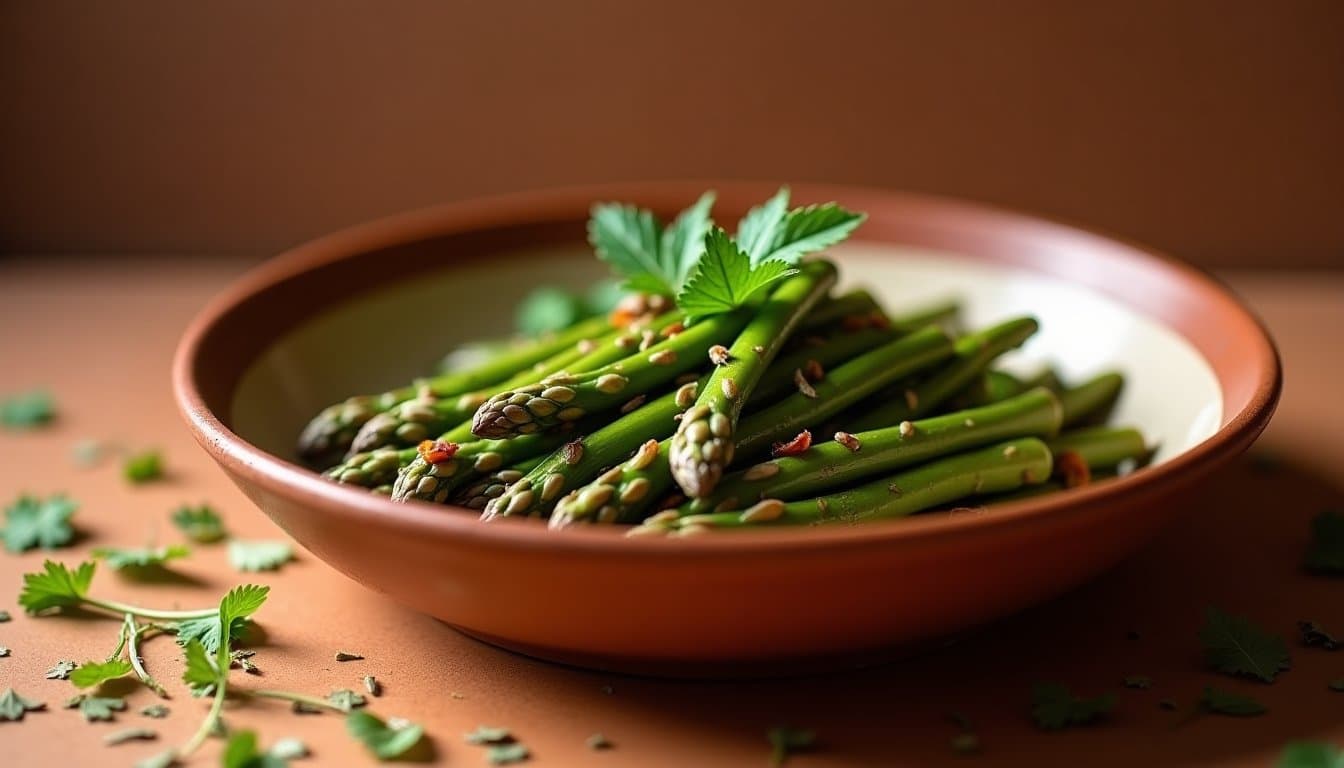
Persian Asparagus Confit with Barberry Glaze, Fenugreek Oil, and Smoked Almonds
what's this?
Strangeness scale
- 1 — Slightly odd
- 2 — Raises eyebrows
- 3 — Genuinely strange
- 4 — Deeply weird
- 5 — Unhinged
- Cook
- 45m
- Total
- 1h 5m
- Difficulty
- Medium
- Serves
- 4
- Origin
- Persian
Slow-poaching asparagus in olive oil at 80°C turns the spears silky and almost fatty in a way that steaming never does. Then barberries, the tart little Iranian pantry staple, cut straight through all that richness with a clean, piercing sourness. Fenugreek herb oil and smoked almond shards push the whole thing onto Nowruz-table territory, where sweet, sour, and bitter belong together.
Equipment
Why It Actually Works
Confiting asparagus at 80–85°C keeps the temperature below the threshold that aggressively breaks down chlorophyll and cell walls, so the spears come out silky and concentrated rather than waterlogged or drab. Barberries are loaded with berberine and malic acid, which deliver a clean tartness that cuts the olive oil's richness without muddying the flavor — the same reason zereshk has been paired with fatty rice dishes in Persian cooking for centuries. Blanching the herbs before blending denatures the oxidative enzymes that would otherwise turn the oil khaki, while fenugreek's maple-like sotolone compound bridges the bitter asparagus and tart berries with a warm, faintly caramelized undertone.
Learn the flavor science rules behind recipes like this →Ingredients
- 900 g thick asparagus spears, woody ends snapped off
- 360 ml good-quality extra-virgin olive oil, plus more if needed to submerge
- 4 cloves garlic, lightly smashed
- 1 tsp whole coriander seeds, lightly cracked
- ½ tsp black peppercorns
- 2 strips lemon zest, pared with a peeler
- 1 tsp fine sea salt
- 60 g dried barberries (zereshk), rinsed
- 2 tbsp honey or vegan maple syrup
- 2 tbsp fresh lemon juice
- ¼ tsp saffron threads, bloomed in 2 tbsp warm water
- ½ tsp ground fenugreek seeds
- 30 g fresh flat-leaf parsley leaves
- 20 g fresh tarragon leaves
- 15 g fresh chives, roughly chopped
- 80 ml neutral oil (grapeseed or sunflower)
- 70 g raw whole almonds
- 1 tsp smoked paprika
- ½ tsp flaky sea salt for finishing
- 1 tsp sumac, for dusting
Instructions
1. BLOOM THE SAFFRON: Crumble saffron threads into 2 tbsp warm (not boiling) water in a small bowl. Set aside for at least 10 minutes — the color should turn deep amber. Dry saffron added directly to fat releases almost none of its crocin pigment, so don't skip this.
2. SET UP THE CONFIT: Choose a heavy saucepan or deep skillet just wide enough to hold the asparagus in a single layer (or snugly in two layers). Add the olive oil, garlic, coriander seeds, peppercorns, lemon zest, and fine sea salt. Warm over the lowest possible heat until the oil registers 80–85°C (175–185°F) on an instant-read thermometer. You want gentle bubbling around the garlic, not a fry.
3. CONFIT THE ASPARAGUS: Submerge the asparagus spears in the warm oil, adding a splash more oil if needed to nearly cover. Maintain 80–85°C for 30–35 minutes, turning the spears once at the halfway point. They're done when a paring knife slides through the thickest stalk with slight resistance — tender but not mushy. Remove spears carefully with tongs to a wire rack set over a baking sheet.
4. MAKE THE BARBERRY GLAZE: While the asparagus confits, combine rinsed barberries, honey, lemon juice, and the bloomed saffron water (including threads) in a small saucepan. Simmer over medium-low heat, stirring occasionally, for 8–10 minutes until the liquid reduces to a syrupy, jammy consistency that coats the back of a spoon. Season with a pinch of salt. Remove from heat and keep warm.
5. MAKE THE FENUGREEK HERB OIL: Bring a small pot of water to a rapid boil. Blanch parsley, tarragon, and chives for exactly 20 seconds, then transfer immediately to an ice bath. Squeeze out all excess water thoroughly — wet herbs will make a cloudy, watery oil. Blend blanched herbs with the neutral oil and ground fenugreek in a high-speed blender for 90 seconds until vivid green and smooth. Strain through a fine-mesh sieve lined with cheesecloth if you want a refined result; leave it rustic for a more textured oil. Season lightly with salt.
6. TOAST AND SMOKE THE ALMONDS: Heat a dry skillet over medium heat. Add almonds and toast, shaking frequently, for 4–5 minutes until golden and fragrant. Remove from heat, immediately toss with smoked paprika and a pinch of flaky salt. Once cool enough to handle, roughly chop or crush in a zip-lock bag with a rolling pin into irregular shards.
7. STRAIN THE CONFIT OIL: Strain the now-aromatic confit oil through a fine sieve. Keep it — it's good for drizzling over hummus, roasting vegetables, or dressing grains all week.
8. ASSEMBLE: Arrange the confit asparagus on a warm serving platter. Spoon the barberry glaze generously over and around the spears, letting the jewel-red berries settle between them. Drizzle fenugreek herb oil in a loose zigzag across the top. Scatter smoked almond shards over everything. Finish with a dusting of sumac and a pinch of flaky sea salt. Serve warm or at room temperature within 30 minutes for best texture.
Nutrition (estimated per serving)
- Calories
- 720
- Fat
- 68g
- Carbs
- 22g
- Protein
- 7g
- Fiber
- 5g
- Sodium
- 620mg
Variations
- Swap the lemon zest in the confit oil for blood orange zest and stir a teaspoon of dried rose petals into the barberry glaze for a more floral result.
- Lay slices of room-temperature pan-seared halloumi under the asparagus before plating — the salty, squeaky cheese against the barberry glaze turns this into a proper light lunch (drop the dairy-free tag if you go this route).
- Use toasted walnuts instead of almonds and add a small pinch of ground cardamom to the herb oil to pull the dish closer to the flavor profile of fesenjan.
Storage & Make-Ahead
The confit asparagus keeps well submerged in its olive oil in a sealed jar or container for up to 5 days in the fridge; the oil will solidify, so pull it out 30 minutes before serving and let it come to room temperature. Make the barberry-saffron glaze and fenugreek oil up to 3 days ahead and refrigerate them separately in small jars. The smoked almonds are the one component that suffers in storage, turning soft if they sit near any moisture, so keep them at room temperature in a dry container and add them right before plating. Freezing the confit asparagus isn't worth it, as the spears turn waterlogged and limp once thawed.
Reader Tips
No tips yet — be the first!
More Strange Recipes
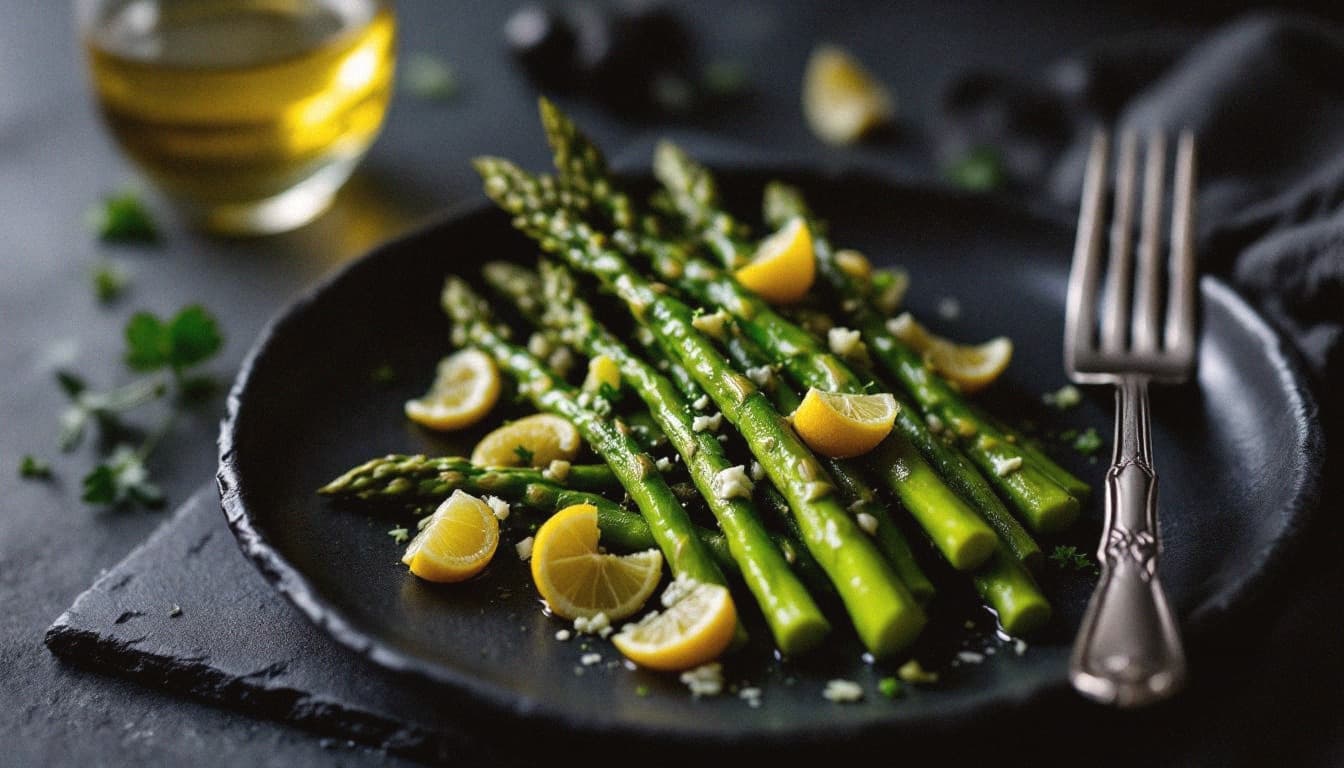
Aquavit-Pickled Asparagus with Juniper and Dill Seed
Aquavit already carries caraway and dill in its botanical makeup, so using it as a pickling base for asparagus is less a wild experiment and more a logical conclusion. Juniper berries crack open to release piney, resinous oils that cut through the brine's acidity, while dill seeds (not fronds) bring a rounder, almost anise-like depth that fresh dill never quite manages. The result is a jar of spears that taste like a Scandinavian forest floor in the best possible way.
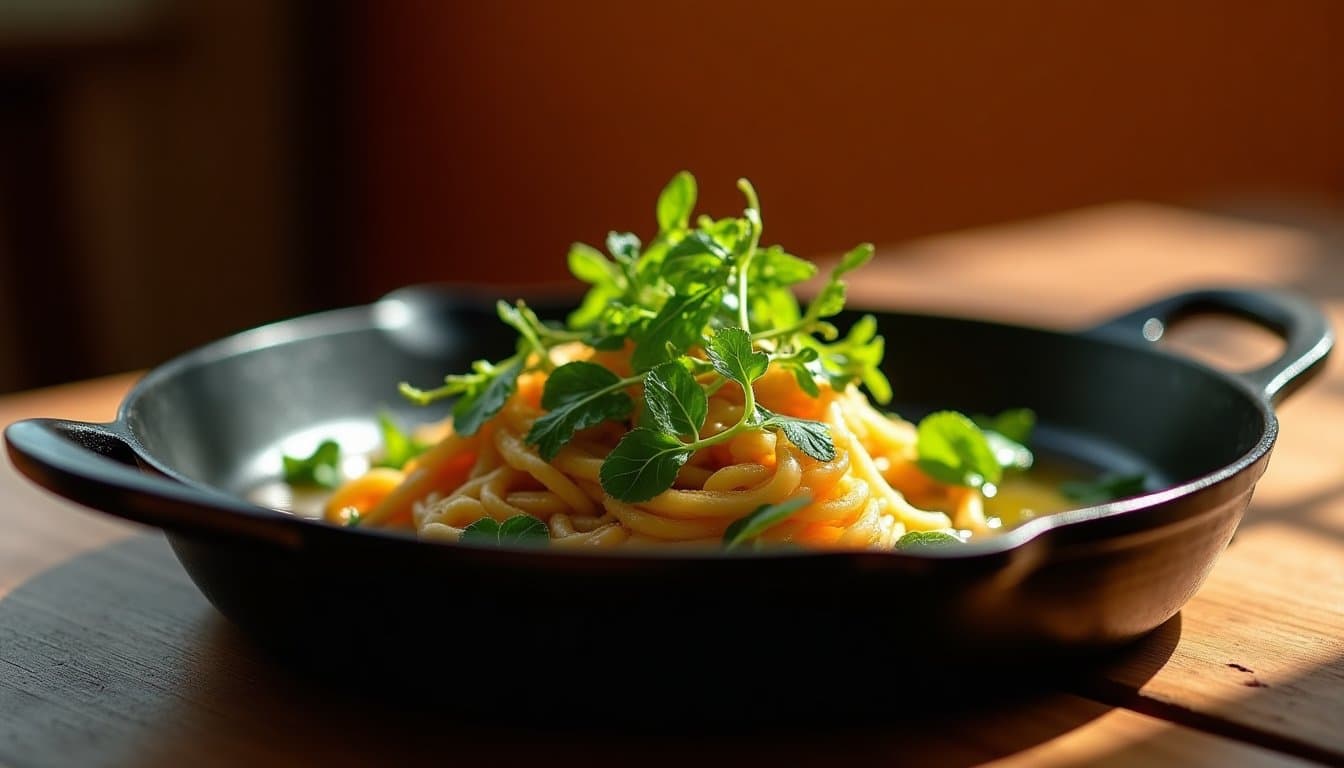
Nettle-Ramp Atakilt Wat en Papillote with Spring Peas
Atakilt wat, Ethiopia's cabbage-and-potato stew built on berbere and turmeric, has no business being this good when ramps and stinging nettles get involved, but here we are. Sealing the whole thing in parchment turns the sulfurous funk of ramp bulbs and the mineral bite of nettles into a pressurized aromatic steam that permeates every vegetable in the packet. Open it at the table so nobody misses the berbere sauna moment.
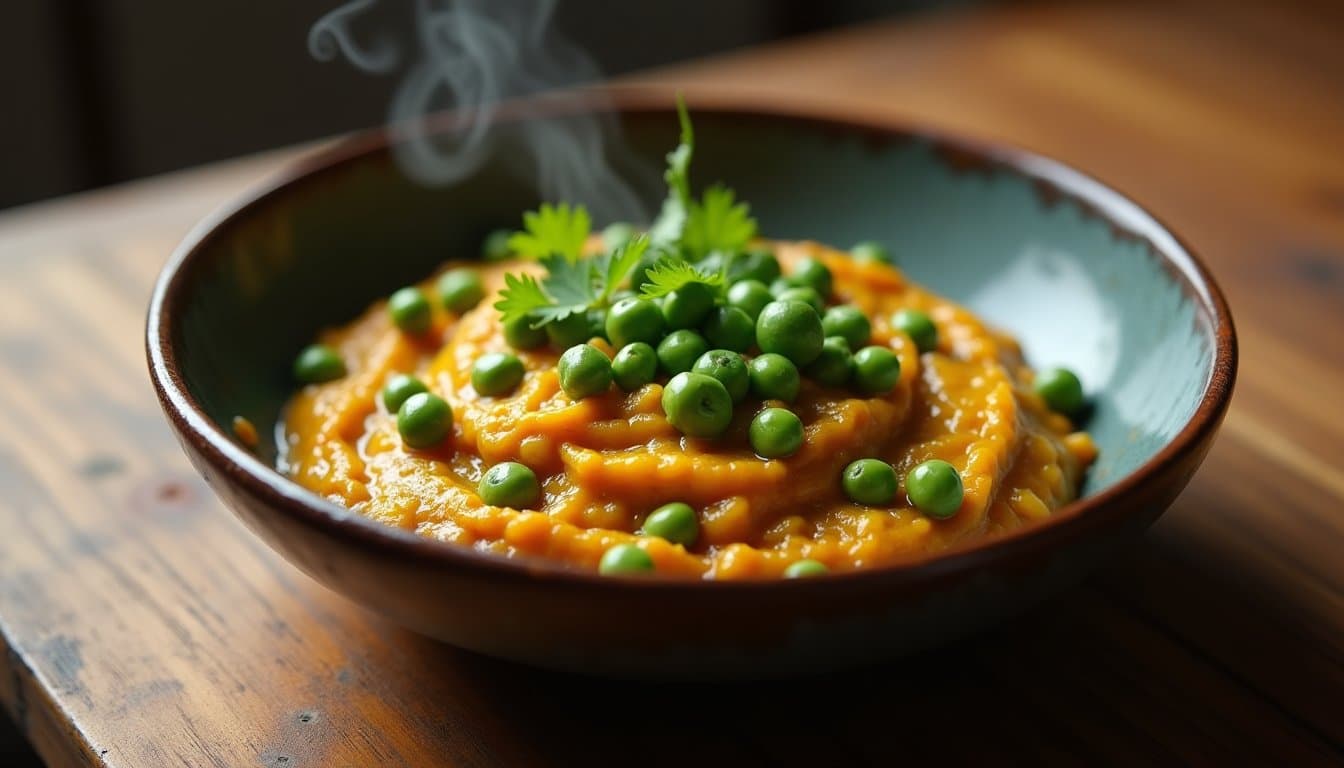
Spring Pea and Ramp Dal with Wild Garlic Tadka and Crispy Curry Leaves
Appalachian foraged ramps have no business being in a Bengali masoor dal, and yet here we are. The sulfurous, leek-meets-garlic punch of ramps and wild garlic replaces the traditional onion-garlic base entirely, while spring peas dissolve into the lentils and bring a grassy sweetness dal has never had before. The plot twist is a screaming-hot wok tadka of curry leaves, black mustard seeds, and raw wild garlic poured over the top at the last second.
Get the free flavor science guide.
5 rules that explain why unusual combinations work — plus new recipes every week.
You can unsubscribe anytime. No spam, ever. Or just read the guide.